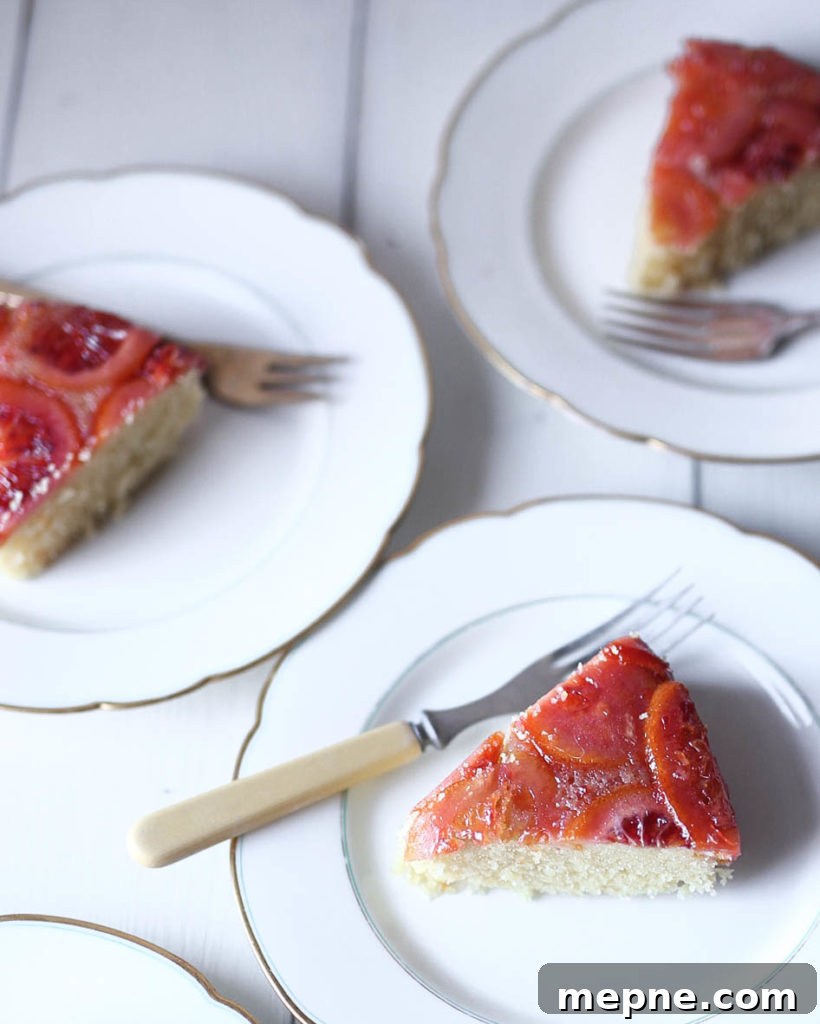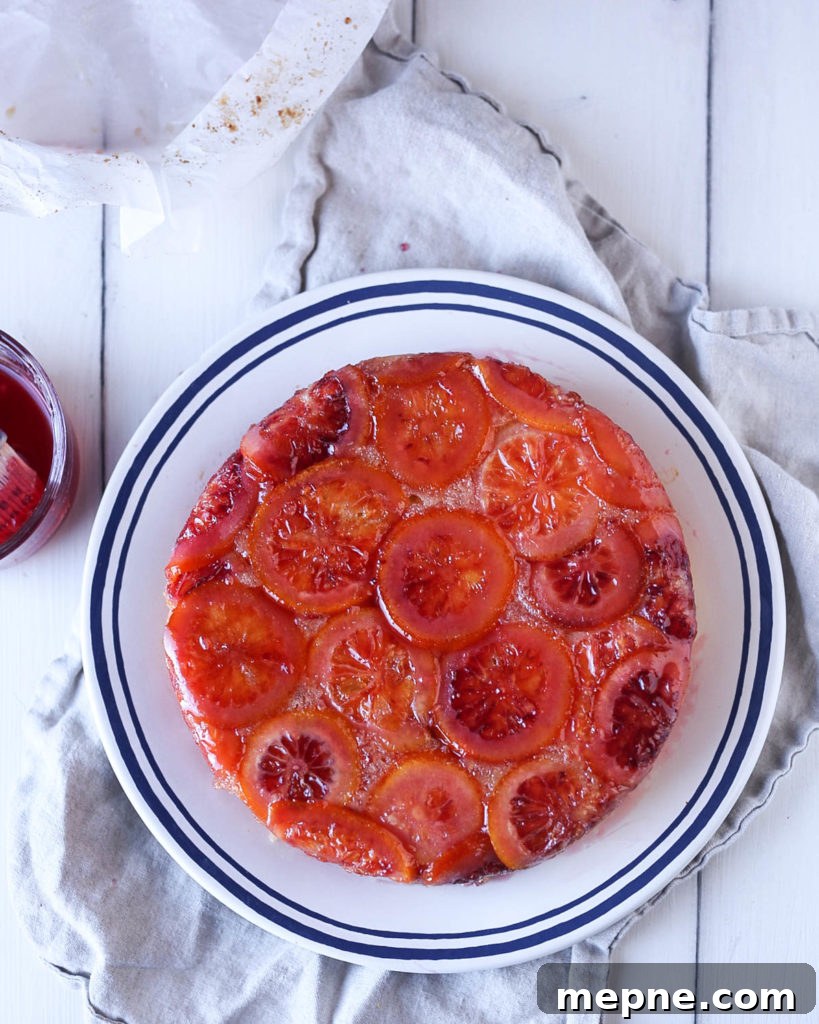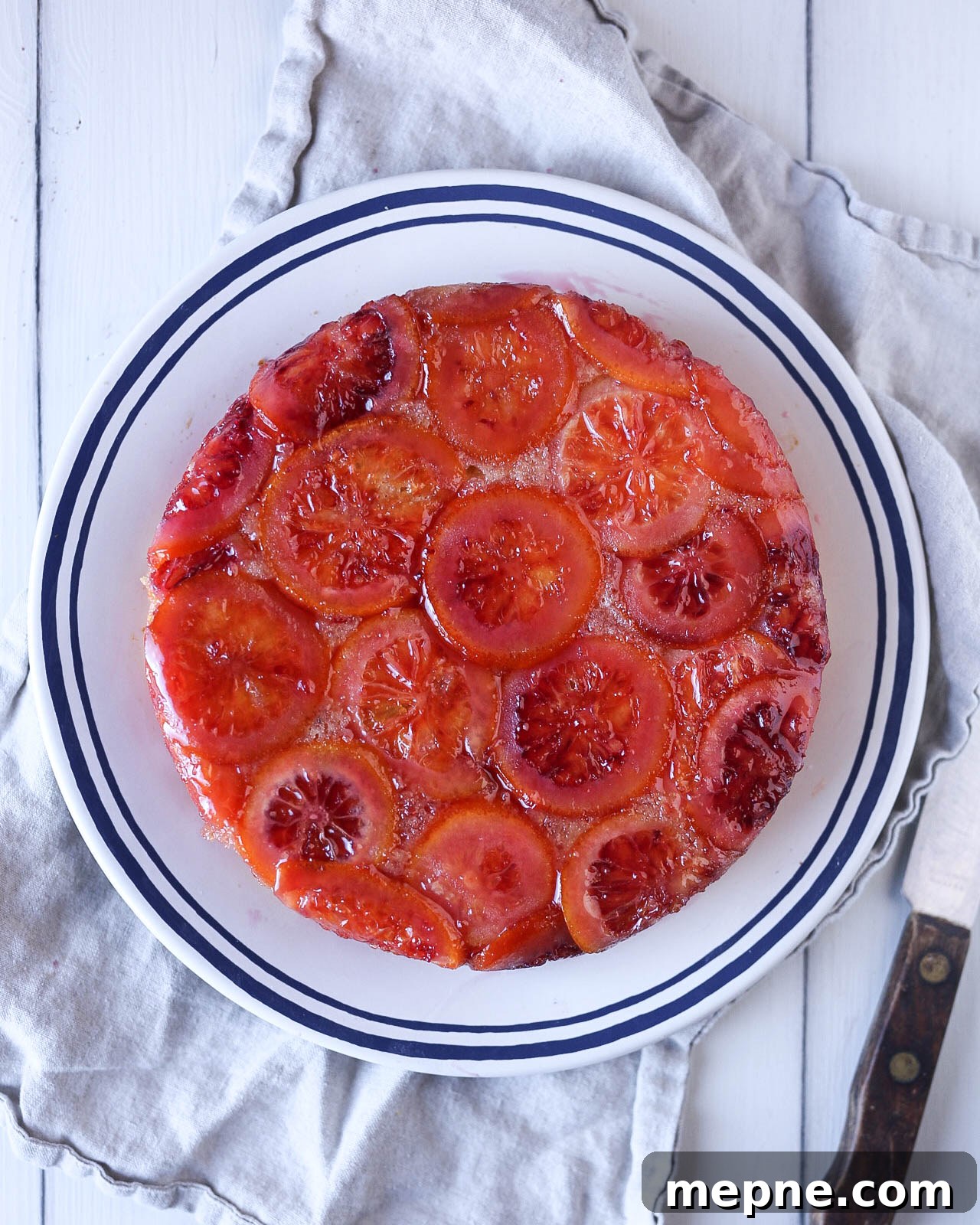
Winter is my least favorite season for its cold and gray days, but the arrival of blood oranges in markets each year always brightens it. I buy them by the bagful, often without a strict plan, and then experiment: glazed doughnuts, a flaky tart, a chocolate bundt scented with blood orange. My favorite, though, is an upside-down cake that showcases the fruit’s color and flavor.
There are many recipes for a blood orange upside-down cake, but I keep returning to the version adapted from Not Quite Nigella’s “Spectacular Upside Down Blood Orange Cake.” What sets this recipe apart is how the orange slices are candied and used to line the entire pan, and how their syrup is reduced and brushed over the finished cake for extra gloss and flavor.
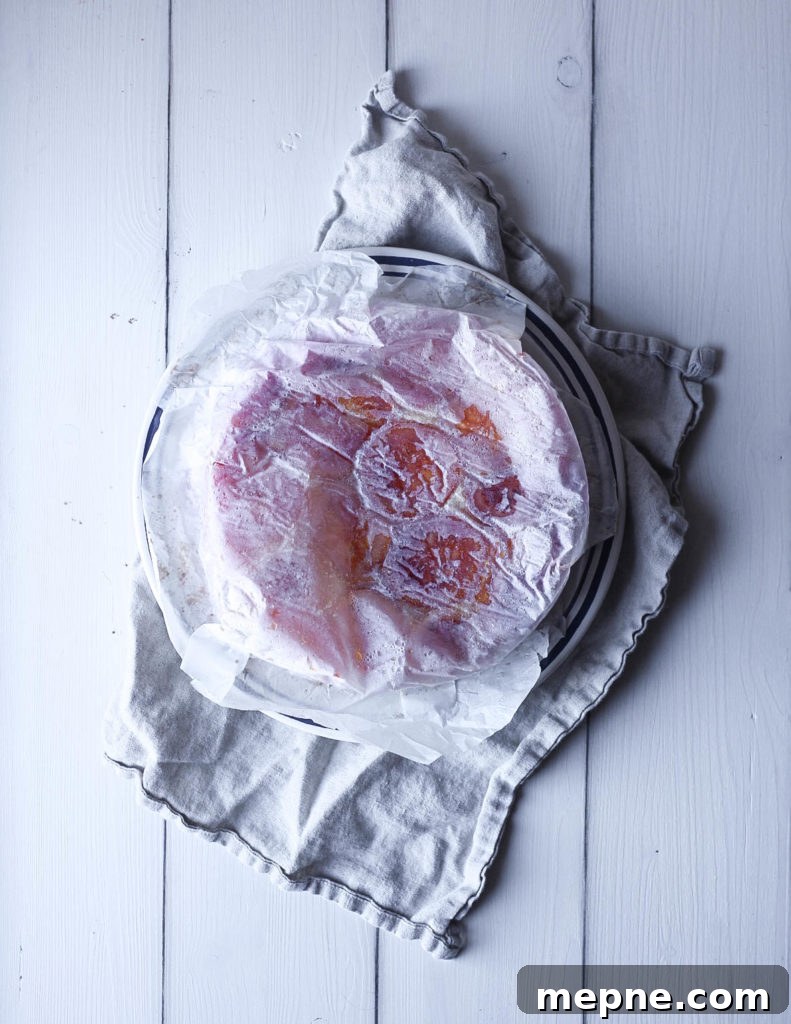
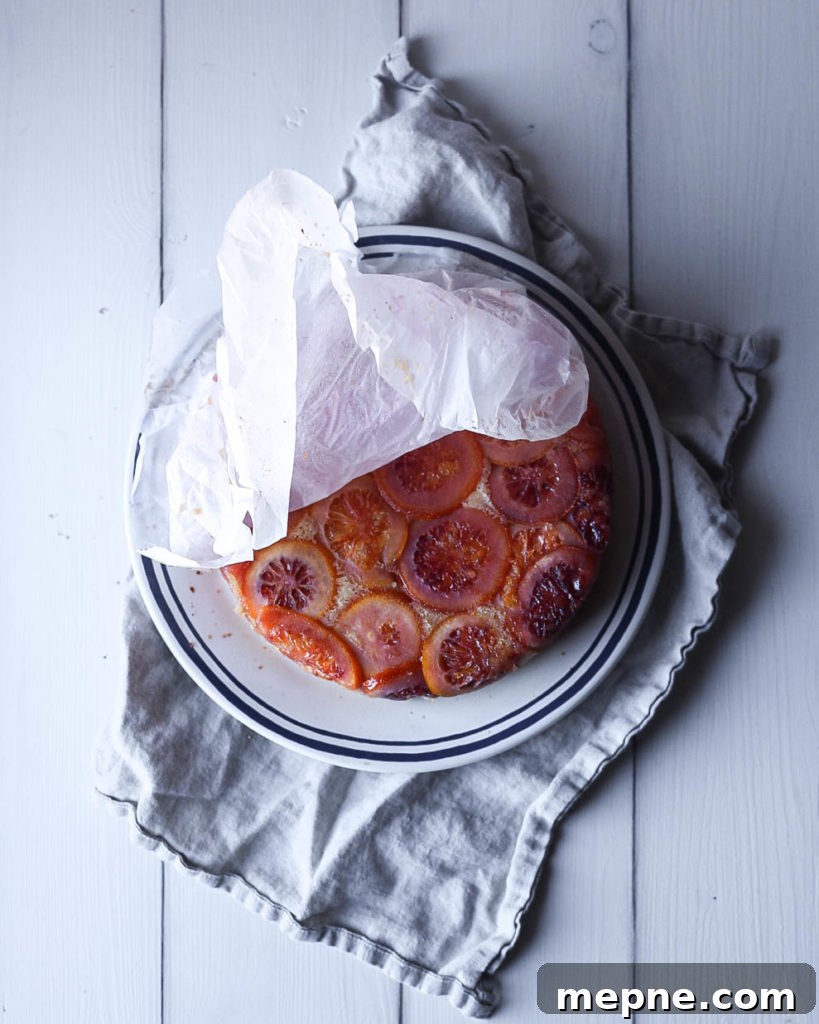
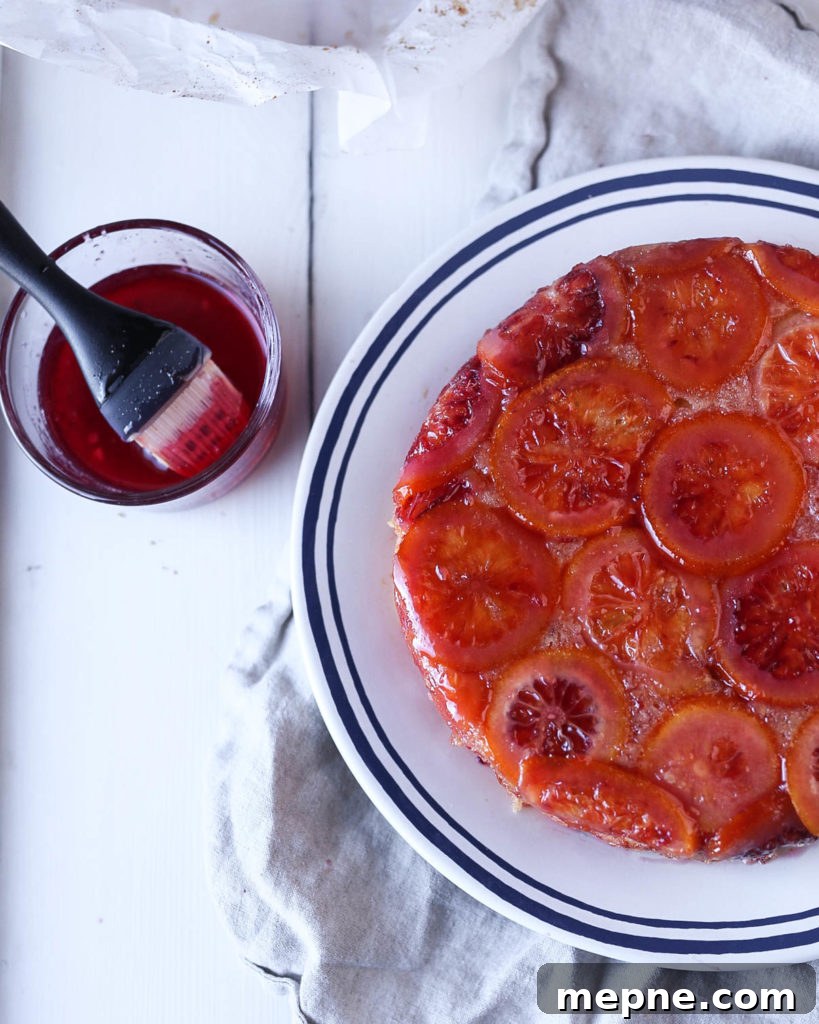
A few details make this cake special. First, the blood orange slices are simmered in a simple sugar syrup so the pith becomes translucent and some of the bitterness softens, producing jewel-like slices. Second, those glossy, slightly sticky candied slices are used to line the entire interior of the parchment-lined pan — bottom and sides — instead of being placed only on the bottom, so every bite has orange flavor. Third, the cooking syrup is reduced and then brushed over the outside of the baked cake for an extra glossy finish. Finally, the sponge itself is surprisingly tender and flavorful: rich yet light, with a delicate almond note.
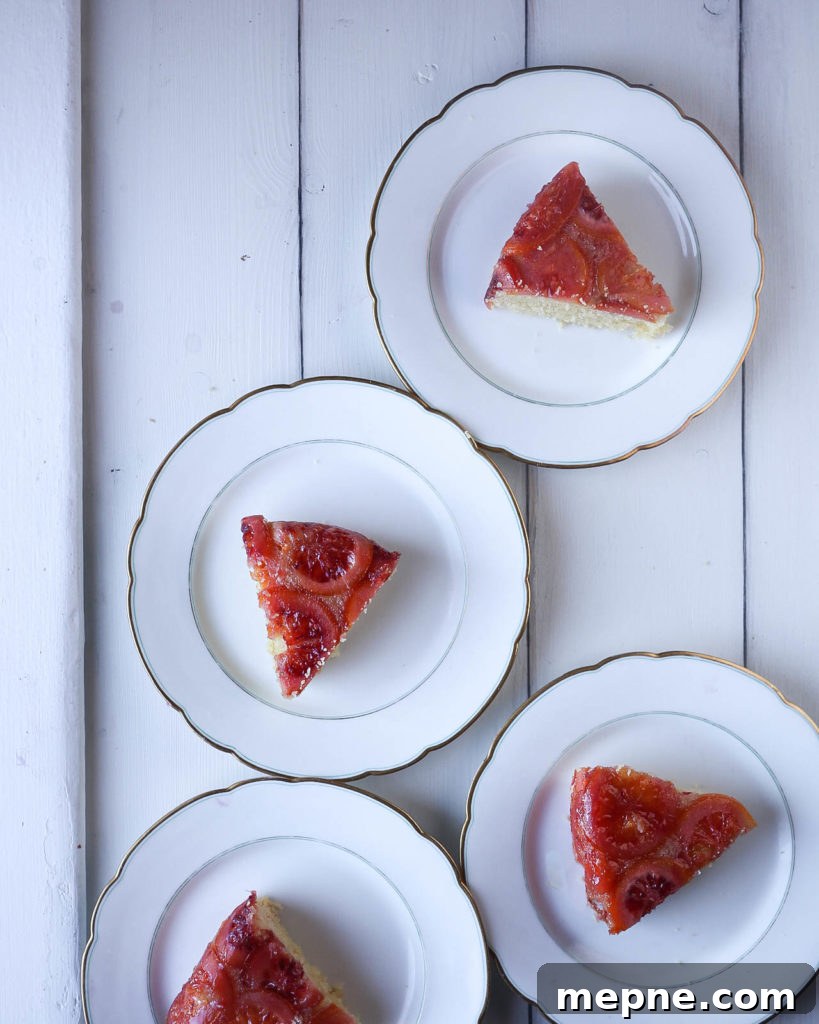
Candied blood orange slices take a bit of attention, but the cake batter is straightforward. The result is worth the effort: an attractive, flavorful cake that feels special but is approachable to make at home.

My Favorite Blood Orange Upside Down Cake
Adapted from Not Quite Nigella’s “Spectacular Upside Down Blood Orange Cake.”
Dessert
blood orange cake, blood orange upside down cake, upside down blood orange cake
Ingredients
For the blood oranges and glaze:
-
2-4
blood oranges
– see notes -
1/2
cup
water -
200
g
granulated sugar
For the sponge:
-
134
g
unsalted butter
– at room temperature -
134
g
granulated sugar -
zest of one blood orange
– finely grated -
2
large eggs
– at room temperature -
1/4
tsp
vanilla extract
– optional -
134
g
almond flour or meal -
67
g
all-purpose flour -
1 1/4
tsp
baking powder -
1/4
tsp
table salt or fine sea salt -
75
g
Greek yogurt
– preferably full-fat
Instructions
-
Preheat the oven to 325°F (160°C). Lightly grease an 8-inch cake pan with butter, then line it with a large circle of baking parchment (about 14–15 inches) so the paper covers both the bottom and the sides of the pan.
-
Thinly slice 2–4 blood oranges with a sharp knife or a mandoline. Aim for slices no thicker than 1/8 inch so they candy evenly.
-
In a medium non-reactive saucepan, combine 1/2 cup water and 200 g (1 cup) granulated sugar over medium-low heat, stirring until the sugar dissolves. Increase heat to medium-high, add the orange slices, and bring to a boil. Reduce to medium and simmer for 10–15 minutes, until the pith becomes translucent.
-
Use a slotted spoon to transfer the candied orange slices to a large plate or tray to cool slightly. Return the syrup to a boil and reduce for 3–5 minutes until it is thicker and more concentrated. Pour the reduced syrup into a bowl and let it cool to room temperature.
-
Line the prepared pan with the candied orange slices, overlapping them slightly so they cover the bottom and rise up the sides. Bend slices gently where the bottom meets the side. If needed, use a little of the reduced syrup to help the slices adhere. Set the pan aside while you prepare the sponge.

-
Make the sponge: In a mixer fitted with the paddle attachment or with an electric hand mixer, cream together the butter, sugar, and the finely grated zest of one blood orange until light and fluffy. Add the eggs one at a time, mixing well after each addition and scraping down the bowl as necessary. Add the vanilla if using.
-
In a separate bowl, whisk together the almond flour, all-purpose flour, baking powder, and salt.
-
Stir the Greek yogurt into the creamed mixture with a wooden spoon or spatula. Fold in the dry ingredients until just combined; avoid overmixing to keep the sponge tender.
-
Spread the batter into the prepared pan, smoothing the top without disturbing the lined orange slices. Bake for 45–50 minutes, until the top is golden and a skewer inserted in the center comes out clean.
-
Let the cake cool in the pan for 10 minutes, then invert it onto a serving plate and gently peel off the parchment. Once the cake has cooled for another 20–30 minutes, brush the outside with some of the reserved blood orange syrup for shine. Chill completely before slicing for the cleanest cuts.

Recipe Notes
- The original recipe uses a 9-inch pan. To adapt this recipe to a 9-inch pan, increase all ingredient quantities by about 50% and expect an extra 5–10 minutes of baking time.
- Optional adjustments I make: adding blood orange zest, a touch of vanilla, and a pinch of salt to the batter. If you like, try 1/8–1/4 tsp almond extract in place of or alongside the vanilla for a stronger nutty aroma.
- The number of blood oranges required depends on their size and how thinly you slice them. Some trimming is normal; any leftover bits can be juiced for drinks or saved for another use.
- For the cleanest slices, chill the baked and glazed cake in the refrigerator for an hour before slicing. Chilling firms the cake and helps produce neat portions.