How to Meal Plan to Save Money on Groceries
Learn a practical meal planning method with step-by-step instructions for beginners. As a family of six on one income, creating a monthly meal plan helps me stick to a budget. Whether you follow keto, want to lose weight, or simply want to stop asking “what’s for dinner?”, this approach will work. Use a printable meal plan template month after month to eat healthier, cut grocery costs, and regain sanity by always knowing what’s for dinner.
Note: this post may include affiliate links. If a link leads to a purchase, I may earn a small commission at no extra cost to you. I only recommend products I use and trust.
Have you ever gone grocery shopping ravenous and come home with far more than you needed? That feeling—buying on impulse—mirrors shopping without a plan.
Before I started planning, my cart was full of random items that sounded good in the moment. The result was predictable: over-budget spending, food wasted, and frustration.
A reliable meal planner has changed that. It has saved time, reduced waste, and trimmed our grocery bill.

How meal planning has simplified life
- I save time—no frantic decisions at dinner time when I’m tired or distracted.
- I waste less food because I plan to use all the ingredients I buy, even things like cabbage.
Less waste naturally means I save money. Planning a whole month at a time increases those savings: you plan once and know what the family will eat for four weeks.
Planning monthly frees up headspace and lowers grocery costs. I plan less often but with better results.
Related post: How to Save on Gluten Free Food
Related post: How to Extend 4 Pounds of Meat into 14 Dinners
Before you begin: a few essentials
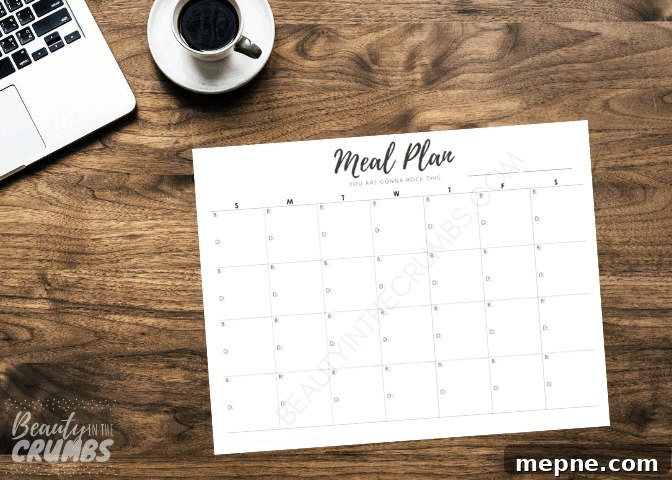
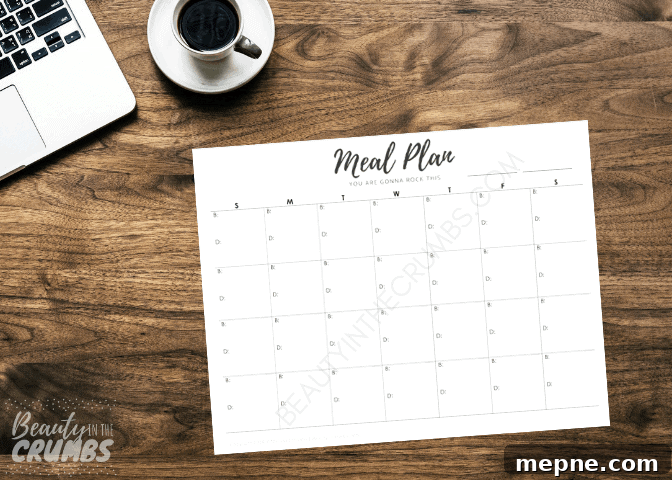
Print a template you like
You’ll be looking at your plan every day for four weeks, so choose a printable template you enjoy. Fill in the dates and keep the sheet visible on the fridge or in your planning area. A clear, attractive layout makes it easier to stick with the habit.
List family favorite meals
Create a rotation of meals your family loves. On your template, keep a section for favorite recipes and note the three ingredients that spoil fastest. This speeds up future planning and prevents last-minute scrambles.
Set the mood
Make planning a pleasant routine: grab a drink, play music, and choose a quiet time—after the kids are in bed works well. Treat it like a short, satisfying appointment with yourself.
Gather supplies
Have your shopping list, favorite pens, a pencil for flexibility, and a weather forecast handy. Whether you use paper or an app for the shopping list, keep it beside you while you plan. Use a pencil on the meal calendar so you can easily move meals around as plans change.
Now you’re ready to start planning.
The basic steps to become a meal-planning pro
1. Mark calendar factors in pencil
- Will you be out of town? Consider making a couple of freezer meals before you go.
- Which nights are rushed? Those can be slow cooker or instant-pot nights.
- Are guests coming? Plan meals that are easy to multiply and cost-effective.
- Check the weather: hot evenings may call for grilled meals, cold nights for soups or stews.
2. Use regular meals to streamline planning
Create a weekly rhythm—Taco Tuesday, Meatless Monday, Stir-Fry Thursday, and so on. Establishing themes reduces decision fatigue and makes shopping predictable.
- Meatless Monday
- Instant Pot or one-pot nights
- Taco Tuesday
- Stir-fry or vegetable-forward meals
- Rotate easy dinners for long days: pizza, pasta, nachos, or breakfast for dinner
Note days you’ll eat out and fill those in first so you aren’t planning unnecessary meals.
Having meals on a regular rotation streamlines your menu planning.
3. Shop your kitchen first
Look at what you already have and let those items guide the plan. Use what’s on hand, especially things you bought on sale. After your plan is set, then watch coupons and deals for the specific ingredients you need—don’t let deals drive your menu.
Tip: Once your meal plan is set, it guides your coupon search—not the other way around. That prevents impulse purchases of “deals” you won’t actually use.
Related post: How to Keep Vegetables Fresh as Long as Possible
The next step looks long but is straightforward—follow the pattern and it becomes second nature.
4. Fill in the plan using a “cornerstone meal” pattern
- Pick a meal you love (a cornerstone meal) and write it on the plan.
- Identify ingredients that will be left over and spoil quickly.
- Plan subsequent meals that use those leftover ingredients within a few days.
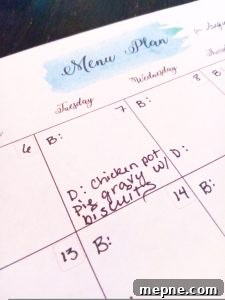
Example: If chicken pot pie is your cornerstone, you may have leftover raw chicken and celery. Schedule a stir-fry or chicken soup a couple of days later to use that chicken and celery before they spoil.
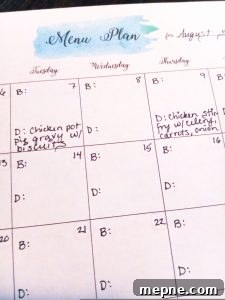
5. Add ingredients to your shopping list as you plan
Use whatever shopping-list tool works for you—an app or paper. Keep the grocery list separate from your meal calendar so the planner stays clean and readable. Sync lists with family members if possible so everyone can add items and check them off while shopping.
Repeat this process for other meal times
I usually plan breakfast and dinner. Lunches and snacks are simpler staples I rotate through; I add necessary ingredients to the shopping list. If it helps, create a visible checklist for breakfasts, lunches, and snacks so nothing is forgotten.
With a monthly plan, you’ll quickly feel the relief of knowing what’s for dinner each night and stop shopping on impulse.
Extra tips
- Swap meals if your appetite changes, but try to swap with a meal that uses the same ingredients to avoid waste.
- Review your plan each evening so you’re prepared and don’t forget to thaw or prep key ingredients.
- If you use a shopping app, consider adding the store name before the item so items can be grouped by store when you sort your list.
I hope these tips help make meal planning easier and more effective. Do you have a method that works for you? I’d love to hear your ideas.
Want a free printable menu planner?