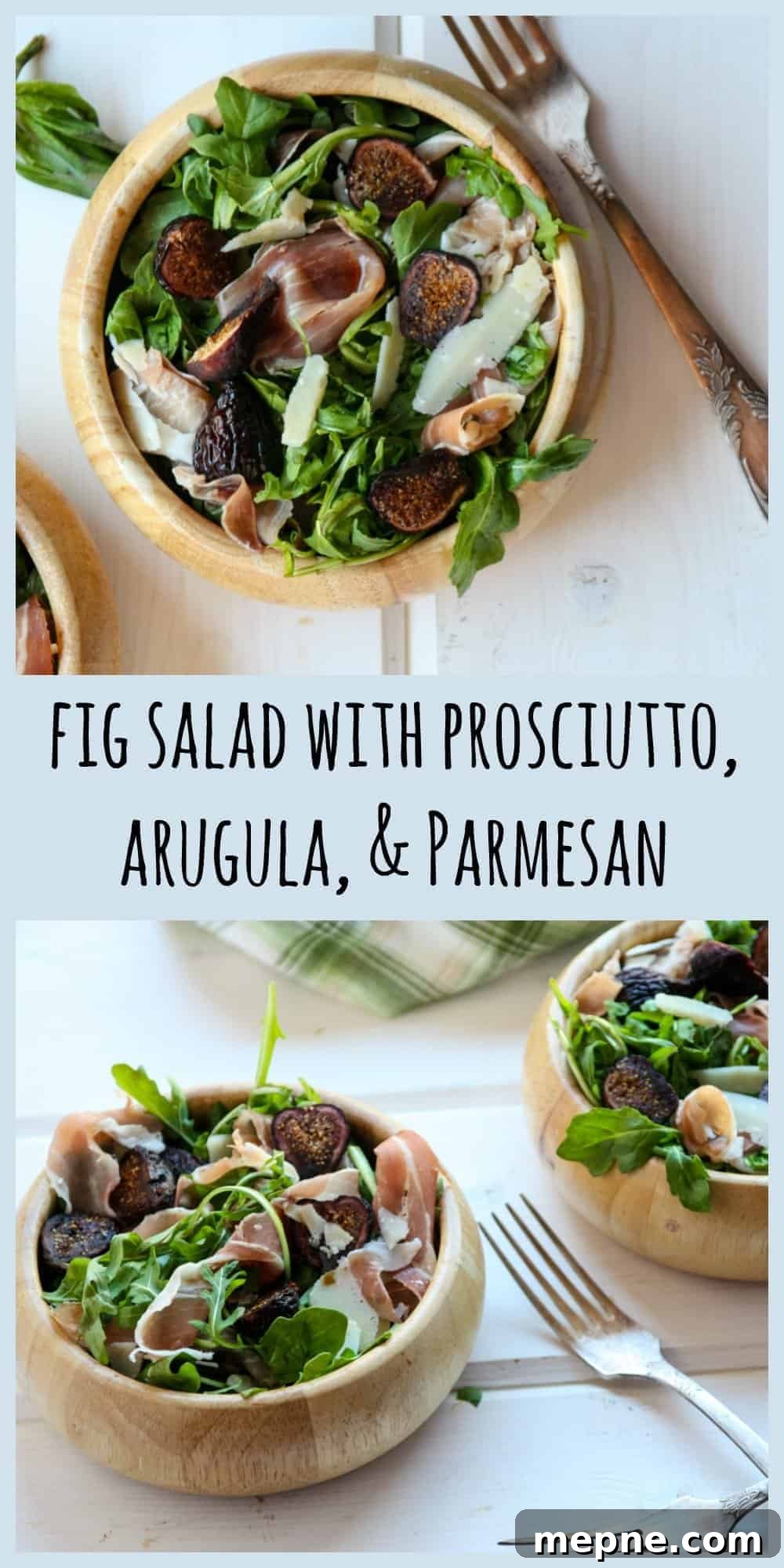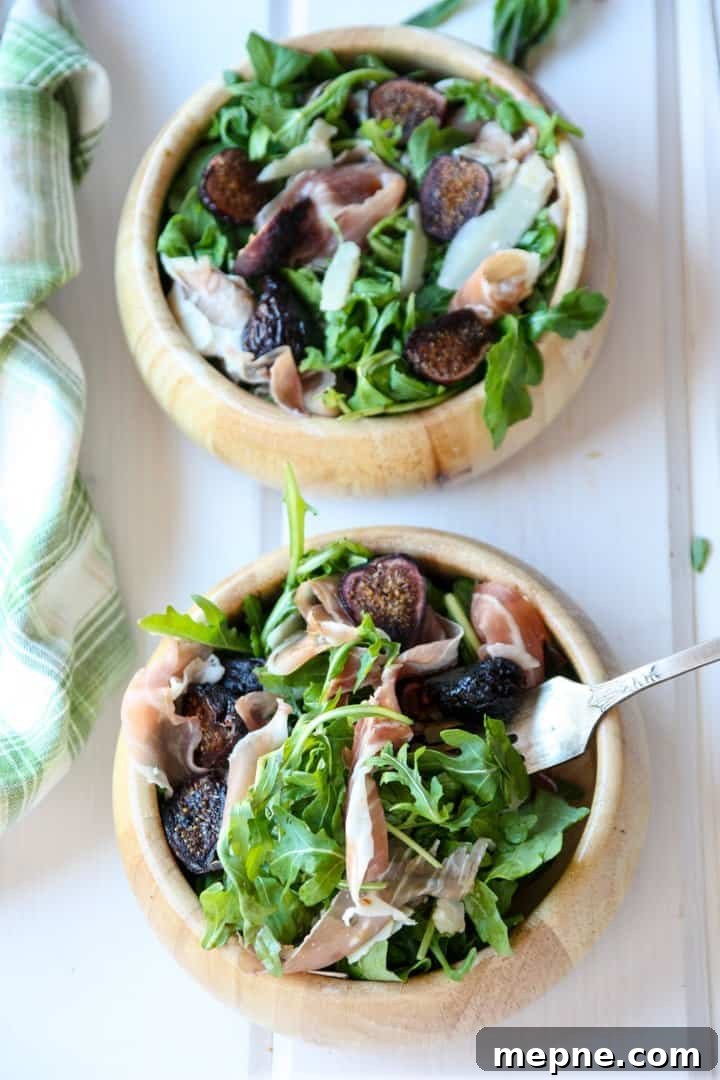
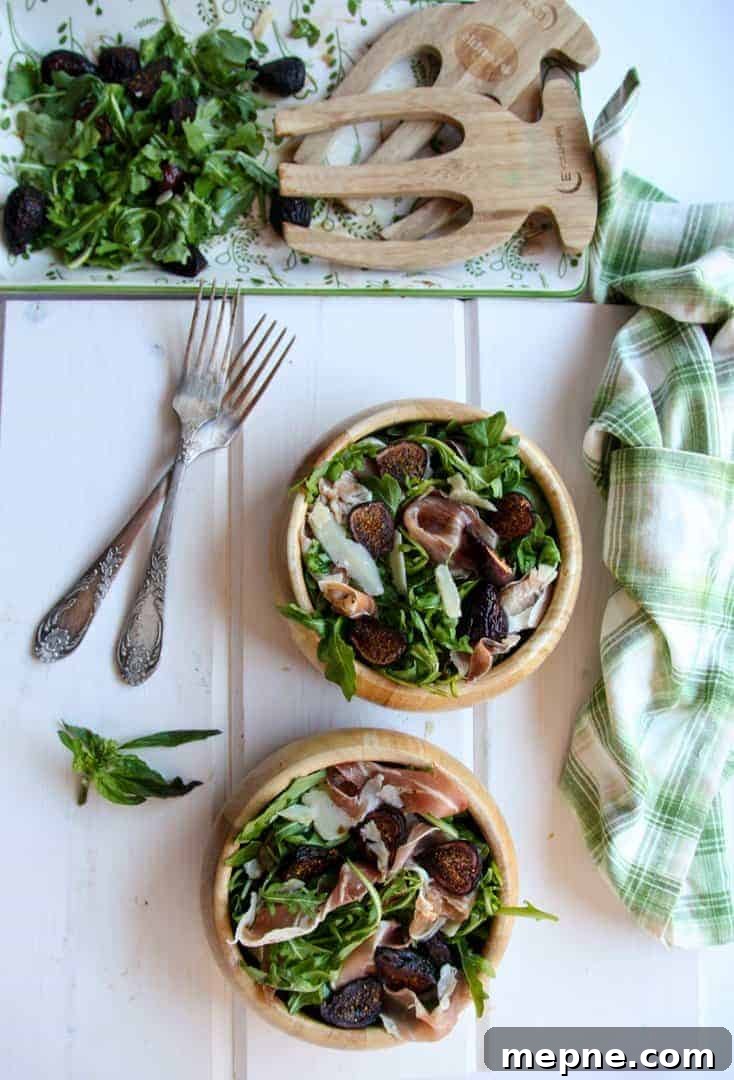
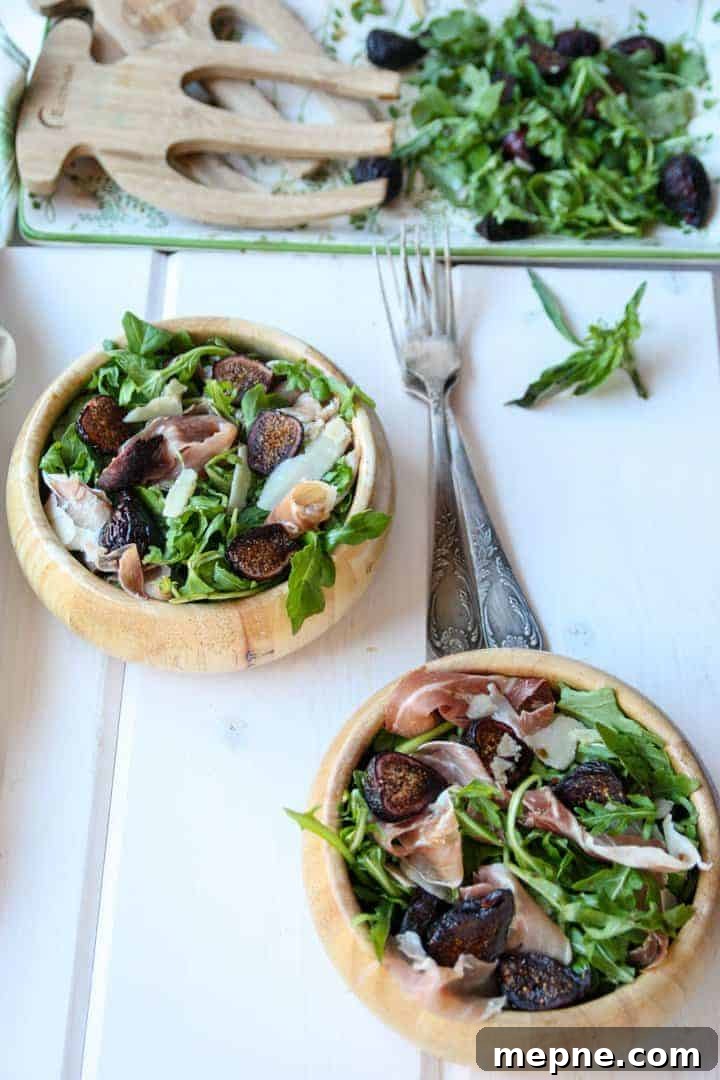
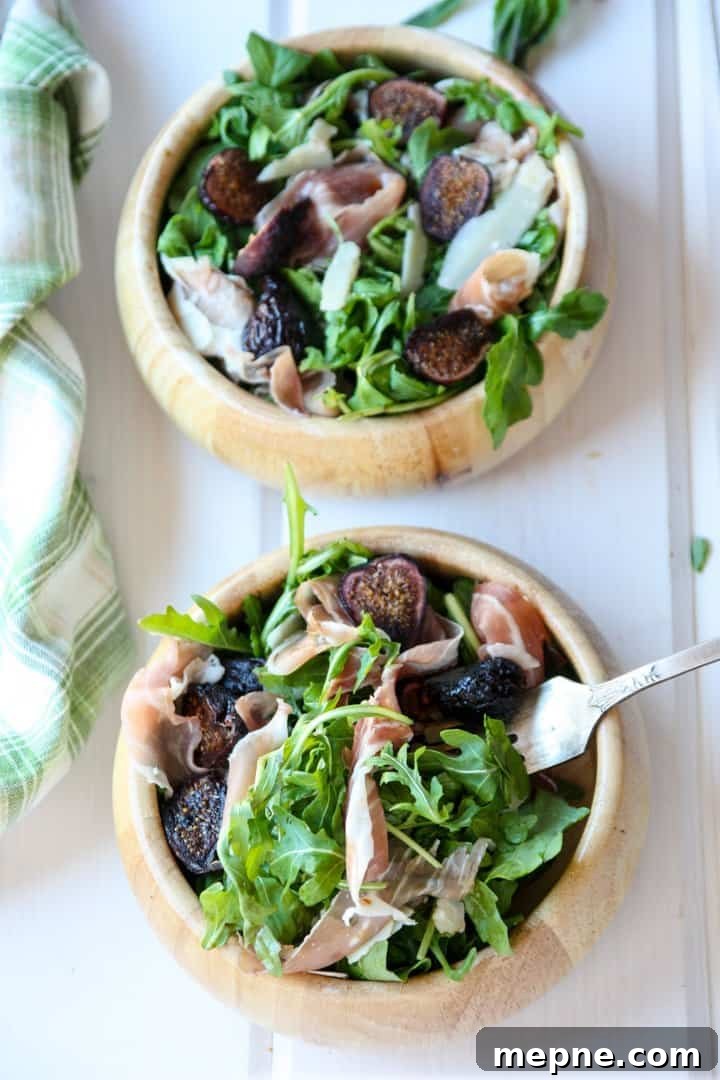
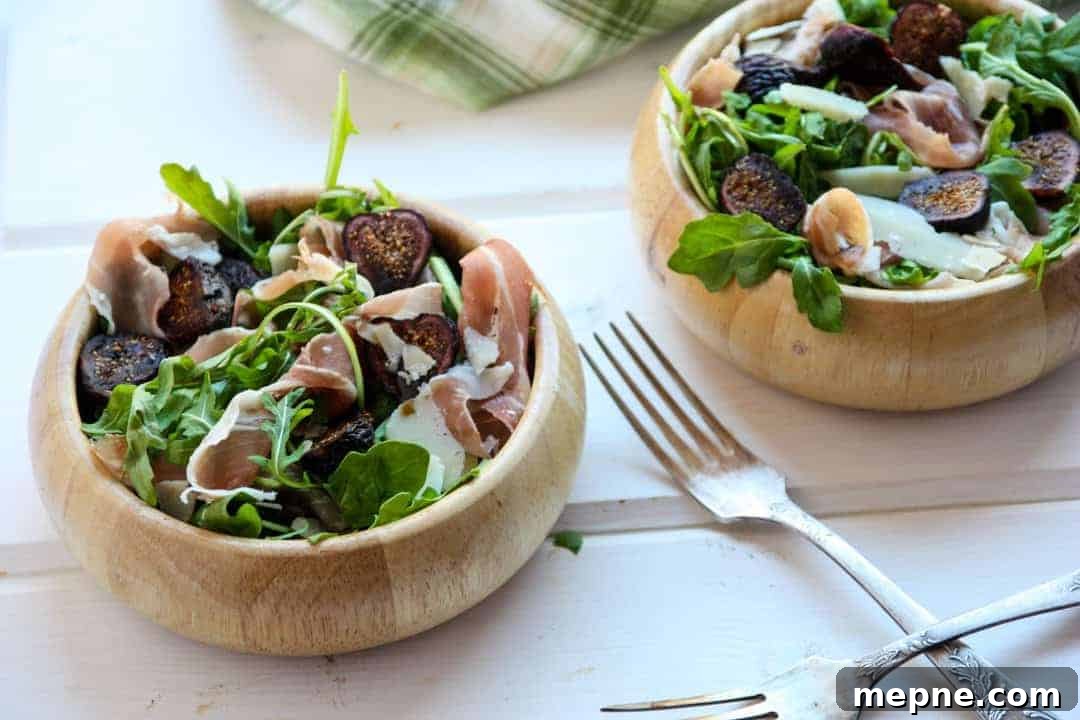
This fig salad with prosciutto and arugula is simple to prepare, full of flavor, and always makes an elegant presentation. Sweet figs, salty cured meat, peppery greens and a tangy-sweet dressing combine for a balanced, crowd-pleasing salad that works as a starter or a light main.
What are figs?
Figs are soft, pear-shaped fruits with a sweet, grainy interior. They come from the ficus tree, which is native to parts of the Middle East and Western Asia and has been cultivated for thousands of years. Figs prefer warm, dry climates; in North America, Mission figs from California are among the most commonly available varieties. Their sweetness and unique texture make them a delightful addition to both sweet and savory dishes.
How do figs grow?
Botanically, a fig is an enclosed cluster of tiny flowers that ripen into the edible fig we eat. In nature, fig flowers are pollinated by small fig wasps that enter the fig to lay eggs and, in the process, transfer pollen. Many cultivated varieties, including those commonly grown in California, are self-pollinating and do not require wasp pollination to produce edible fruit. For most consumers, the growing process is a curiosity rather than a concern; commercially sold figs are safe and delicious to eat.
Are figs vegan?
Whether figs are considered vegan can be a personal or philosophical decision. While wild fig pollination sometimes involves wasps, many cultivated varieties are self-pollinating and do not depend on wasps. Most commercially available figs are free from visible insect parts, and many vegans are comfortable eating them. If this is a concern for you, choosing commercially grown or thoroughly washed figs can help provide peace of mind.
Are figs good for you?
Figs are nutritious and relatively low in calories, offering a good amount of dietary fiber as well as vitamins and minerals. Both fresh and dried figs provide nutrients such as vitamin K, several B vitamins, manganese, potassium, calcium, phosphorus, iron, copper, and zinc. Dried figs are more concentrated in calories and minerals, so they deliver higher percentages of daily values for potassium, calcium and iron compared with fresh figs. Including figs as part of a balanced diet can contribute fiber, natural sweetness and micronutrients.
Raw vs dried figs
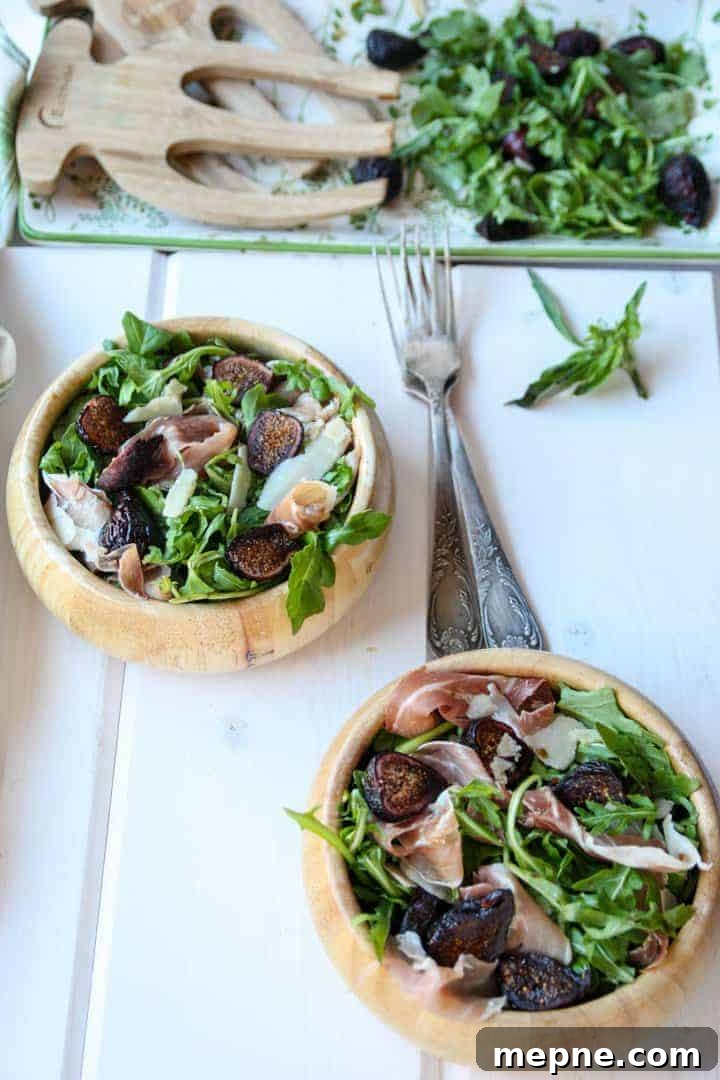
Fresh figs offer a soft, juicy texture and a delicate sweetness, but they are seasonal and can be fragile. Dried figs are concentrated, chewier and available year-round, making them a convenient substitute. In most recipes, you can substitute fresh and dried figs depending on what you have: dried figs can be briefly rehydrated in warm water if you prefer a softer texture. Each form has its place—use fresh for bright, delicate salads and dried for longer-lasting pantry options.
About this fig salad
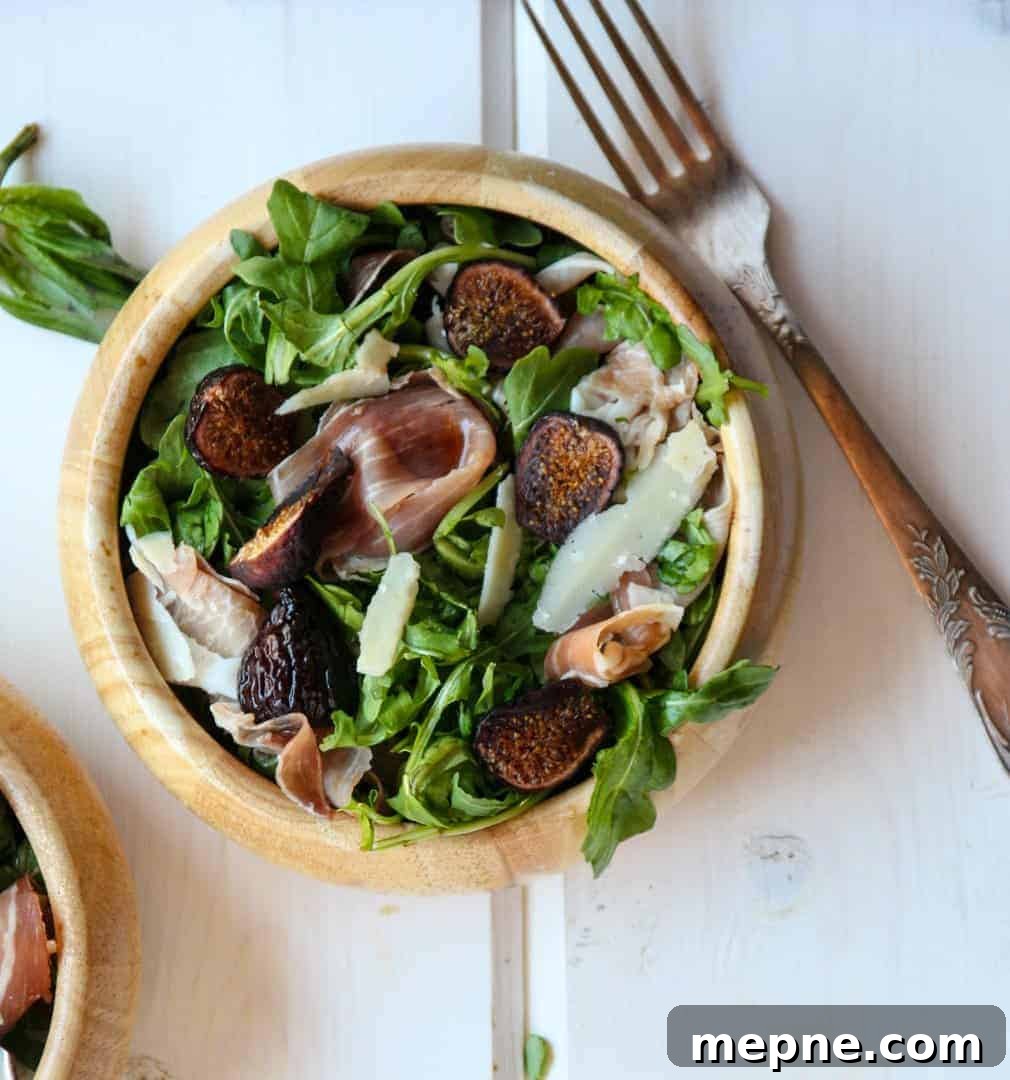
This salad highlights the contrast between sweet figs and savory, salty elements. Peppery arugula provides a fresh base while fragrant basil adds an aromatic lift. Shaved aged Parmesan gives a nutty, savory bite, and thin ribbons of prosciutto bring a delicate cured-meat saltiness that pairs beautifully with the figs. A simple vinaigrette of balsamic, honey and a touch of olive oil ties the salad together with a tangy-sweet finish.
Other hearty salad ideas
Looking for more salads with substantial flavor and texture? Try one of these options as inspiration: Butternut Buckwheat Salad, Farro with Pomegranate and Endive, Beet with Pistachio and Orange, Salmon with Spinach and Mandarin, Mediterranean Buckwheat Salad, or Sweet Potato with Quinoa and Chickpeas. Each brings a different combination of grains, vegetables, and bold flavors to the table.
Recipe
Fig Salad with Prosciutto & Arugula
This simple salad can be served as a light main or a flavorful side. Prep time is short and the result is elegant and balanced.
Course: Salad
Cuisine: Mediterranean
Prep Time: 10 minutes
Total Time: 10 minutes
Servings: 4
Calories (per serving): 316 kcal
Author: Colleen Milne
Ingredients
- 3 cups arugula
- 1 cup basil leaves, torn
- 3 oz prosciutto, cut into ribbons
- 1 cup dried figs, halved (or use fresh figs when available)
- 2 oz Parmesan cheese, shaved into ribbons (use a vegetable peeler)
Vinaigrette
- 3 tablespoons balsamic vinegar
- 2 tablespoons honey
- 1 tablespoon extra virgin olive oil
Instructions
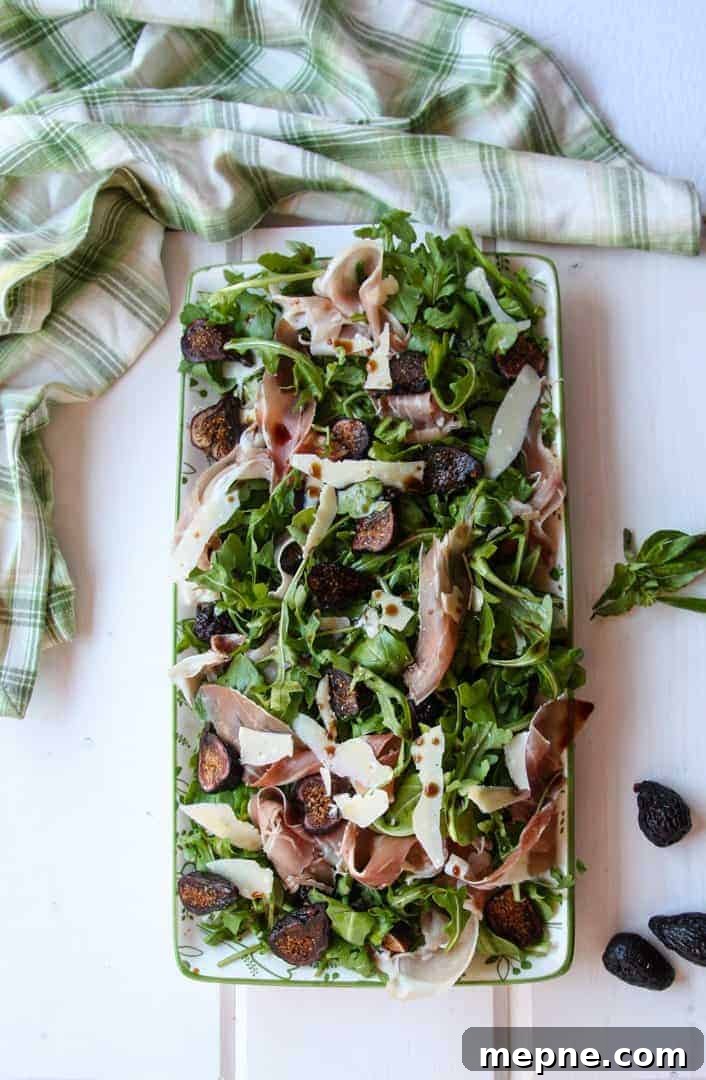
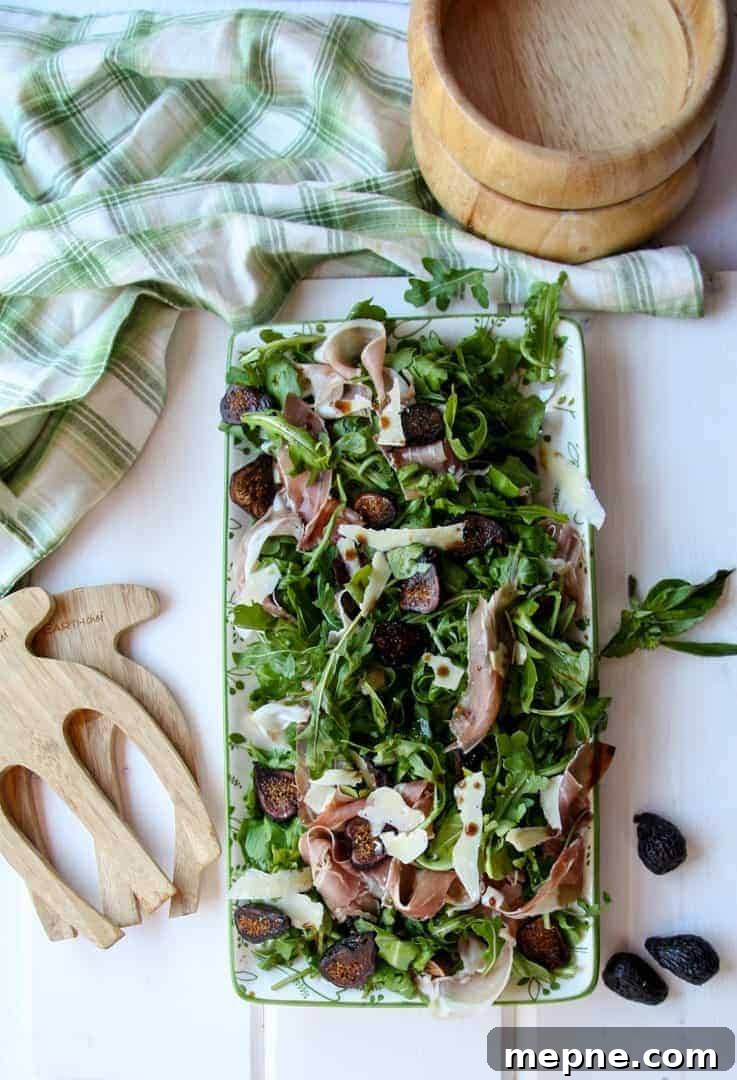
- On a large platter, arrange the arugula and torn basil leaves in an even layer.
- Scatter the prosciutto ribbons and halved figs over the greens.
- Top with shaved Parmesan ribbons.
- To make the vinaigrette: shake the balsamic vinegar, honey and olive oil together in a jar with a lid, or whisk them briskly in a small bowl until blended.
- Drizzle the vinaigrette over the salad just before serving and toss gently if desired. Serve immediately.
Notes
Fresh figs are excellent when in season; dried figs can be rehydrated in warm water for a softer texture if you prefer. For a stronger cheese flavor, substitute blue cheese or gorgonzola for the Parmesan. This salad is best served right away to keep the greens crisp.
Nutrition (approximate)
Per serving: Calories 316 kcal | Carbohydrates 36 g | Protein 10 g | Fat 16 g | Fiber 4 g | Sugar 29 g | Calcium 266 mg | Potassium 395 mg