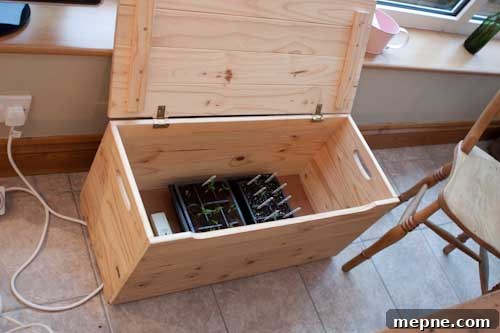
For the last three years, I have used a homemade light box to give my chilli plants a stronger start early in the season. I have mentioned the box before, but I have never explained in detail how it was put together, what parts I used, or why it works so well for young pepper seedlings. This simple chilli grow light box is inexpensive, easy to build, and ideal for anyone who wants to start seeds before natural daylight levels are strong enough. In this post, I will go through the main components, explain how I made it, and cover the benefits it brings during germination and the first stages of growth.
The Bulbs
At the heart of any useful grow box setup are the bulbs. There is a lot of confusion and misinformation around grow lights, especially when it comes to what plants really need at different stages. For this particular setup, I am not trying to grow mature chilli plants all the way through to flowering and fruiting. The aim is simply to help pepper seedlings during their earliest stage of development, when they need steady light and a little warmth. For that purpose, ordinary household fluorescent bulbs are more than adequate.
One of the main advantages of fluorescent lights is that they produce very little heat compared with traditional incandescent bulbs. This makes them cheaper to run and also much safer for tender young seedlings. Too much heat can quickly scorch small chilli plants, especially when the lights are positioned close to the leaves. Fluorescent tubes provide a useful balance: enough light to encourage healthy early growth, without creating excessive temperatures inside the box.
The bulbs I use are 18W T8 fluorescent tubes, each roughly a foot and a half long. Each tube produces around 1150 lumens of light and is usually available in two common colour temperatures: Cool White 4000K and White 3500K. Both are suitable for starting chilli seeds and growing young pepper seedlings indoors.
Plants use different parts of the light spectrum at different stages of growth. For early foliage growth and general seedling development, anything above around 2500K is perfectly usable. If you plan to keep your chilli plants under artificial lights later in the season and want to push them towards flowering and fruiting, you may need a stronger and more specialised grow light, often around the 6000K range. However, for starting chilli seeds and encouraging compact early growth, these basic fluorescent tubes are a practical and affordable option.
Personally, I use the Cool White 4000K tubes, although the 3500K version should do the job just as well for this type of grow box. The important point is to provide young chilli plants with consistent light as soon as they germinate, rather than leaving them to stretch towards a weak windowsill in winter or early spring.
Mounting The Lights
Mounting the light units is very straightforward, even for someone with only basic DIY skills. I cut a piece of MDF, about 1.5cm thick, so that it would sit neatly over the top of the wooden box. In truth, I was lucky enough to find a suitable offcut in the shed, which made the job even easier.
The next step is to drill two small holes through the board for the wires from each light unit. This means the cables can be kept outside the grow box rather than trailing around inside it. Once the holes are in place, the light units can be screwed onto the underside of the board, positioned parallel to each other so they spread light evenly across the seedlings below. After that, it is simply a matter of fitting a plug to each wire and clipping the fluorescent tubes into place.
I did consider mounting the lights directly to the inside of the box lid, but decided against it at the time. The separate MDF panel works well and makes the setup easy to move or adjust if needed. At some point, I may make a more permanent version, but this simple arrangement has been reliable enough for several seasons.
The Grow Box
The grow box itself is nothing complicated. It is just a plain wooden box from B&Q, used exactly as it came. There is no special grow tent, no expensive reflective lining, and no complicated ventilation system. For a small number of chilli seedlings, a basic wooden box is perfectly suitable.
At some stage, I may line the inside of the box with aluminium foil to reflect more light back towards the plants and make better use of the output from the bulbs. Even without that extra reflective surface, the box still performs well as a compact indoor chilli seedling grow box. The enclosed design helps hold in a little warmth while keeping most of the light contained.
Perfect for Germinating Seeds
The biggest benefit of this homemade grow light setup is that it provides both light and gentle warmth. Chilli seeds need warmth to germinate well, and once they do appear, the seedlings need light immediately. Without enough light, young pepper plants quickly become tall, thin, and weak. By keeping the seeds and seedlings in the same light box, newly germinated plants receive suitable light from the moment they break through the compost.
Another advantage is that the setup is fairly discreet. Because the light is mostly contained inside the box and the outside does not look too industrial or agricultural, it can be kept in the house if space is limited. This is useful during winter, when a greenhouse, shed, or conservatory may be too cold for reliable chilli seed germination.
Once the box is assembled and the lights are switched on, it holds the temperature at a steady 21 degrees Celsius. This is despite the box currently sitting in a cold, unheated conservatory in the middle of winter. I run the lights on an 18-hours-on, 6-hours-off cycle, which gives the chilli seedlings plenty of light while still allowing them a regular dark period.
Next Stages of Growth
After a few weeks, you may find that your seedlings need more space, or you may be tempted to start even more chilli seeds. At that point, this small light box can become a little limited. The next step up would be to use regular domestic Compact Fluorescent Light bulbs, often called CFLs, in a different arrangement that can cover a larger growing area. A setup like that is better suited to slightly larger seedlings that have outgrown a small enclosed box.
If you want to take indoor chilli growing more seriously, you may eventually consider a more powerful setup, such as a proper CFL chilli grow light. These lights do not have to be extremely expensive, and for small to medium-scale growing they can make a noticeable difference to plant growth and final pepper yield. However, for the earliest stage of the season, a simple homemade fluorescent grow box is often enough to get plants off to a healthy start.
Overall, this cheap chilli grow light box has been one of the most useful pieces of kit I have made for starting peppers indoors. If I remember correctly, the whole setup cost less than £20, which shows that grow lights do not need to be as expensive as many people assume. With a little effort and a few basic materials, you can build an effective homemade grow box that helps your chilli seedlings germinate, grow steadily, and get a valuable head start before the main growing season begins.