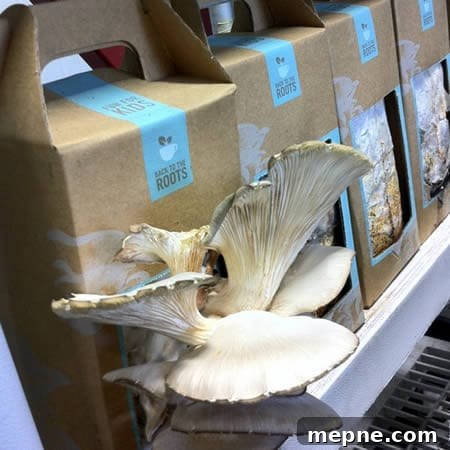
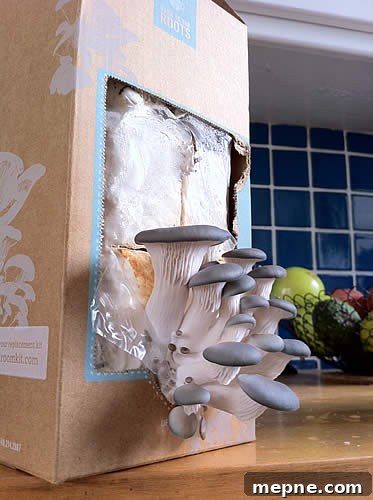
Last October I joined Matty at a conference in San Francisco and stayed at the Fairmont Hotel on Nob Hill. I also took the opportunity to spend an afternoon in Oakland touring a remarkable urban mushroom farm. The company, Back To The Roots, has built a business around sustainability and accessible home growing: their flagship product is a Do-It-Yourself mushroom kit that lets anyone grow fresh oyster mushrooms at home.
These kits are simple to use and delightfully effective. Each kit contains recycled coffee grounds inoculated with pearl oyster mushroom spores. In the kitchen, you cut a few slits in the bag, mist it lightly a couple of times a day, and keep it in a cool, indoor spot. Within about a week you can harvest vibrant, flavorful oyster mushrooms—some of the freshest you’ll ever taste.
What seems simple on the countertop is the result of careful development and a precise production process. Founder Nikhil Arora gave me a tour and explained the steps it takes to transform waste coffee grounds into a ready-to-grow mushroom kit. Their approach keeps waste out of landfills while creating an engaging product for home gardeners and chefs alike.
The process begins with collecting spent coffee grounds from local coffee shops. Every morning a truck makes the rounds to pick up grounds. Back when I visited, they were collecting roughly 20,000 pounds of spent grounds each week from multiple Peet’s locations in the Oakland area. Since then they have expanded collection efforts—doubling that amount and adding San Francisco locations—diverting more than 40,000 pounds of waste per week from landfills. They were on track to recycle over a million pounds of grounds by the end of the year.
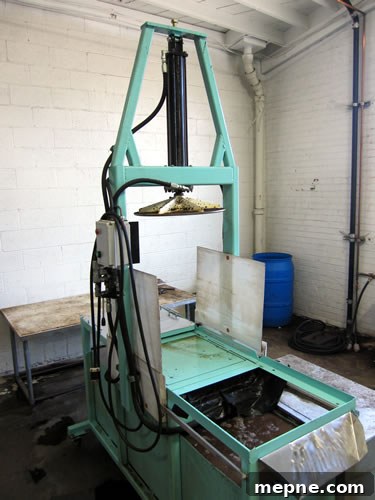
Freshly used coffee grounds are far too wet for mushroom cultivation, so drying and moisture control are essential. The team used to press grounds by hand and even used a wine press at one point, but eventually invested in a custom hydraulic press crafted by a local machinist. This press brings the grounds to the correct moisture level consistently and efficiently.
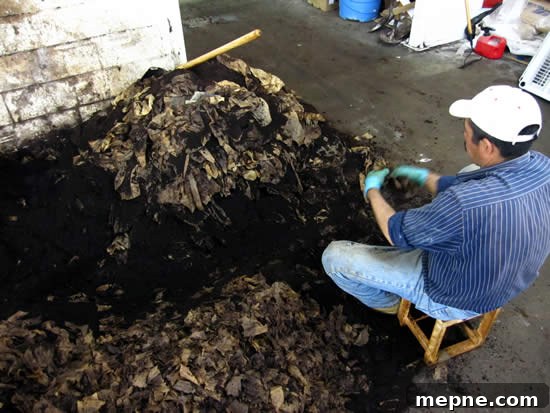
After pressing, the remaining paper coffee filters are separated from the grounds. Those filters are then broken down and repurposed as a soil amendment—another way the operation minimizes waste and maximizes resource use. It’s a messy step of the process, but the aroma of coffee makes the task pleasant.
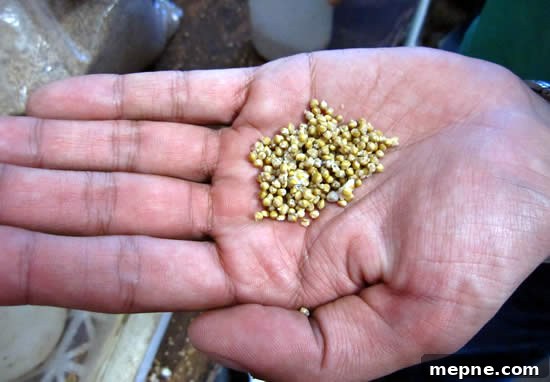
For cultivation they use pearl oyster mushroom spores supplied on a carrier of rye grain. These spores are mixed into the prepared coffee grounds at precise ratios to ensure reliable colonization. The inoculated grounds are then packed into specially designed plastic grow bags that include a small breathable filter at the top—allowing air exchange while maintaining a controlled environment.
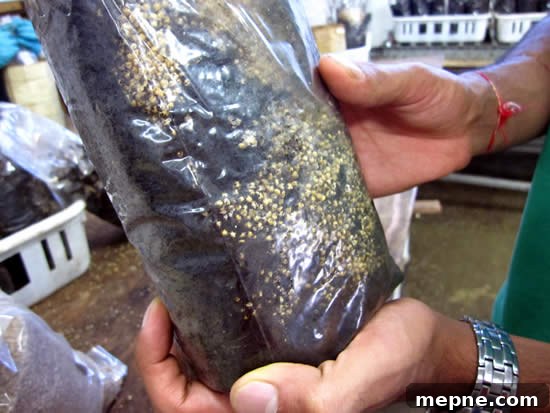
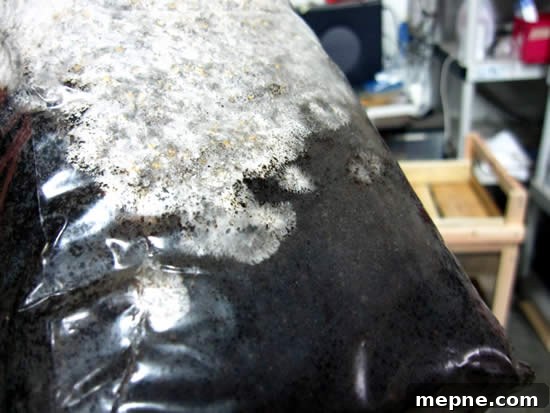
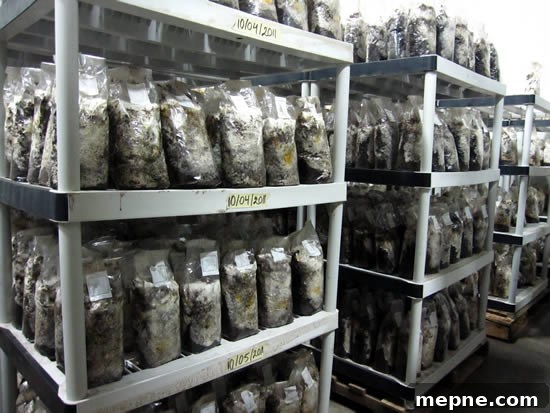
Once filled, the bags are sealed and moved to an incubation area. There they rest for about three weeks while mycelium—the vegetative network of the fungus—spreads through the bag and fully colonizes the substrate. Over this period the bags develop a firm white crust of interlocking mycelial threads, an indication the kit is ready for home use.
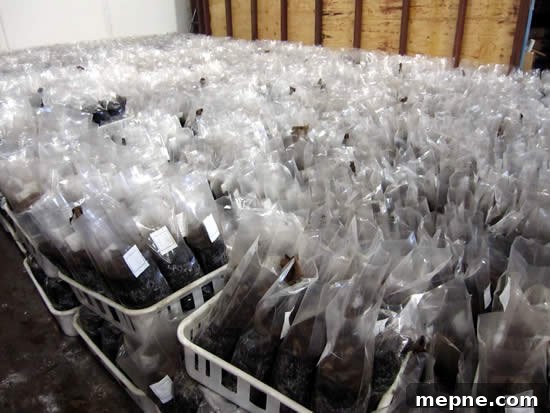
The incubation racks hold row after row of carefully tended bags. Surprisingly, despite the volume of production, the facility does not have a noticeable odor. The controlled environment keeps conditions optimal for steady mycelial growth until each unit is ready to ship.
When the bags are fully colonized they are placed into boxes for distribution. Home growers receive a product that is already well on its way, requiring only a little light and regular misting to trigger fruiting and produce plump, tasty oyster mushrooms. The final result is attractive, flavorful produce that connects consumers directly to a small-scale, circular food system.
On the tour I sampled the mushrooms and saw the full lifecycle—from discarded coffee to a boxed kit ready for kitchen counters. The final product is a testament to thoughtful design and sustainable thinking: reusable waste becomes food, and customers get a hands-on way to grow fresh mushrooms at home.
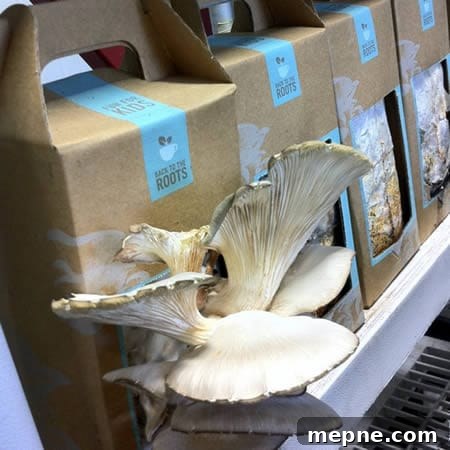
Many thanks to Nikhil Arora and the Back To The Roots team for the insightful tour. Their work makes it easy and enjoyable to grow oyster mushrooms at home while diverting significant amounts of organic waste from the landfill—an elegant example of urban agriculture and circular resource use.