Here’s practical, easy-to-follow advice for baking bread machine dough in a conventional oven.
How to Bake Bread Dough in the Oven
Last updated August 25, 2025 – Originally posted November 26, 2024
I use a bread machine for convenience: it mixes, kneads and can even bake. But many bakers prefer to use the machine only for making dough and then finish baking in a conventional oven. Baking bread machine dough in the oven gives you more control over loaf shape, crust color and overall presentation. Below are clear, practical steps and tips to get consistent, bakery-style loaves when you move dough from the machine to the oven.
Reasons for Baking Bread in the Oven
There are several good reasons to bake bread machine dough in an oven:
- Traditional loaf shape: Most bread machines use a vertical pan, which produces a tall, loaf-shaped on its side. Baking in a standard horizontal pan yields the familiar rectangular loaves you see in bakeries and supermarkets.
- No kneading-paddle holes: Bread machines leave small holes where the kneading paddle sat. Oven-baked loaves shaped from machine dough avoid those holes for a neater presentation—helpful when giving bread as a gift or serving guests.
- Custom crust and color: Oven baking often produces a crisper, browner crust. With an oven you can control steam, finish temperature and browning to suit your preference.
Bread Machine Cycles for the Basic Setting
Before moving dough to the oven, it helps to understand the main cycles most machines use on a basic or white bread setting. Machines vary, but the typical sequence is:
Rest/Preheat Cycle – Not all machines include this. When present, it stabilizes ingredient temperature and softens fats.
Knead Cycle – Mixes and kneads the dough to develop gluten, the network that gives bread structure and elasticity.
First Rise Cycle – Yeast becomes active, producing gas that causes the dough to expand. This build-up of gas and gluten development creates the dough’s initial volume.
Punch Down/Deflate Cycle – Also called a stir-down. This releases trapped gas and prepares the dough for subsequent rises and shaping.
Second Rise Cycle – Further fermentation improves texture and volume. Some machines include a third rise or extra punch-downs depending on the program.
Bake Cycle – The machine’s internal oven completes the loaf. When you plan to use a conventional oven instead, stop the machine after the dough cycle you choose (usually the end of the second rise or the dough setting) and proceed to shape and bake by hand.
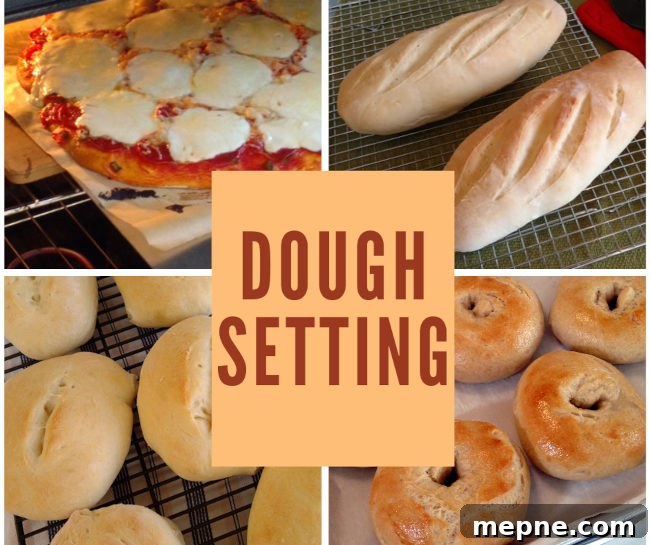
Note: This article focuses on finishing bread machine dough in the oven. If you are making rolls, bagels or shaped breads, follow dough-setting recipes and adapt the shaping and baking instructions for the oven.
General Instructions for Baking Bread Machine Dough in the Oven
Use your machine’s dough setting or the program that ends after the second rise. This provides a fully developed, risen dough that’s ready to shape and bake. Follow these steps for a two-pound loaf machine (adjust quantities and pan sizes for other machines):
- Prepare pans: For a 2-pound loaf you’ll usually need two 9×5 or 9×6 inch loaf pans. Grease or spray pans lightly with cooking oil.
- Deflate and divide: Turn the dough onto a lightly floured surface and punch it down to remove large air pockets. Divide the dough into equal portions if making more than one loaf.
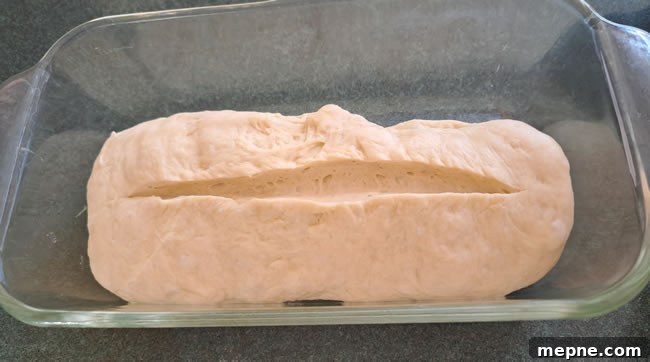
- Shape the loaves: Flatten each portion into a rectangle roughly the length of your pan and 1/2 to 3/4 inch thick. Roll each rectangle jelly-roll style, sealing seams and tucking ends. Place seam-side down in the prepared pan and press gently into the corners.
- Score the tops: Use a lame, sharp knife or razor to cut a shallow slit along the top—about 1/2 inch deep—to control expansion and create an attractive finish.
- Second rise (proof): Cover pans with a lightweight towel and let rise in a warm, draft-free spot until the dough is just above the top edge of the pan. This usually takes 45 minutes to 1.5 hours depending on room temperature and humidity. Avoid over-proofing; dough that rises more than an inch above the pan rim may collapse in the oven.
- Preheat the oven: Preheat before baking. A common starting point is 350°F for many sandwich-style breads, with baking times near 30 to 45 minutes. Check after 30 minutes and adjust as needed. Denser or enriched breads often bake longer or at a slightly lower temperature; lighter rustic loaves may need a hotter oven and steam for a crisp crust.
- Add steam for a crisper crust (optional): Place a shallow pan of hot water on the oven bottom or mist the oven with water during the first few minutes to improve crust color and crunch.
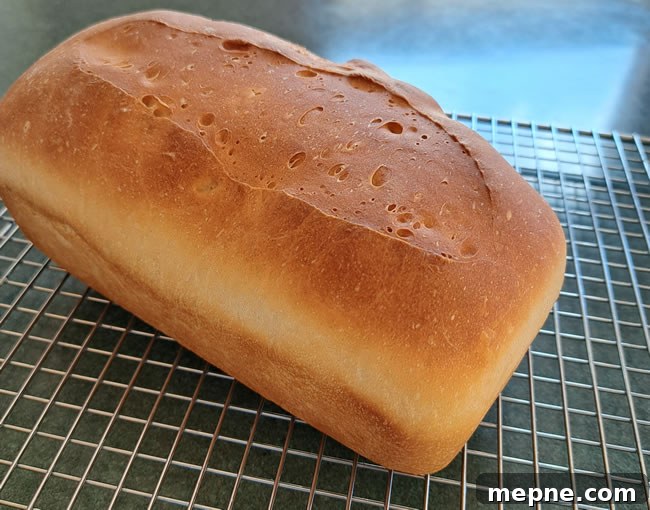
- Check for doneness: The crust should be firm and deeply browned. Tap the bottom of the loaf for a hollow sound. Many bakers also use an instant-read thermometer; many white breads are done around 190–200°F internal temperature, but visual and tactile checks are also reliable.
- Cool properly: Remove loaves from the pans and cool on a wire rack. Cooling allows steam to dissipate and the crumb to set, giving easier, cleaner slicing.
These steps will help you get consistent oven-baked loaves from bread machine dough. Adjust times and temperatures to suit the specific recipe and your oven, and with a little practice you’ll enjoy bakery-style results with the convenience of a bread machine for dough preparation.