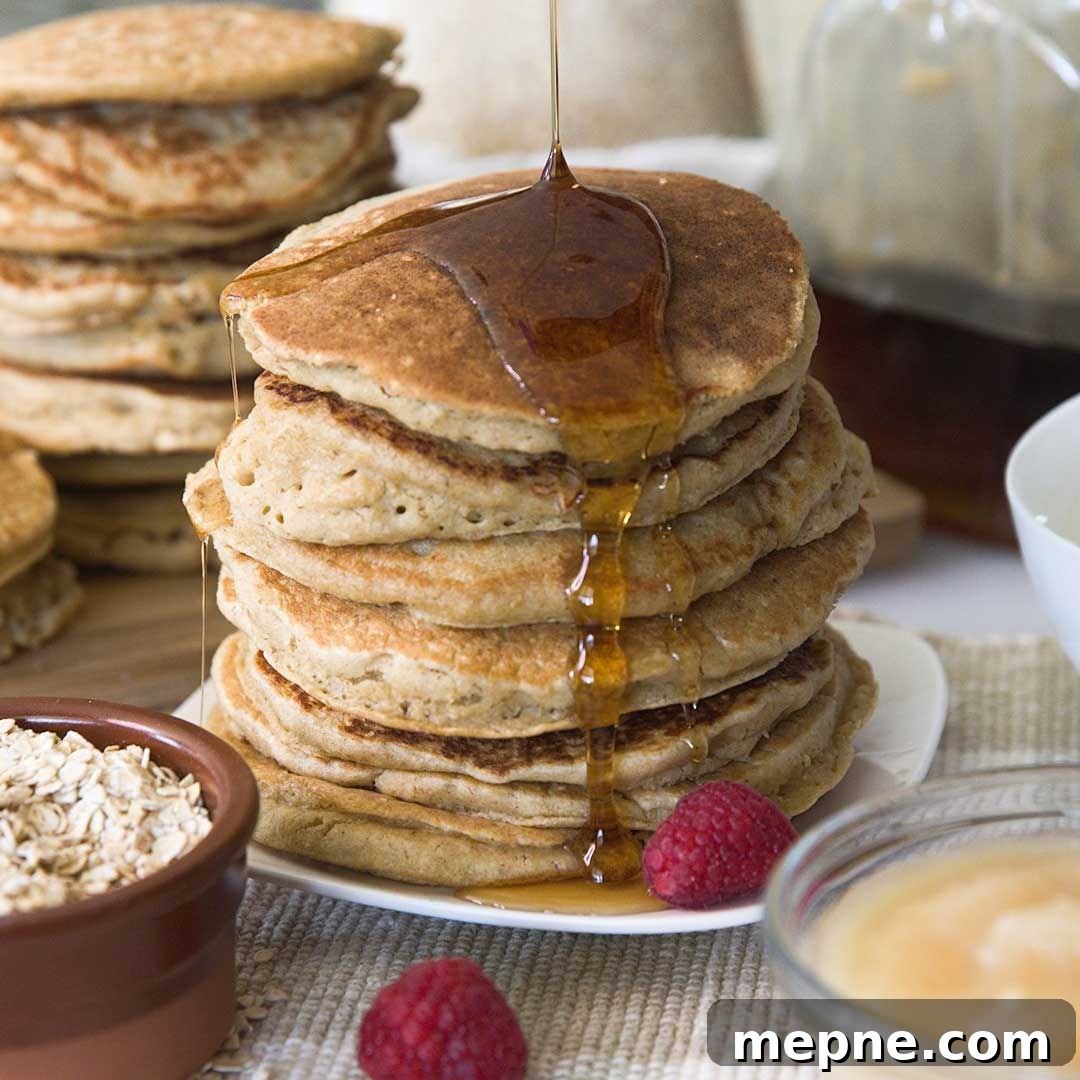
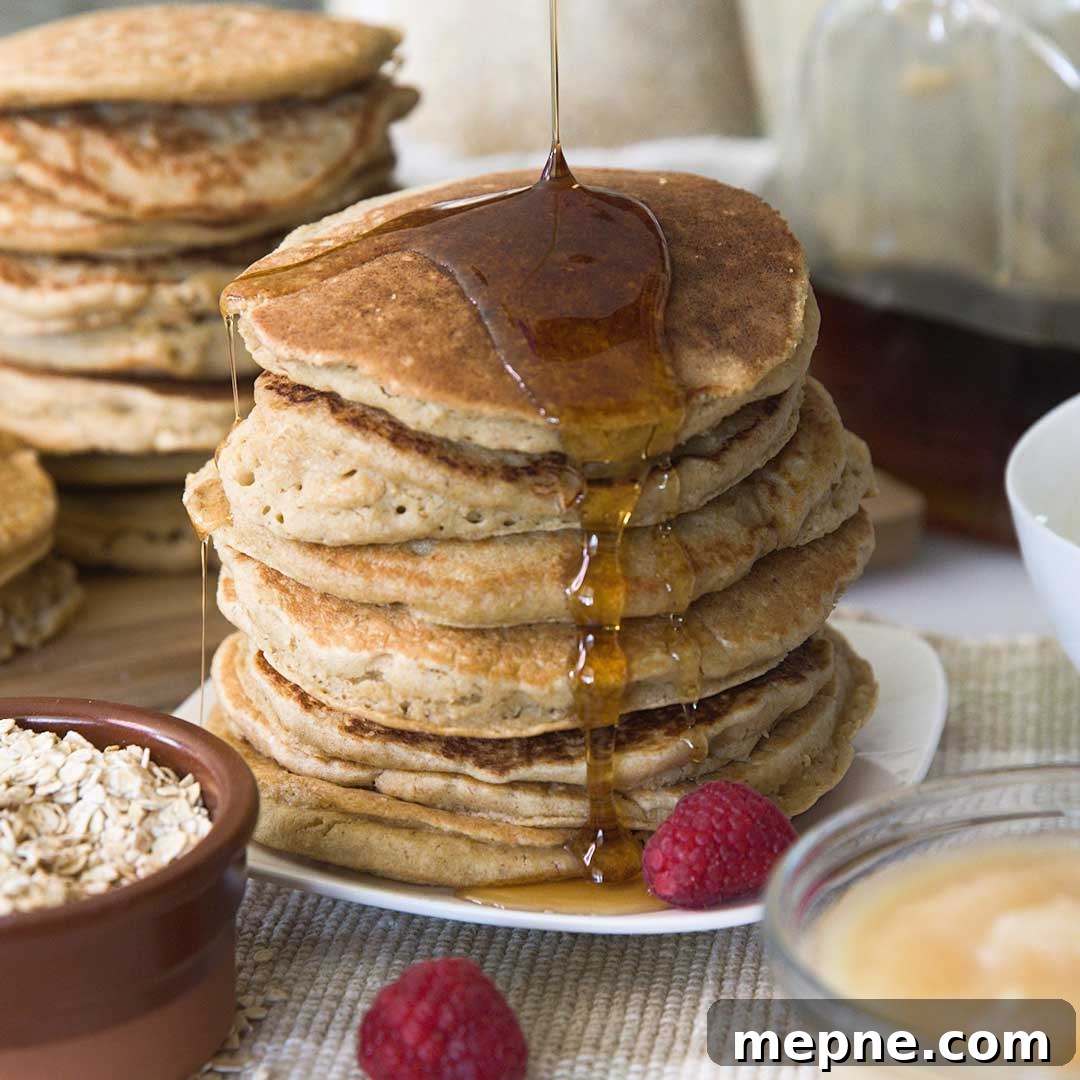
These gluten-free oat flour pancakes are made from finely ground oat flour, eggs, milk, maple syrup, baking powder, and a small splash of apple cider vinegar. The batter is intentionally a little looser than a classic wheat pancake batter so the oat flour can fully hydrate, which yields soft, tender pancakes rather than dry or gritty ones.
The method is straightforward and reliable. Oat flour can be temperamental, but this approach keeps the pancakes light without relying on starch blends or complicated techniques. The apple cider vinegar reacts with the leavening to help the batter rise and cook evenly, producing a tender center and golden exterior each time.
I often batch-prep these pancakes: my kids can take a stack from the fridge, pop them in the toaster, and enjoy a filling, wholesome breakfast. They reheat well and feel gentle on digestion, which is something I value for everyday meals.
Why These Oat Flour Pancakes Work
- Fully hydrated oat flour: Letting the batter rest allows the oat flour to absorb liquid, preventing a dry, chalky texture.
- Gentle lift from vinegar: A small amount of apple cider vinegar helps activate the baking powder for lighter, airier pancakes.
- Moisture-forward batter: Oat flour soaks up more liquid than wheat flour, so a slightly looser batter keeps pancakes tender instead of dense.
- Minimal, simple ingredients: No extra flours or starches required—this recipe relies on a tried technique for predictable results.
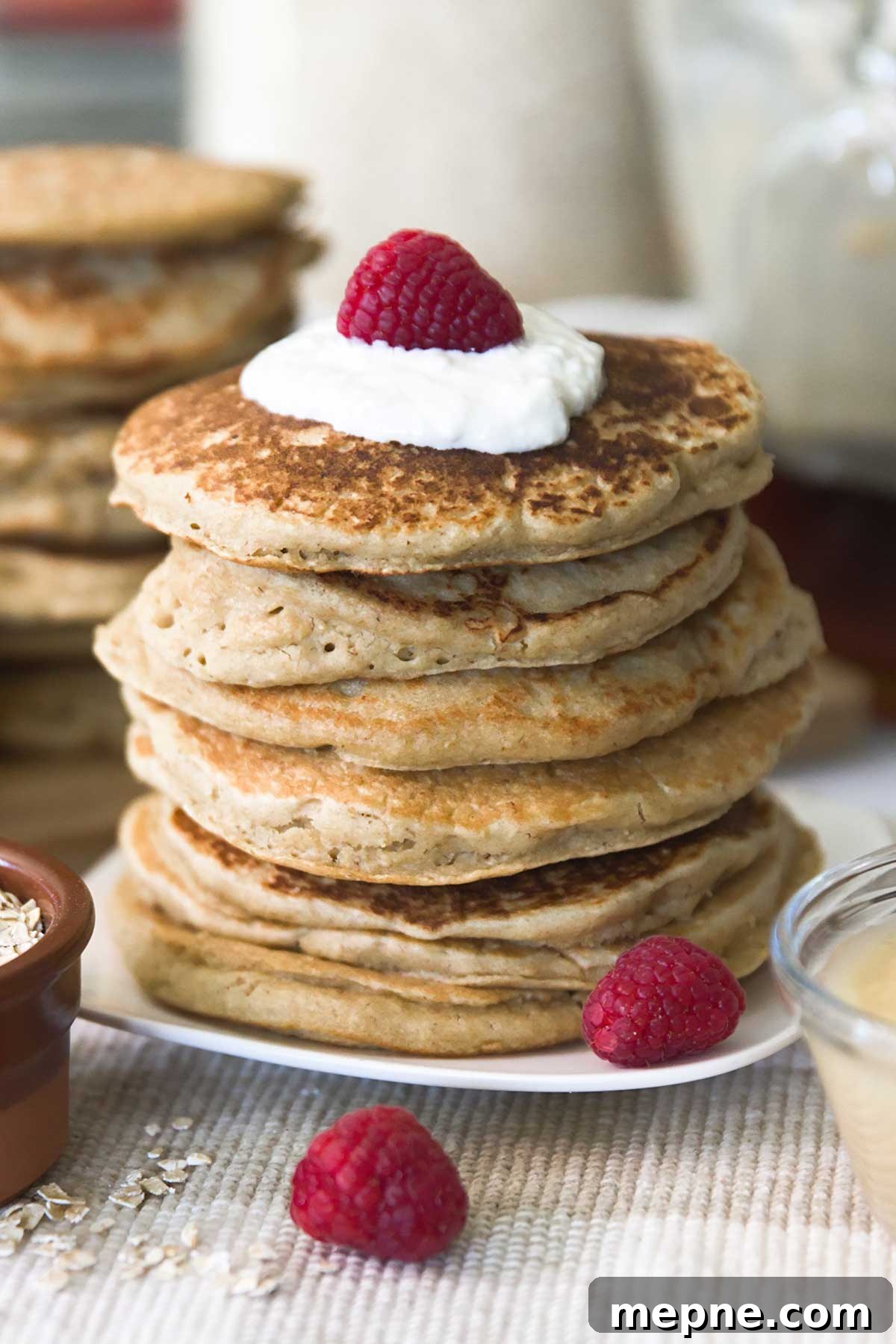
Ingredients & Substitutions
What you need to make these gluten-free oat flour pancakes
- Oat flour: Use store-bought gluten-free oat flour or make your own by blending rolled oats until very fine. If gluten-free status is important, choose certified gluten-free oats.
- Eggs: Provide structure and lift. For an egg-free version, substitute flax eggs (1 tablespoon ground flaxseed mixed with 3 tablespoons water per egg).
- Milk: Any milk works—almond, oat, soy, or dairy milk are all fine.
- Light olive oil: Or use another neutral oil, melted butter, or coconut oil for richness.
- Vanilla extract: Adds warmth and a touch of sweetness.
- Maple syrup: Provides natural sweetness. Honey or agave work as alternatives, or omit if you prefer less sweetness.
- Apple cider vinegar: Small amount improves rise and flavor; lemon juice can be used in a pinch.
- Baking powder and salt: Baking powder gives lift; salt balances the flavors.
Easily Adapt This Recipe for Different Diets
This pancake base is flexible. Because oat flour absorbs liquid differently from wheat flour, small texture changes will occur with substitutions, but the overall method still produces tender pancakes.
- Gluten-free: Use certified gluten-free oats and baking powder to keep the recipe safe for those avoiding gluten.
- Dairy-free: Swap in any plant-based milk and you won’t need any other changes.
Pro tip: If you discover a swap that works well for you, note it for next time—small adjustments like changing the milk or sweetener can make this recipe your go-to.
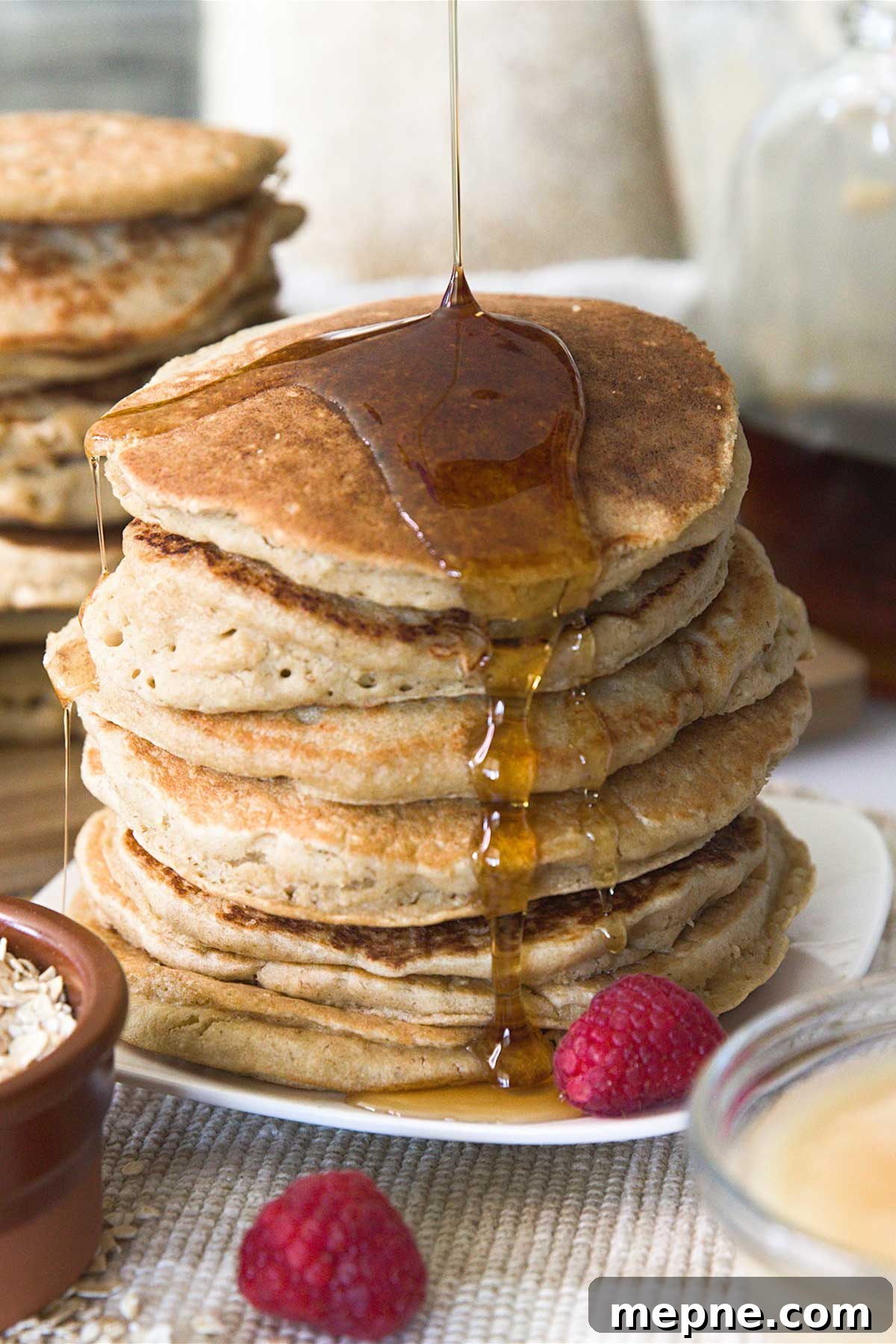
How to Make Fluffy Oat Flour Pancakes
Step 1: Make the batter
If you’re making oat flour at home, blend rolled oats until they are very finely ground, then measure 3 cups of oat flour.
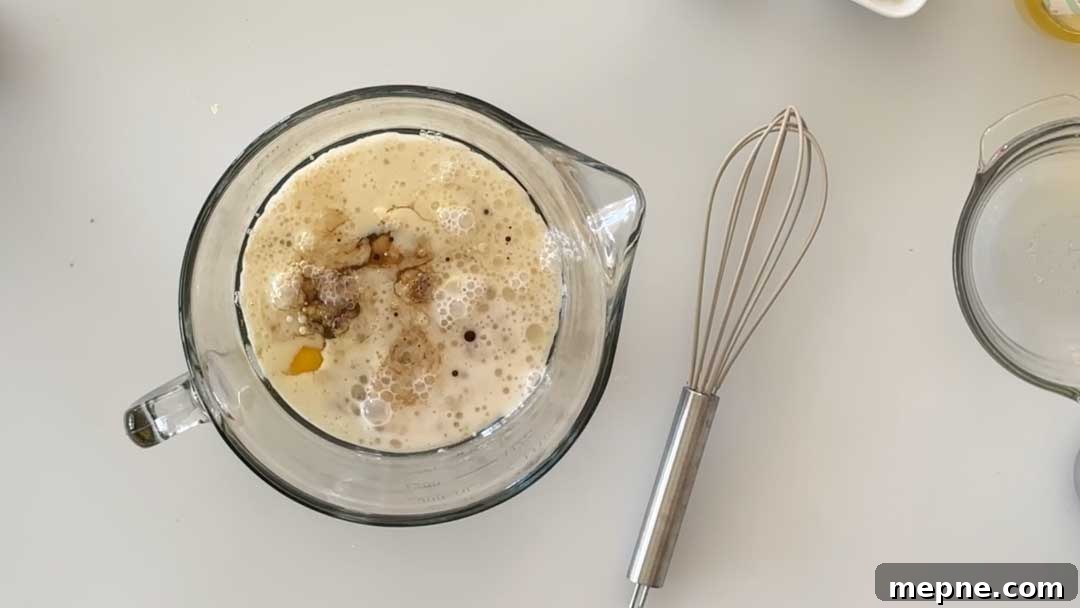
In a large bowl, whisk together 1½ cups milk (any type), 4 eggs, ¼ cup light olive oil (or melted butter), ¼ cup maple syrup, 2 teaspoons vanilla, and 2 teaspoons apple cider vinegar until smooth. Add 3 cups oat flour, 1½ tablespoons baking powder, and 1 teaspoon salt. Whisk until there are no dry pockets of flour.
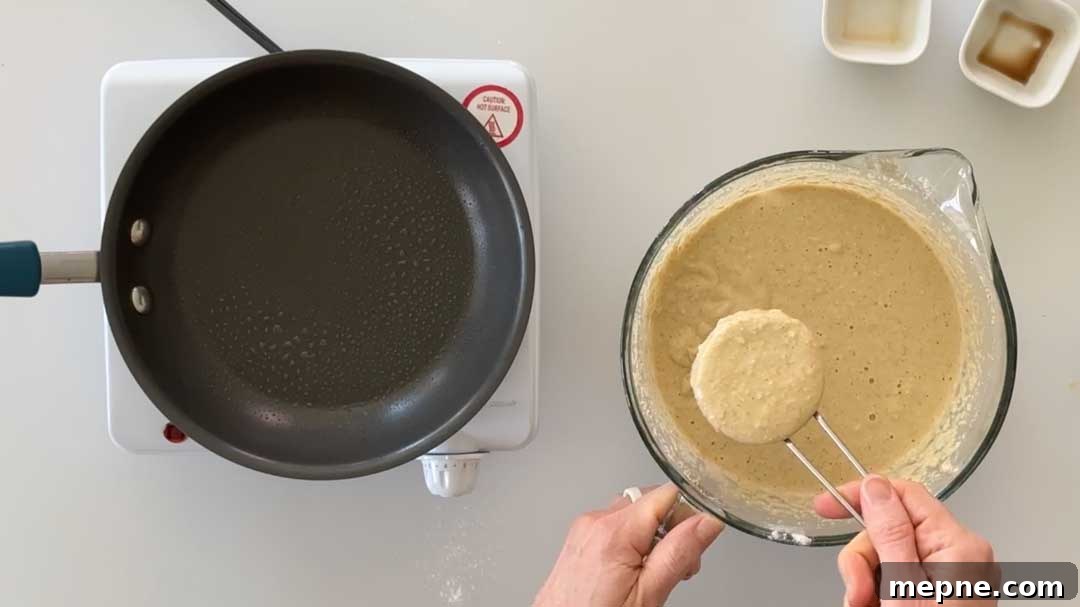
Let the batter rest for 10 minutes. This short rest gives the oat flour time to fully hydrate and results in a softer finished pancake.
Step 2: Cook the pancakes
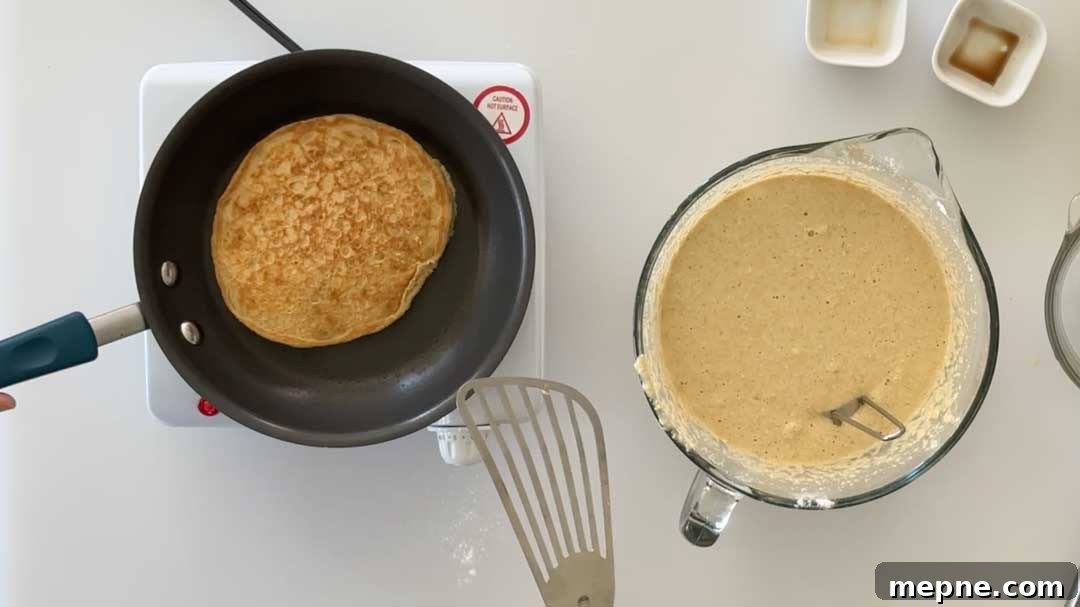
Heat a non-stick skillet or griddle over medium-low heat and lightly grease it. Scoop about ⅓ cup of batter per pancake and gently spread into a circle. Cook until bubbles form across the surface and the edges look set, then flip and cook until golden and cooked through.
Because oat flour browns faster than wheat, keep the heat moderate so the centers cook without the outside over-browning. Repeat with the remaining batter.
Step 3: Serve or store
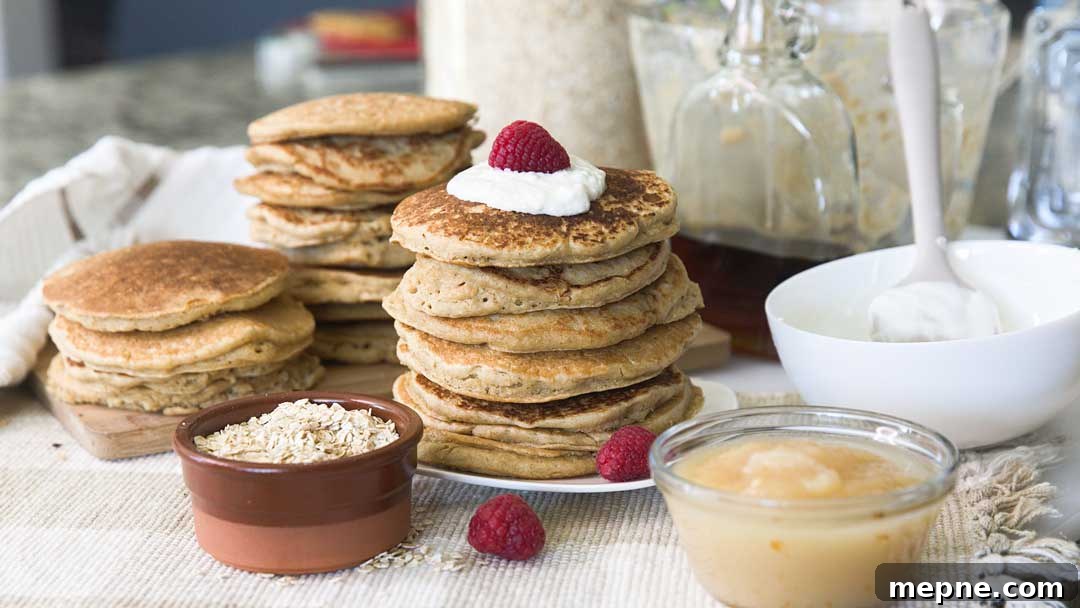
Serve the pancakes warm with your favorite toppings. They also store well: cool completely, stack with parchment paper between layers, and refrigerate for up to 5 days or freeze for longer storage. Reheat in a toaster or microwave.
My Expert Recipe Tips
- Expect the batter to thicken: After resting, the batter will be thicker. Stir in a little extra milk if it becomes too stiff to pour.
- Use gentle heat: Cook on medium-low so the pancakes brown slowly and cook through without burning.
- Grind oat flour fine: If making oat flour at home, blend until silky smooth. A coarse grind can make the texture grainy, especially after cooling.
- Flip at the right time: Wait until bubbles form and edges look set before flipping to avoid tearing the pancake.
Delicious Serving Suggestions
- Pure maple syrup or honey: A classic topping that complements the oat flavor.
- Nut butter: Almond or peanut butter adds creaminess and protein; warm slightly for easy drizzling.
- Fresh fruit: Berries, sliced bananas, or stewed fruit add brightness and natural sweetness.
- Greek yogurt: A spoonful brings tang and extra protein.
- Mix-ins: Fold in a small handful of chocolate chips or blueberries for variety.
Frequently Asked Questions
How do I store oat flour pancakes?
Store in an airtight container in the fridge for up to 5 days or freeze for longer. Stack pancakes with parchment between layers to prevent sticking. Reheat from frozen in a toaster or microwave.
Can I freeze oat flour pancakes?
Yes. Let them cool completely, layer with parchment, and freeze. They reheat evenly and maintain texture when toasted or microwaved.
Why are my oat flour pancakes dense instead of fluffy?
Density usually comes from skipping the rest period or cooking at too high a heat. Allowing the batter to hydrate and cooking on medium-low reduces density.
Can I make oat flour pancakes with homemade oat flour?
Yes, but blend the oats until very fine. A coarse grind can lead to a grainy mouthfeel, especially as the pancakes cool.
Do oat flour pancakes need a batter rest?
Yes—resting for at least 10 minutes helps the oat flour absorb liquid, improving texture and helping them cook more evenly.
Why do oat flour pancakes brown faster than regular pancakes?
Oats caramelize more quickly than wheat flour, so they brown faster. Lower heat prevents the outside from darkening before the middle is cooked.
Recipe
Fluffy Oat Flour Pancakes (Gluten-Free)
Servings: 16 pancakes | Prep: 10 mins | Cook: 30 mins | Total: 40 mins
Dairy-free option available. Naturally sweetened.
Wet Ingredients
- 1½ cups milk of choice (almond, oat, dairy)
- 4 eggs (or 4 flax eggs for vegan)
- ¼ cup light olive oil (or melted butter/coconut oil)
- ¼ cup maple syrup (optional sweetener)
- 2 teaspoons vanilla extract
- 2 teaspoons apple cider vinegar
Dry Ingredients
- 3 cups oat flour (finely ground)
- 1½ tablespoons baking powder
- 1 teaspoon salt
Instructions
- If making oat flour at home, blend rolled oats until very fine, then measure 3 cups.
- In a large bowl, whisk milk, eggs, oil, maple syrup, vanilla, and apple cider vinegar until smooth.
- Add oat flour, baking powder, and salt. Whisk until combined and no dry streaks remain. Let batter rest 10 minutes.
- Heat a non-stick skillet or griddle over medium-low and lightly grease. Scoop ~⅓ cup batter per pancake and spread gently.
- Cook until bubbles form and edges set, then flip and cook until golden and cooked through. Repeat with remaining batter.
- Serve warm or cool and store in the fridge or freezer.
Notes
- Expect the batter to thicken during the rest; add a splash of milk if needed to reach desired consistency.
- Use medium-low heat to avoid premature browning.
- For the smoothest texture when making oat flour at home, blend until powdery and free of larger bits.
- Wait for bubbles and set edges before flipping to avoid tearing.
Nutrition (approx. per pancake)
Calories: 154 kcal • Carbohydrates: 18 g • Protein: 5 g • Fat: 7 g • Fiber: 1 g • Sugar: 3 g