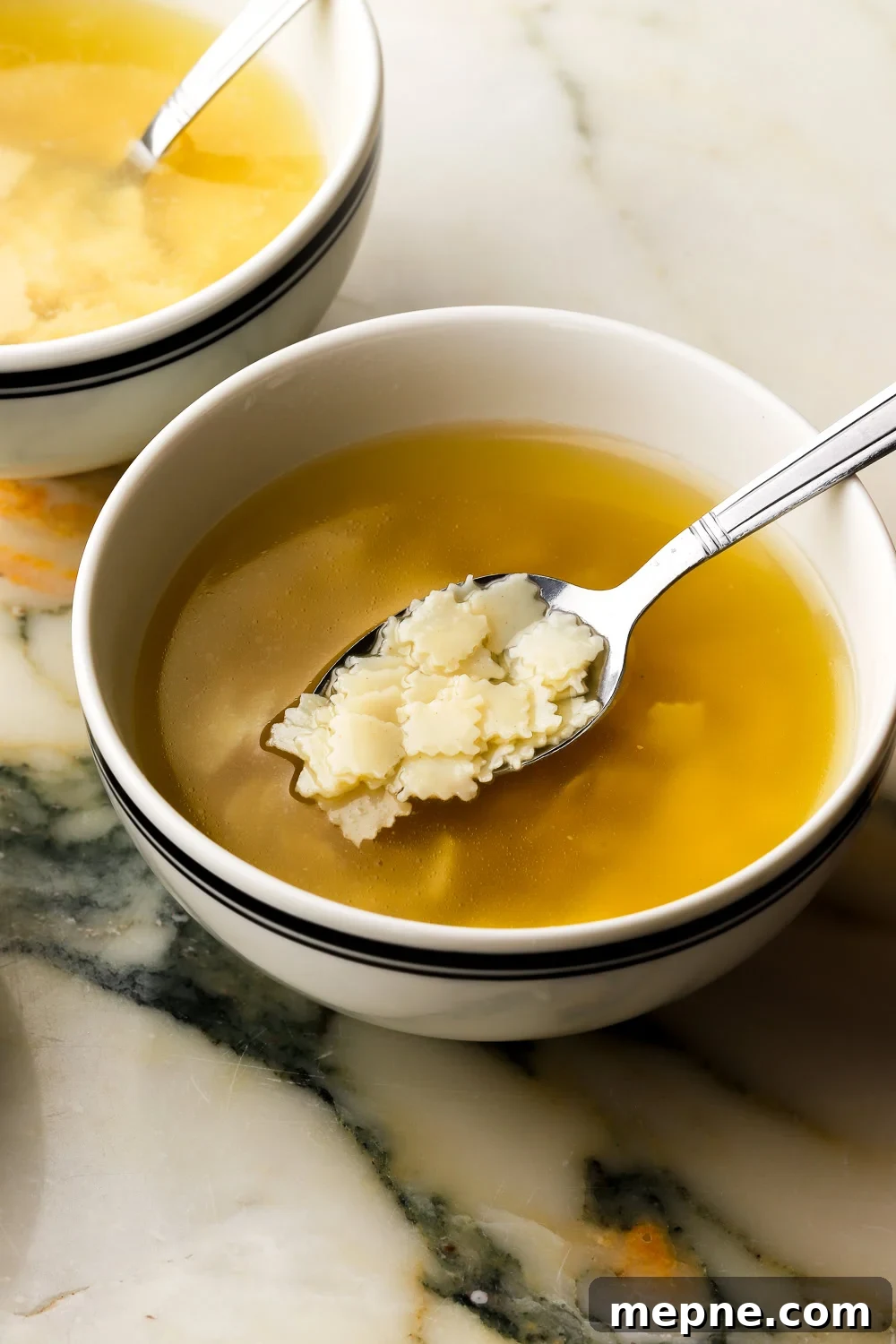
This Romanian chicken soup — sometimes called Sunday soup — is a dish I grew up with. My mother made it almost every Saturday so we could enjoy it for Sunday lunch, often paired with her famous Tocăniță. It has the same comforting qualities as American chicken noodle soup, but the real star is the slow-simmered homemade chicken broth. A whole chicken is cooked with carrots, celery, onions and parsnip until the liquid becomes rich, golden and deeply flavored.
Ingredients You’ll Need
There are a few ingredients that give this soup its regional character, but you won’t need anything exotic to make a delicious version at home. The flavor comes from time and a good, slowly made broth.
Chicken: A whole chicken yields the best, most complex broth because of the bones and skin. If you don’t want to use a whole bird, include a mix of bone-in dark and white meat so the broth keeps that depth of flavor.
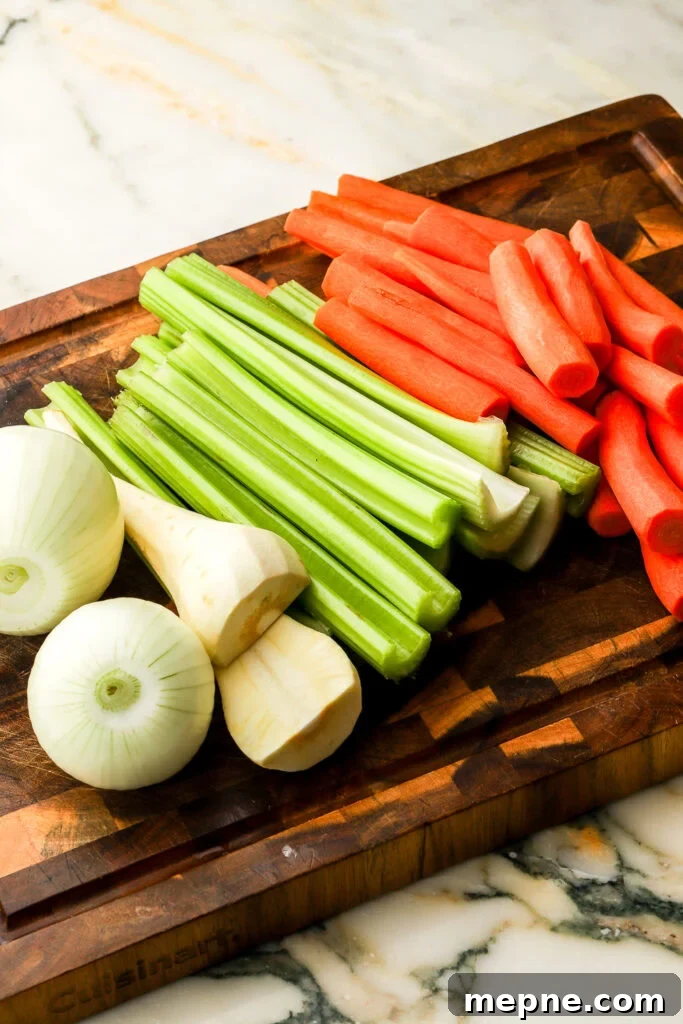
Vegetables: Carrots, celery, sweet onion and parsnip form the classic base. They contribute sweetness and body to the stock; feel free to add more vegetables if you prefer, but this is the traditional set.
Seasoning: Simple salt and pepper work well. If you can find Vegeta (a common Eastern European seasoning), it adds an extra savory note; otherwise increase the salt to taste and the broth will still be excellent.
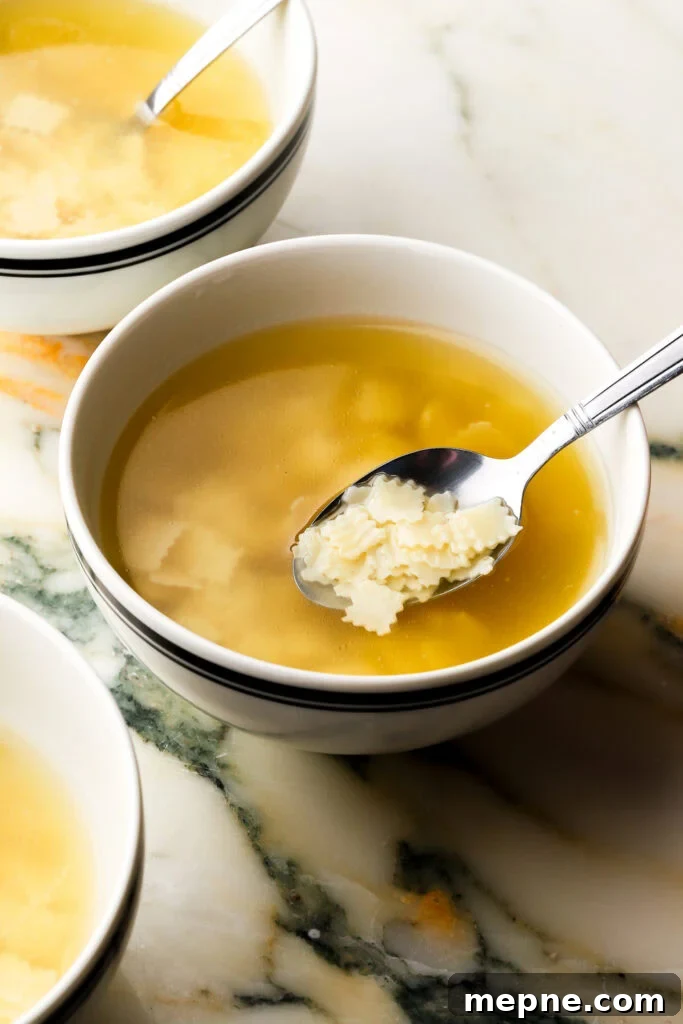
Noodles: Homemade thin egg noodles are traditional and give the most authentic texture, but small store-bought egg noodles or thin soup-style pastas work fine. Look for tiny egg noodles, angel-hair shaped soup noodles, or small spaetzle-like pieces if you prefer a chunkier noodle.
Herbs: Lovage (leuștean) is the classic herb used in Romanian chicken soup; it tastes a bit like a cross between celery and parsley. Fresh lovage can be hard to find, so parsley or celery leaves make a good substitute.
How To Make It
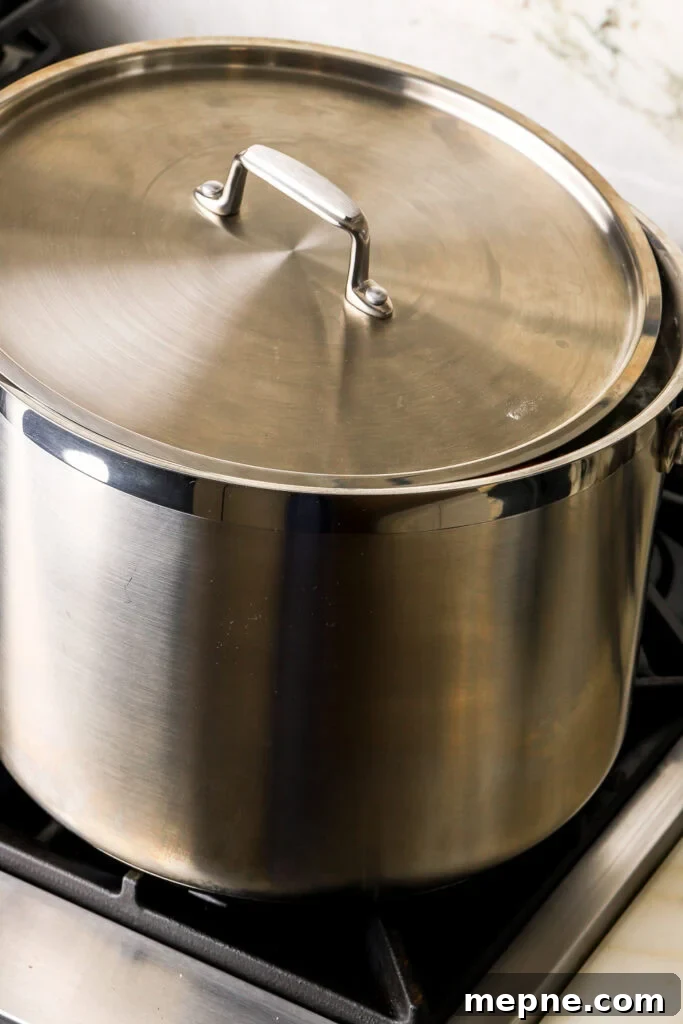
Making a deep, clear chicken broth is straightforward but requires patience. You’ll need a large pot (about 16–20 quarts) if you’re using a whole chicken and want a big batch. For smaller batches, see the notes below.
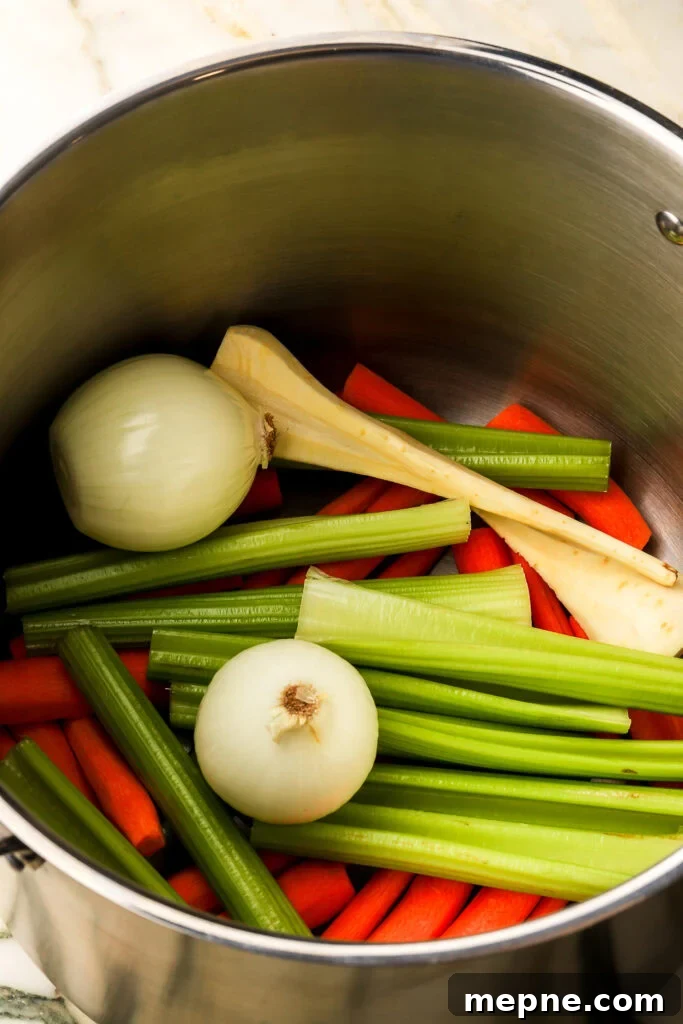
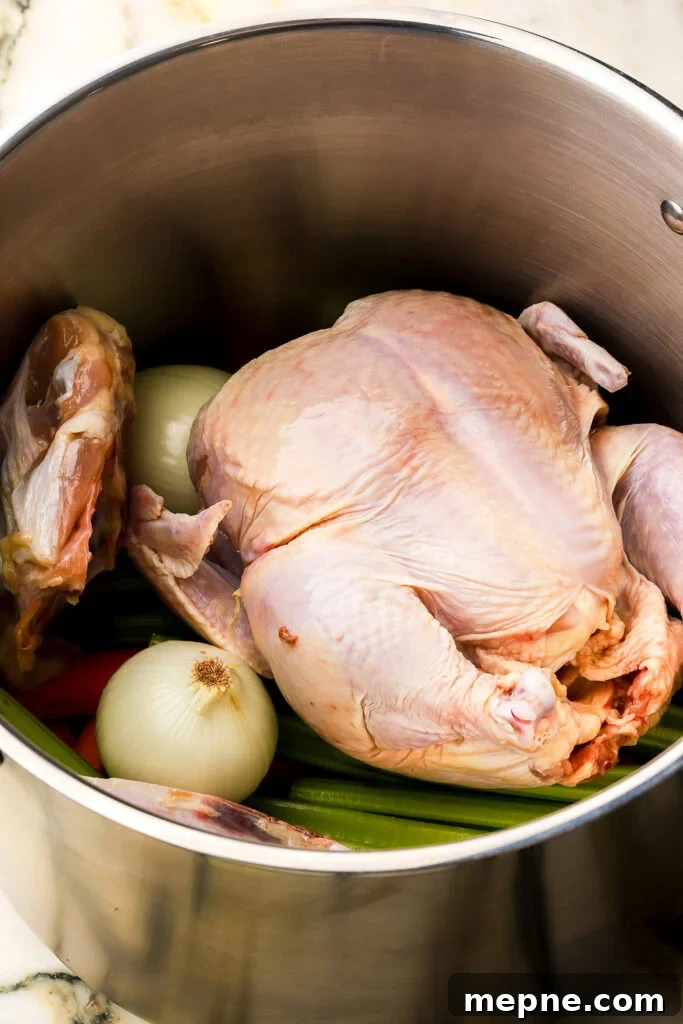
- Trim and clean the vegetables. Leave slender carrots whole; halve or quarter larger carrots and parsnips lengthwise so they cook evenly. Split celery stalks lengthwise and remove the leaves. Peel the onion but keep it whole.
- Place the vegetables in the bottom of the pot and set the whole chicken on top.
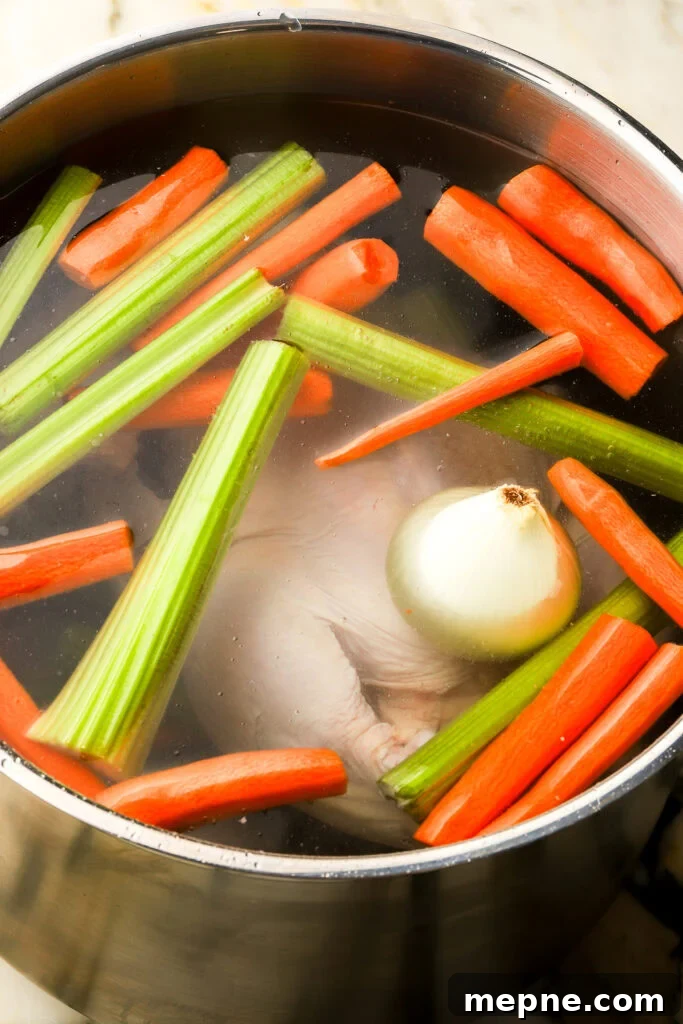
- Fill the pot with cold water. If the pot becomes heavy, fill partway, move it to the stove, and finish filling using a pitcher.
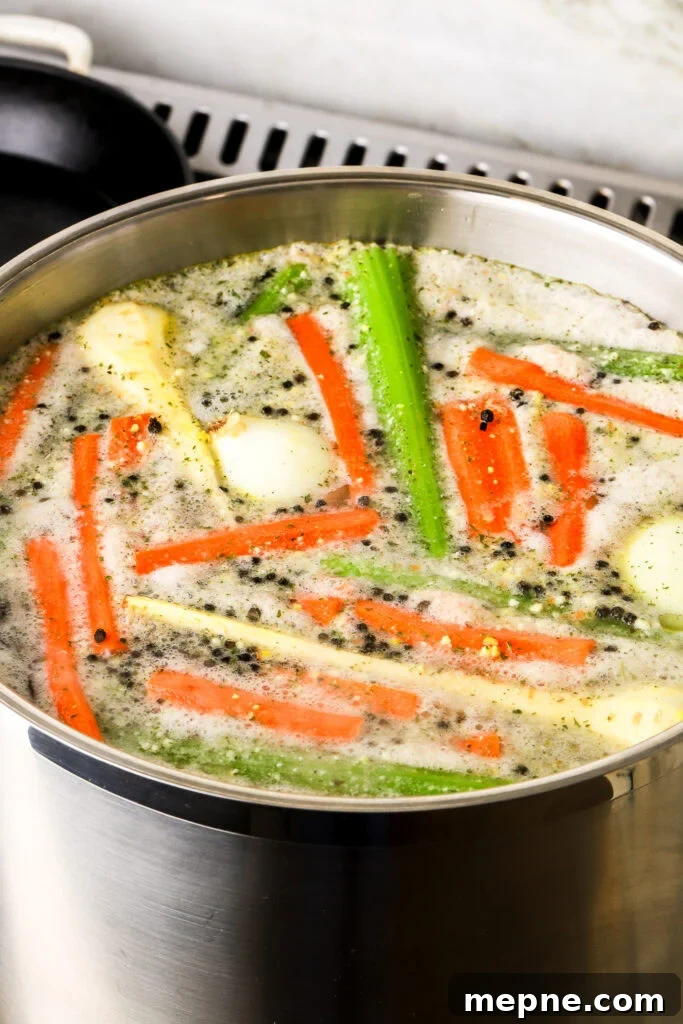
- Add salt and Vegeta (if using) and stir to distribute the seasoning.
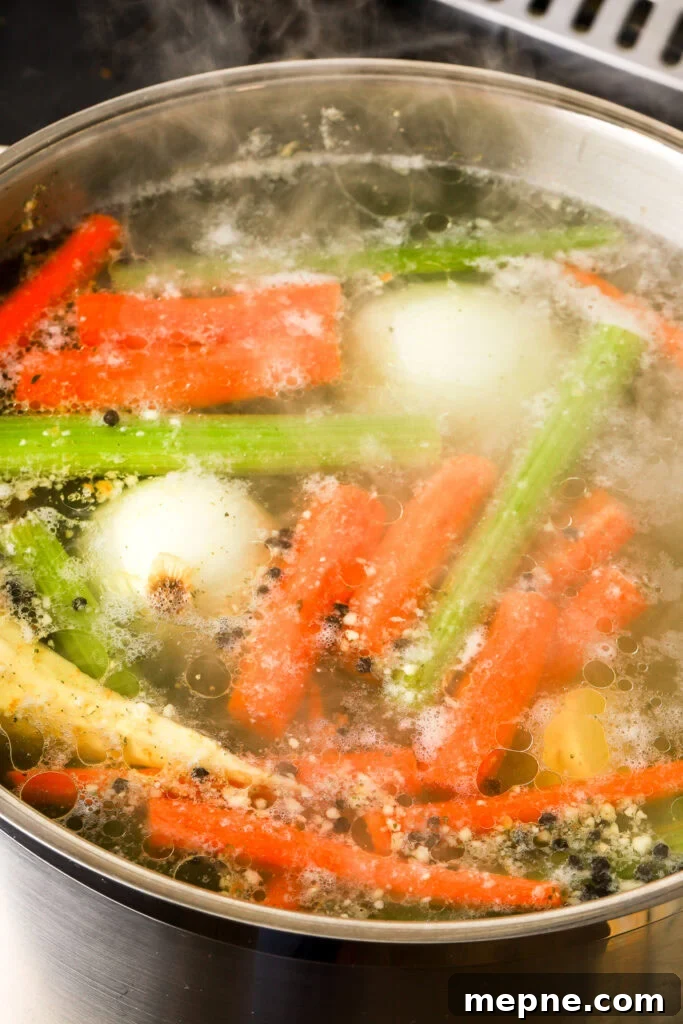
- Bring the pot up to a boil over high heat. When boiling, lower the heat to a gentle simmer. Skim off the foam and impurities that rise to the surface with a large spoon.
- After skimming, add whole peppercorns. I add them after skimming to avoid removing them with the foam.
- Simmer gently for 3–4 hours. Stir occasionally and remove any additional foam or excess fat. If liquid reduces too much, add a little water and continue simmering until the broth reaches a deep golden color.
- When the broth is ready, the meat should pull easily from the bones and the carrots should be tender but not mushy. Taste and adjust salt as needed.
- Turn off the heat and let the pot cool for an hour or two before straining. Remove large pieces of chicken and vegetables first — I save the chicken and carrots and discard the cooked onion, celery and parsnip skins if they are overcooked.
- Strain the broth through a fine-mesh sieve into another pot or into jars for storage.
- To serve, bring the strained broth to a boil and cook noodles for the time suggested on their package — usually 1–5 minutes, depending on size. For thin homemade-style noodles, 1–2 minutes is often enough; chunkier egg pastina may take closer to 5 minutes.
- Turn off the heat, add a few leaves of lovage or parsley, cover and let sit 5–10 minutes. Remove the herb leaf and serve with freshly cracked black pepper.
Tip for smaller batches: use 2–4 bone-in chicken breasts and 2–4 thighs to fit a smaller pot while still producing a rich broth.
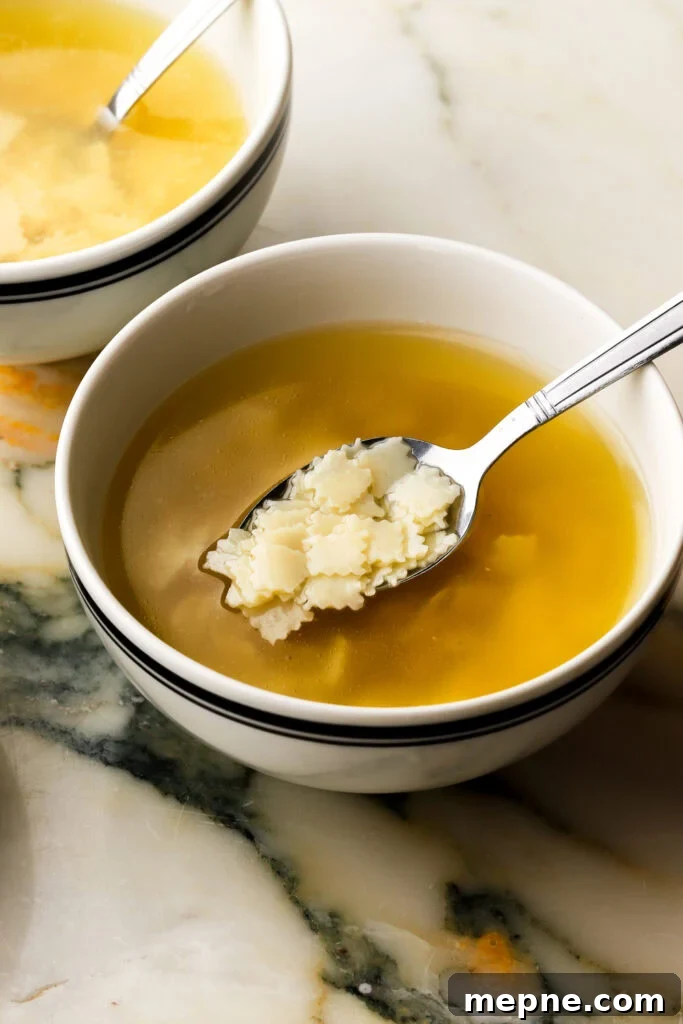
Noodle To Soup Ratio
For a balanced, broth-forward soup I use about 40 grams (roughly 1/4 cup) of small egg noodles for every 2 cups of broth. The exact volume depends on noodle shape, so weighing noodles is more reliable. This ratio keeps the soup broth-heavy while still giving you noodles in every bite.
If you prefer more noodles, increase to about 3/4 cup per 2 cups of broth, but remember noodles absorb broth over time. For leftovers, store noodles and broth separately when possible.
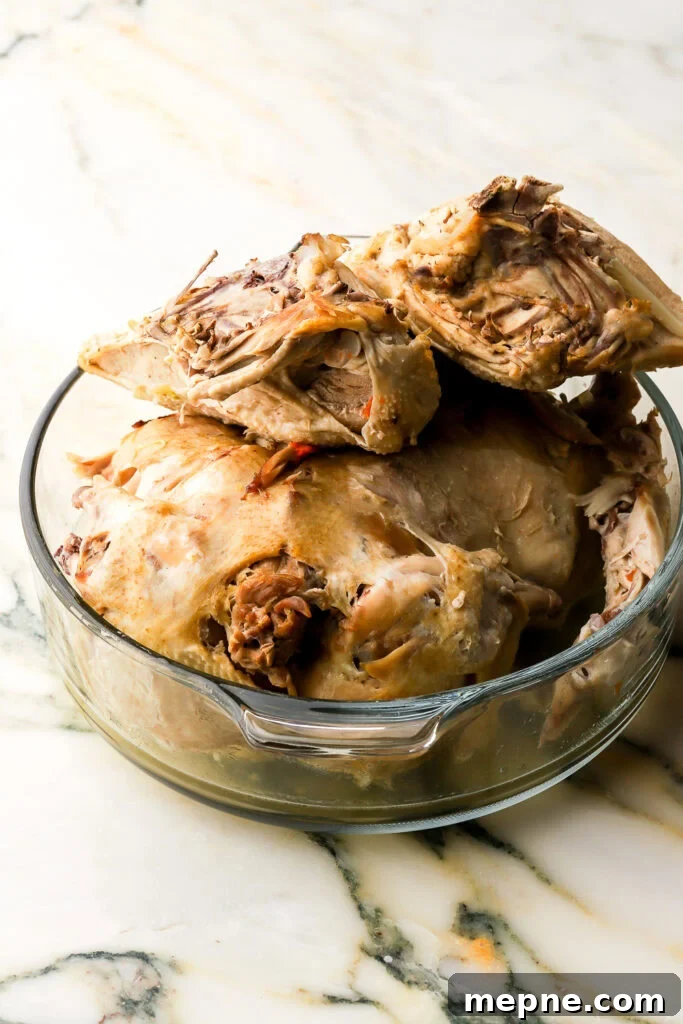
What To Do With The Chicken & Veggies
After straining, I save the cooked chicken and the carrots. The dark meat is especially good served right away, either on its own or added to individual bowls. The white meat works well shredded or finely diced in chicken salad because it can be a bit drier after long simmering.
Discard the overcooked onion, celery and parsnip scraps, or compost them. Store any leftover chicken and carrots in an airtight container in the refrigerator and use within a few days for best flavor.
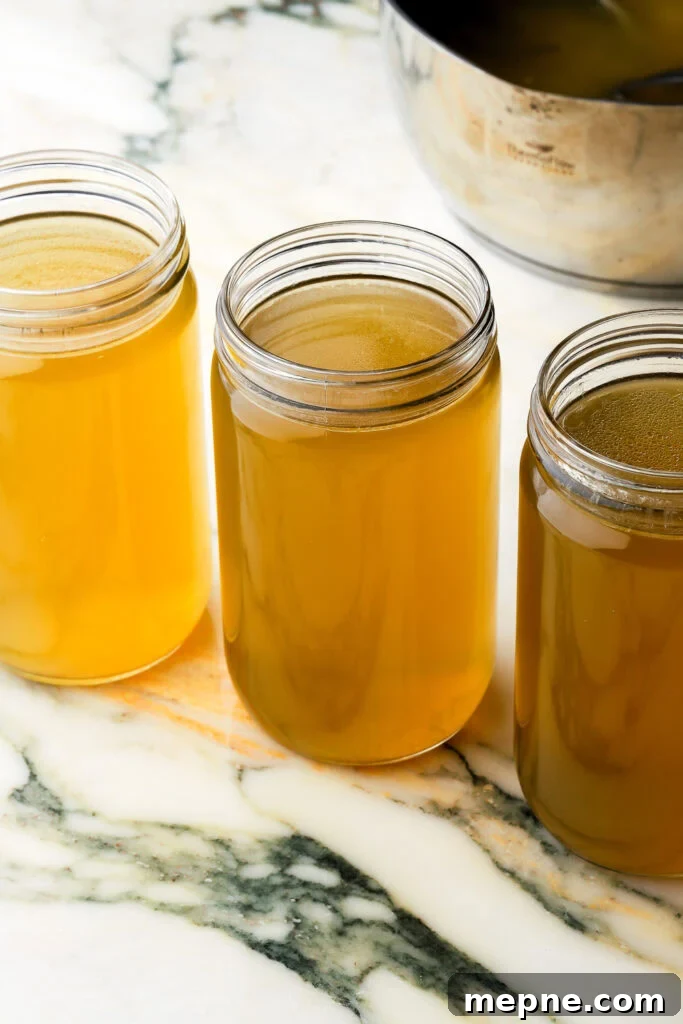
Serving & Storing
This soup is usually served as a light starter, though my family often happily eats multiple bowls. As a guideline, plan on about 2 cups of broth per person for a generous single serving when served ahead of a meal.
I freeze most of the broth in glass or plastic containers, leaving about 1/8–1/4 inch of headspace so the liquid can expand. Thaw jars in the refrigerator overnight before reheating. If you plan to keep leftovers, store broth and noodles separately; soup with noodles will keep in the fridge for about 4 days and will begin to sour if it goes bad.
If you try this recipe, I’d love to hear how it turned out. Leave a comment with questions or a quick rating if you enjoyed it. Happy cooking and have a blessed day.
Love, B
Equipment
- 1 large 16–20 quart pot
- 1 large fine-mesh sieve
- 1 wooden spoon
Ingredients (Large Batch Chicken Broth)
- 1 lb carrots, peeled
- 1 lb celery, cleaned
- 1 large onion, whole
- 1 large parsnip, peeled
- 1 whole chicken
- a lot of water (enough to cover chicken and vegetables)
- 1–2 tbsp fine sea salt (adjust to taste)
- 3–4 tbsp Vegeta (optional)
- 2–3 tbsp black peppercorns
Soup Ratio (per pot)
- 1920 mL chicken broth (or scale as needed)
- 160 g tiny egg noodles (adjust by preference)
Method
- Prepare and place vegetables in the pot, set the chicken on top and cover with cold water.
- Add salt and Vegeta, bring to a boil, then reduce to a simmer.
- Skim any foam, add peppercorns, and simmer gently for 3–4 hours.
- Cool slightly, remove large pieces, then strain the broth through a fine sieve.
- To serve, boil the strained broth, cook noodles briefly, turn off heat, add lovage or parsley, cover for 5–10 minutes and serve with cracked black pepper.
Notes
The seasoning range depends on pot size and water volume—taste and adjust after simmering. The typical noodle-to-broth ratio is about 40 g noodles per 2 cups broth for a broth-forward bowl. Store broth separately from noodles for longer-lasting leftovers.
Nutrition (per serving)
Calories: 182 kcal • Carbohydrates: 31 g • Protein: 9 g • Fat: 3 g • Sodium: 1777 mg