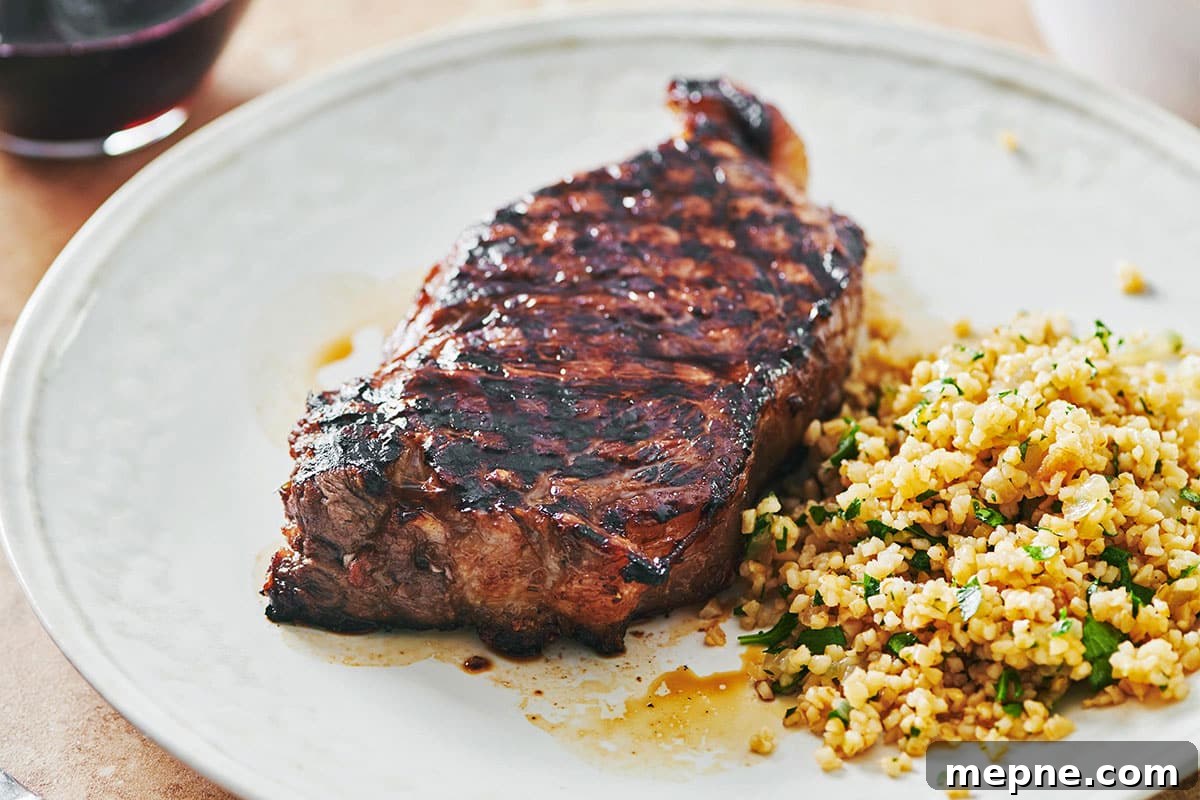
Getting restaurant-quality cross-hatch grill marks is straightforward when you use the right technique. Position the steak diagonally to the grates—about a 45-degree angle—so the sear lines run across the meat at an angle. With the steak rotated and flipped at the right moments, you create the attractive cross-hatch pattern that signals a well-seared surface.
Thickness matters. Thick steaks give you more room to develop a deeply caramelized crust while keeping the interior juicy and pink. For thinner cuts (about 1 1/4 inch or less), a single flip is usually enough; flipping multiple times risks overcooking the center while you chase perfect exterior color.
This cross-hatch method is ideal for thick cuts cooked over direct, high heat—think New York strip, filet mignon, ribeye, or top sirloin. It also works well for meaty fish steaks such as swordfish or tuna. Always dry the steak, oil the grates, and preheat the grill so you get clean, dark sear lines without sticking.
For doneness, aim for your target internal temperature and remember that carryover cooking will raise the temperature by several degrees while the meat rests. A common rule is to remove steaks about 5°F (3°C) below your desired final temperature, then rest them for a few minutes so juices redistribute and the internal temperature evens out.
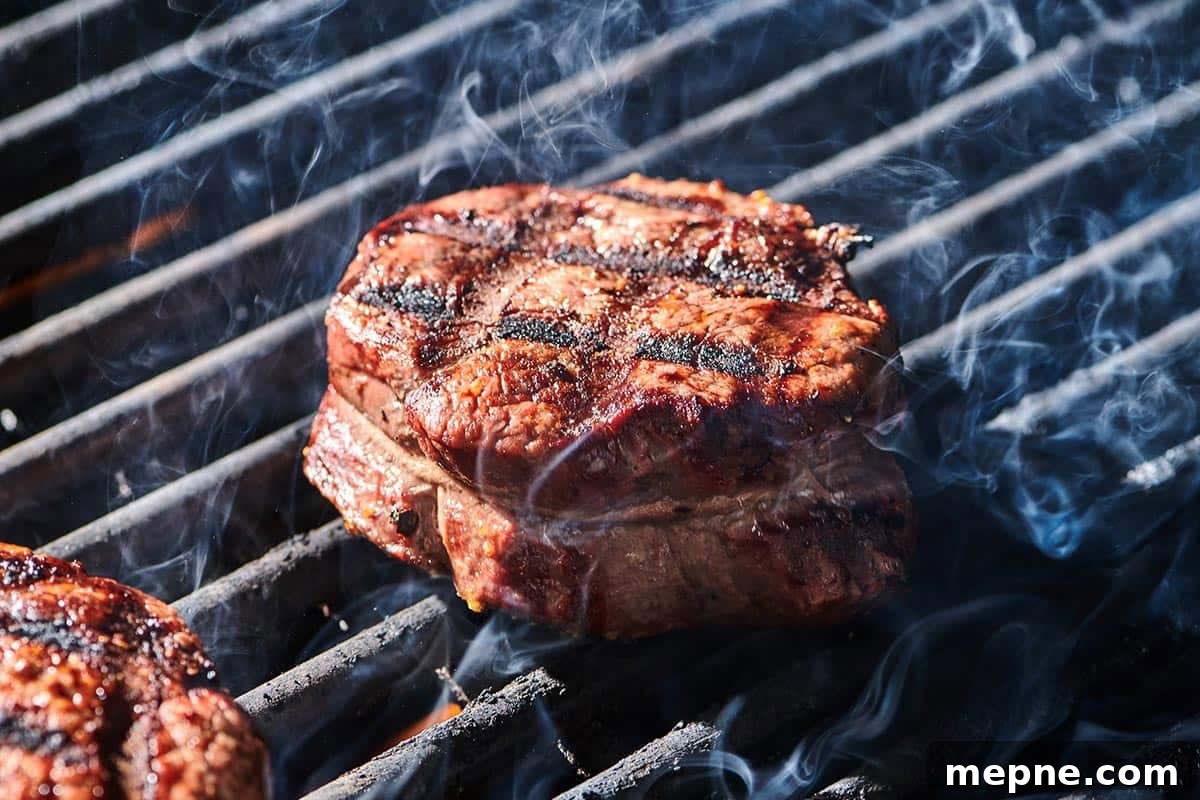
How to Get Cross-Hatch Marks on Grilled Steak
- Clean and oil the grill grates thoroughly. A well-oiled grate prevents sticking and helps create crisp, dark sear marks.
- Bring the steak to room temperature while you preheat the grill to high heat (roughly 450–500°F). Pat the steaks dry with paper towels so surface moisture doesn’t steam the meat and prevent a good sear.
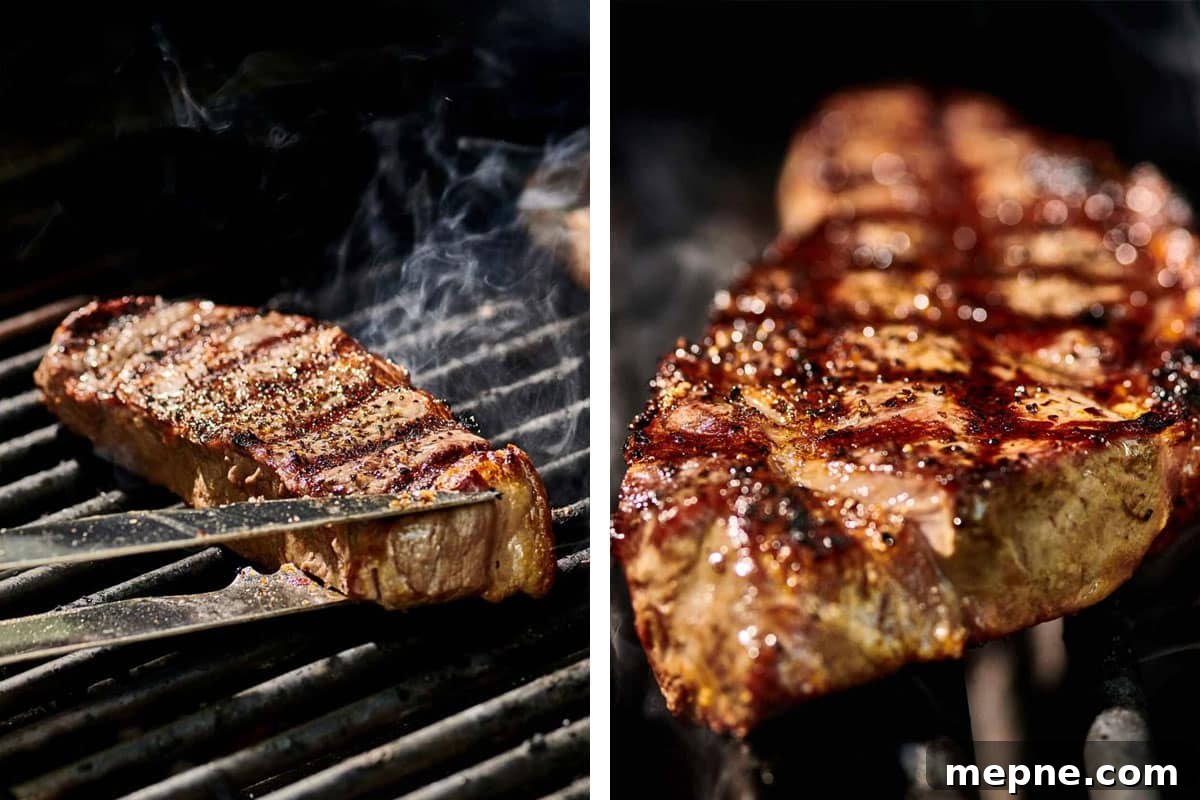
- Place the steak on the grill at a 45-degree angle to the grates. Let it sear without moving it for a few minutes so a solid mark forms. Then rotate the steak a quarter turn (about 90 degrees) so the sear lines cross and form one half of the cross-hatch pattern. This creates a square pattern at an angle to the grain of the meat.
- Flip the steak and repeat the same process on the other side: set it at a 45-degree angle, allow a few minutes to sear, then rotate a quarter turn to complete the cross-hatch on that face. For a 1.5-inch steak over high heat, expect roughly 2–3 minutes per position before rotating, though exact timing depends on the cut and grill.
- Remove the steaks from the grill and let them rest for about 5 minutes on a cutting board before slicing or serving. Resting lets the juices settle so each slice stays moist.
Grilling Smarts
If the steak reaches the desired doneness before you complete a third flip, don’t worry. A clear cross-hatch on the top surface looks great when you plate the steak with that side up. You can finish cooking the other side without adding marks that won’t be seen. Prioritize proper doneness and resting over perfect symmetry of grill lines.
Favorite Grilled Steak Recipes
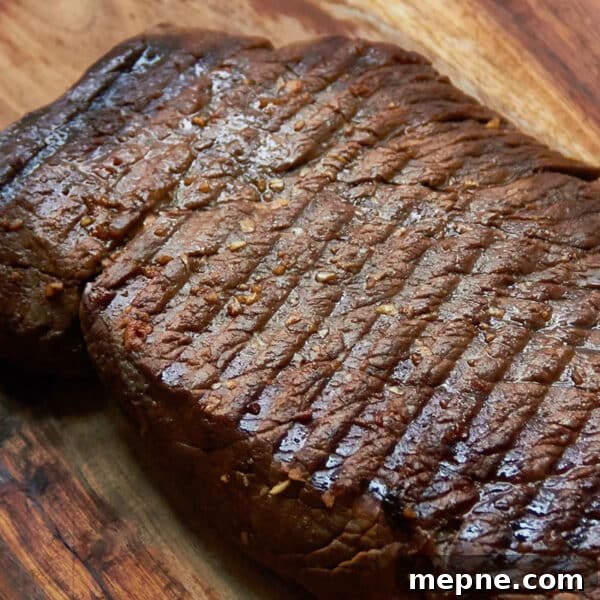
Marinated and Grilled London Broil
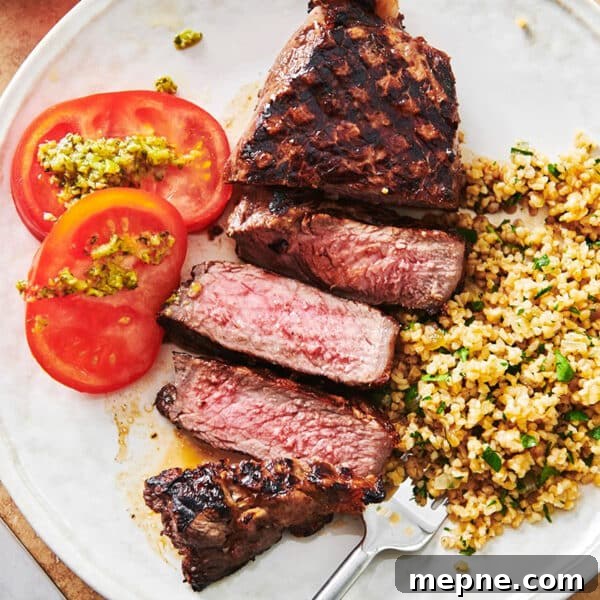
Grilled Marinated New York Strip Steak