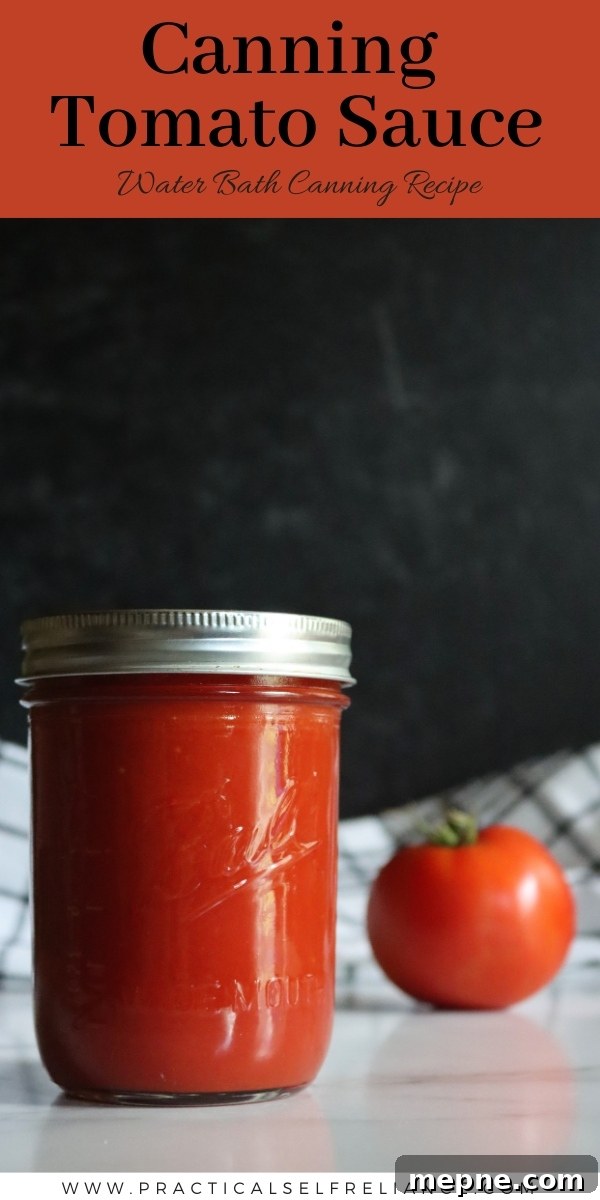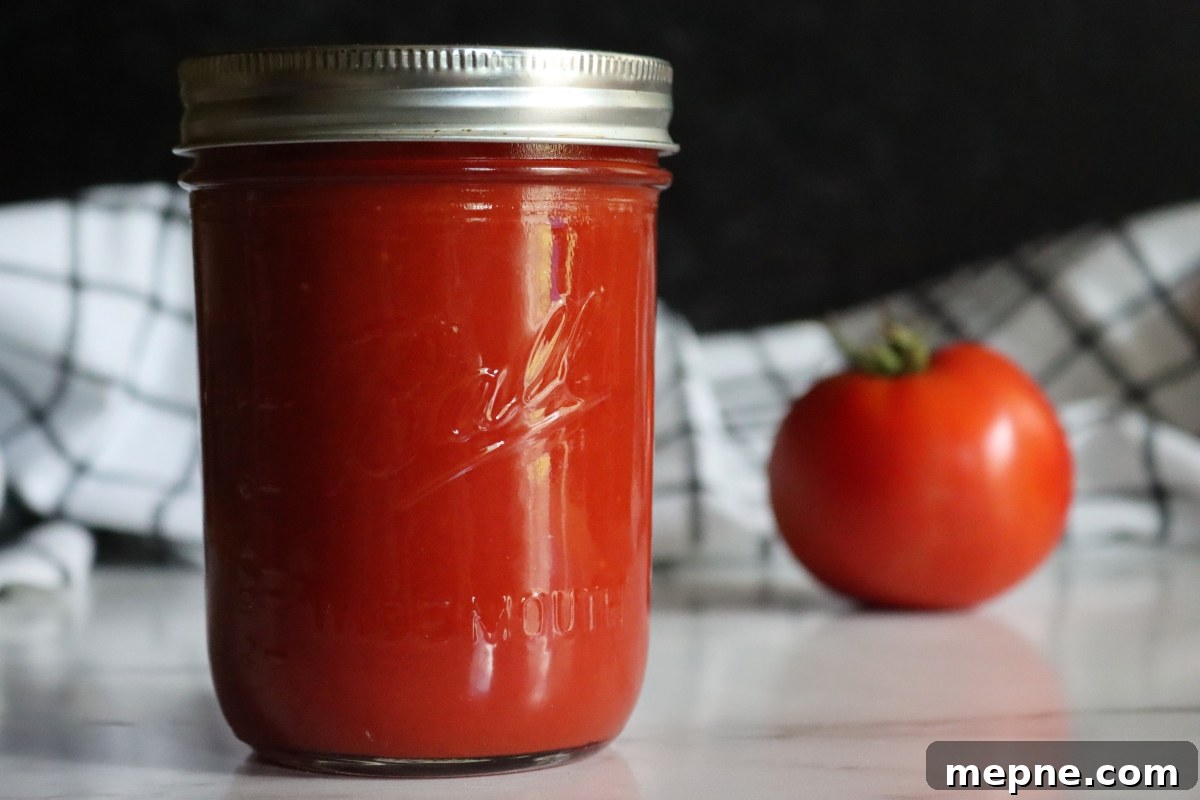
Canning tomato sauce is one of the easiest tomato-preserving projects you can do. Peels and seeds are quickly removed with a strainer or food mill, and the sauce can be processed safely using a water bath or pressure canner. You can preserve unseasoned or lightly seasoned sauce—both follow the same basic method.
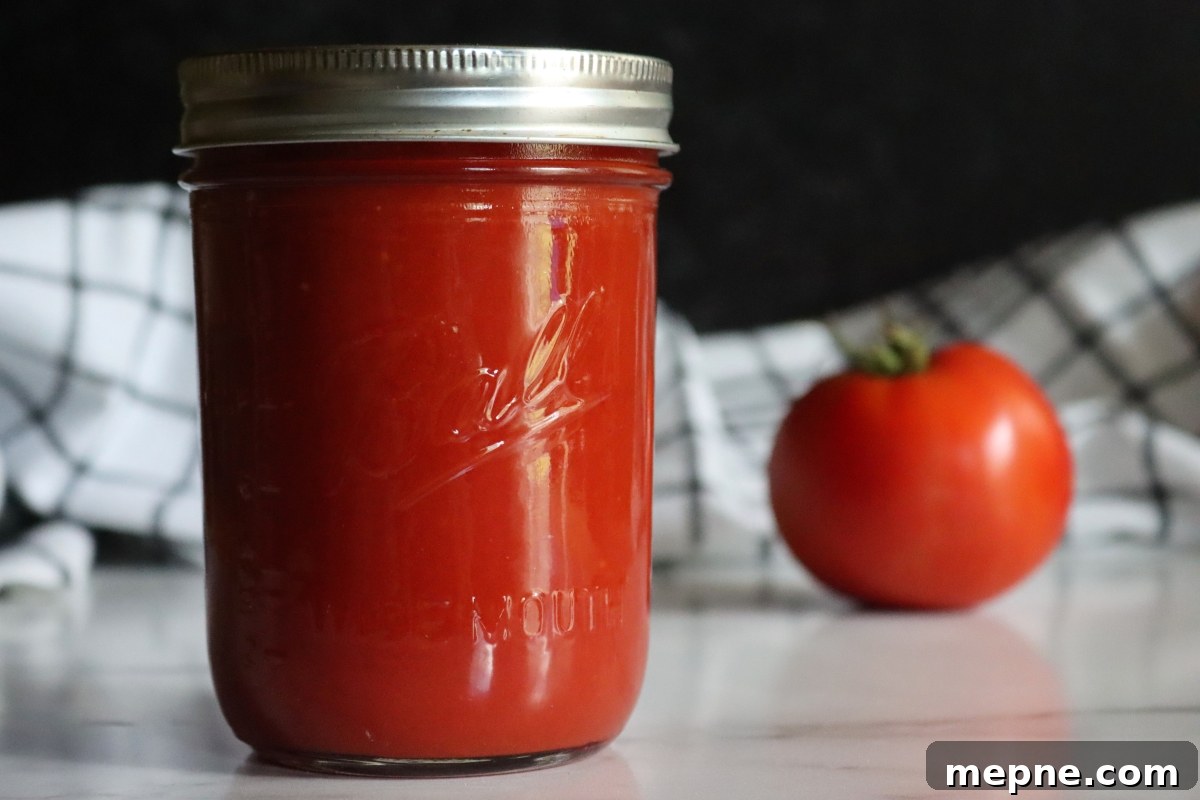
Canning homegrown tomatoes lets you enjoy fresh tomato flavor year-round. Traditional methods that require hand-peeling and seeding are time-consuming, so making a cooked tomato sauce and passing it through a food mill or sieve is a fast, effective alternative when you have a lot of fruit to process.
If you use a food strainer or mill, you don’t need to peel or seed beforehand—the equipment will separate skins and seeds while producing a smooth sauce that’s ready to reduce and can.
How to Make Tomato Sauce
Decide whether you want a thin or thick finished sauce. Thick sauce requires more tomatoes per batch. If you end up with a thinner result you can always reduce it further on the stovetop before serving.
Estimated tomato quantities per canner load:
- Thin sauce: about 35 lb whole tomatoes for a 7-quart canner load, or about 21 lb whole tomatoes for a 9-pint canner load.
- Thick sauce: about 46 lb whole tomatoes for a 7-quart canner load, or about 28 lb whole tomatoes for a 9-pint canner load.
To prepare tomatoes, wash them, remove stems, and trim any bruised or discolored areas. If you don’t have a food mill or strainer, you will need to peel and seed the tomatoes by hand, which is much more labor-intensive.
Preventing Tomato Sauce Separation
Tomatoes can separate because an enzyme released when cells are broken down encourages the juices to separate from the solids. To reduce separation, add tomatoes gradually to the pot in small batches, crushing and bringing the mixture to a vigorous boil as you work. Once all the tomatoes are in the pot and crushed, simmer for 5 minutes to set the juice and soften the flesh.
If you don’t mind some separation, you can add all quartered tomatoes at once, bring them to a boil, crush, and simmer for 5 minutes. After this quick cook the mixture is ready to be strained into a smooth sauce.
Straining Tomato Sauce
After cooking, strain the tomatoes to remove skins and seeds using one of these tools:
- A food strainer or food mill for large batches—these attach to mixers or are hand-cranked and separate the pulp quickly.
- A chinois or fine-mesh sieve for small batches—works well for a jar or two but requires more effort.
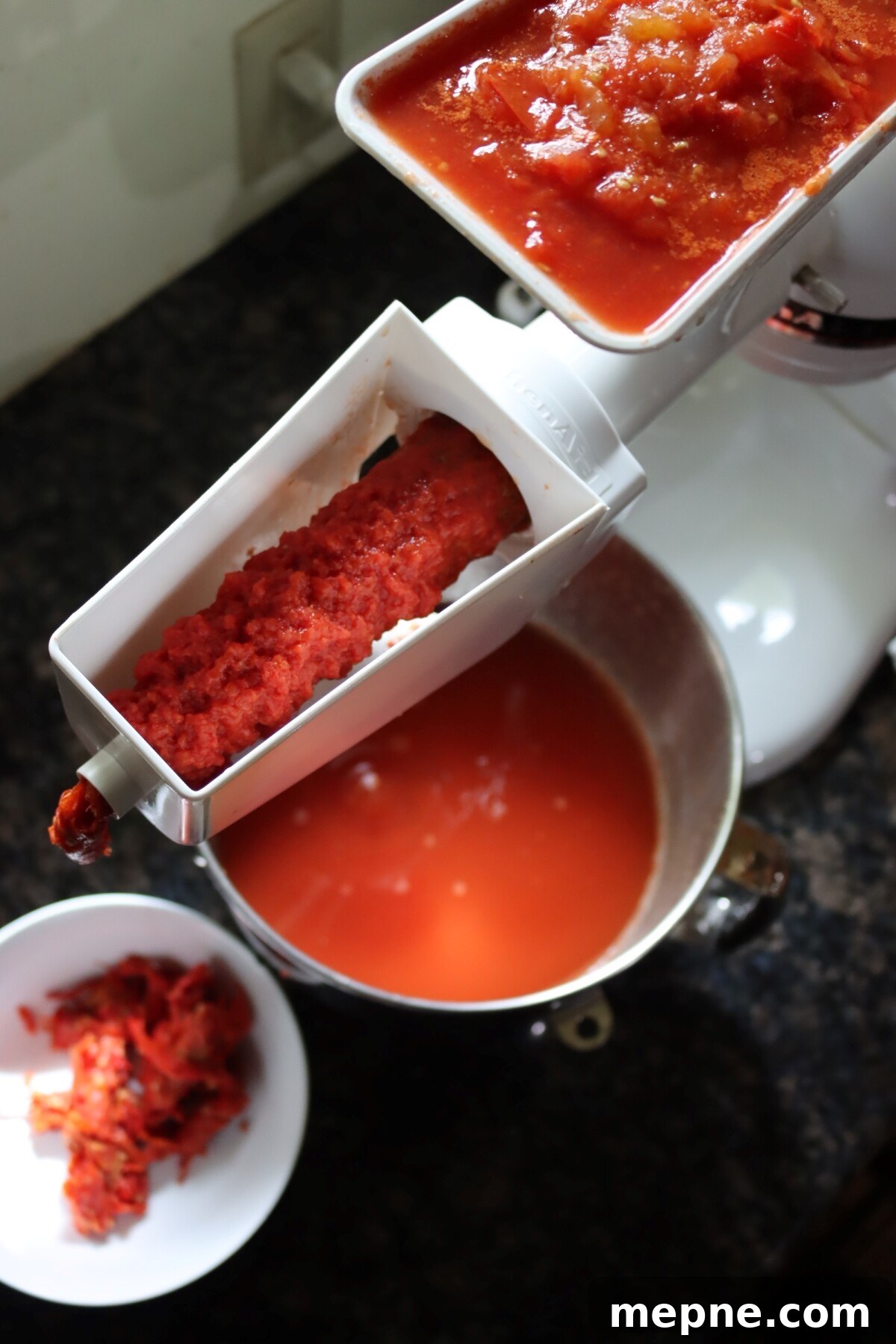
Return the strained pulp and juice to a wide saucepan and simmer to reduce. Reduce by about one-third for a thin sauce, or by about one-half for a thicker sauce. Remove from heat once the desired consistency is reached.
Adding Acidity to Tomato Sauce for Canning
Tomatoes vary in acidity and many modern varieties sit near the borderline for safe home canning. To ensure safe acidity and prevent the risk of botulism, always acidify tomato products before canning unless following a tested recipe that states otherwise.
Two common acidifiers are bottled lemon juice (standardized acidity) and citric acid powder. Citric acid is tasteless, while bottled lemon juice adds a mild citrus note. Always add the acid directly to each jar before filling so you won’t forget.
Acid amounts:
- Quarts: 2 tablespoons bottled lemon juice or 1/2 teaspoon citric acid per jar.
- Pints: 1 tablespoon bottled lemon juice or 1/4 teaspoon citric acid per jar.
Canning Tomato Sauce
Prepare clean jars and add the appropriate amount of lemon juice or citric acid and optional salt (1 teaspoon per quart or 1/2 teaspoon per pint). Ladle the hot sauce into jars, leaving 1/4-inch headspace, wipe rims, apply lids, and screw bands fingertip-tight. Process using either a boiling water bath or a pressure canner, following recommended times and altitude adjustments.
Water Bath Canning Tomato Sauce
Processing times for unseasoned tomato sauce in a boiling water canner:
- Pints: 35 minutes at 0–1,000 ft; 40 minutes at 1,001–3,000 ft; 45 minutes at 3,001–6,000 ft; 50 minutes above 6,000 ft.
- Quarts: 40 minutes at 0–1,000 ft; 45 minutes at 1,001–3,000 ft; 50 minutes at 3,001–6,000 ft; 55 minutes above 6,000 ft.
Pressure Canning Tomato Sauce
Tomato sauce may also be pressure canned, but it still requires added acidity. The following times assume the sauce has been acidified.
Dial-gauge pressure canner (unseasoned tomato sauce):
- Pints: 6 PSI for 20 minutes at 0–2,000 ft; 7 PSI for 20 minutes at 2,001–4,000 ft; 8 PSI for 20 minutes at 4,001–6,000 ft; 9 PSI for 20 minutes at 6,001–8,000 ft.
- Quarts: 11 PSI for 15 minutes at 0–2,000 ft; 12 PSI for 15 minutes at 2,001–4,000 ft; 13 PSI for 15 minutes at 4,001–6,000 ft; 14 PSI for 15 minutes at 6,001–8,000 ft.
Weighted-gauge pressure canner:
- Pints: 5 PSI for 20 minutes at 0–1,000 ft; 10 PSI for 20 minutes above 1,000 ft.
- Quarts: 10 PSI for 15 minutes or 15 PSI for 10 minutes at altitudes of 1,000 ft or lower. Use 15 PSI for 10 minutes only at lower altitudes as noted above.
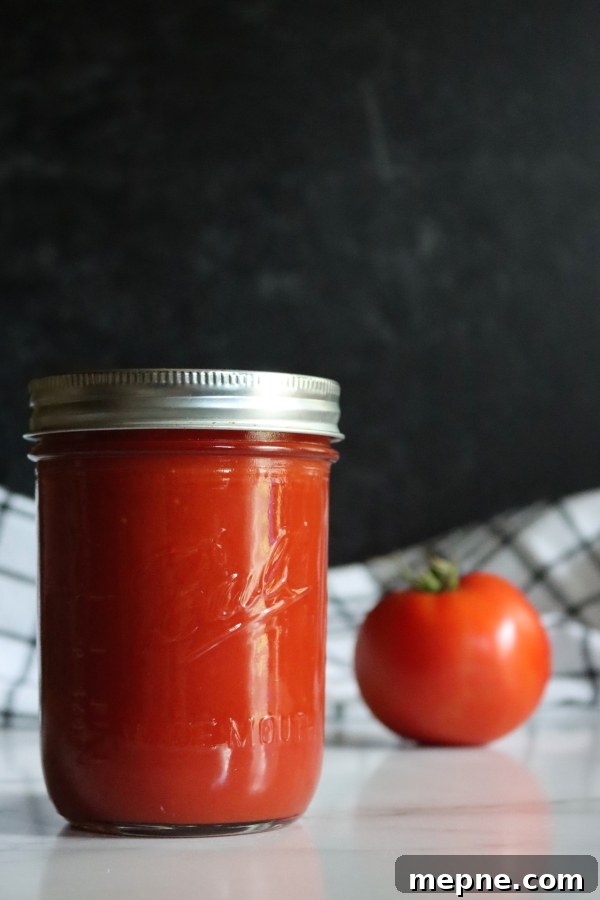
After processing, remove jars and let them cool undisturbed for 12–24 hours. Check seals, remove bands, wipe jars, label with contents and date, and store in a cool, dark place. Refrigerate after opening. Properly sealed home-canned tomato sauce is best used within about 18 months.
Seasoned Tomato Sauce
The instructions above describe unseasoned sauce (salt optional). You can add dried herbs and spices in moderate amounts without changing canning times, but avoid fresh vegetables and fresh herbs unless you follow a specifically tested recipe. Fresh onions, peppers, mushrooms, or other low-acid ingredients require pressure canning and tested procedures because they change the acidity and processing requirements.
Swapping dried spices is usually safe—for example, substituting ground cumin for basil in a Mexican-style sauce is fine. When in doubt, follow a tested canning recipe for safety.
Here are a few seasoning blends suitable for use with tomato sauce; each blend seasons roughly 4 pints or two quarts (no fresh vegetables included):
Italian tomato sauce seasoning blend
- 2 Tbsp dried oregano
- 2 Tbsp dried basil
- 1 Tbsp garlic powder
- 2 tsp dried thyme
- 2 tsp crushed red pepper
Mix and add to sauce sparingly to taste before canning.
Smoky Mexican tomato sauce seasoning blend
- 2 tsp cumin seeds (toast and grind)
- 2 tsp coriander seeds (toast and grind)
- 4 tsp ground chipotle powder
- 4 tsp chili powder
- 2 tsp dried oregano
- 2 tsp garlic powder
Toast cumin and coriander, grind, then combine with the other spices.
Creole tomato sauce seasoning blend
- 1 Tbsp sweet paprika
- 1 Tbsp hot paprika
- 1 Tbsp ground red pepper
- 1 Tbsp dried oregano
- 2 tsp garlic powder
- 2 tsp onion powder
- 2 tsp ground black pepper
- 2 tsp dried thyme
- 1 tsp celery seed
- 1 tsp ground white pepper
Combine and add to sauce where desired.
Tomato Paste v. Tomato Sauce
Tomato paste is essentially a much-reduced tomato sauce. Use the same heat-and-crush prep, then simmer crushed tomatoes longer. For paste, simmer about an hour after initial cooking until reduced by half, press through a sieve or food mill, then return to the pot. Stir in 1 teaspoon citric acid to the pot (so it disperses evenly) and continue simmering for another 2½ hours or until the paste “rounds up” on a spoon. Remove any bay leaves or whole garlic before canning. Paste requires different canning instructions because of its thickness—follow a tested paste recipe.
Tomato Canning Recipes
If you’d like to can other tomato products, consider whole or halved tomatoes, tomato paste, or diced tomatoes. Each product has its own tested instructions for safe processing.
Canning Tomato Sauce — Recipe Summary
Yield: About 7 quarts or 9 pints per batch (adjust based on your yield and desired consistency). Prep ~15 minutes, cook ~1 hour, additional time ~45 minutes; total ~2 hours.
Ingredients
- For thin sauce: ~35 lb whole tomatoes (per 7-quart load) or ~21 lb (per 9-pint load)
- For thick sauce: ~46 lb whole tomatoes (per 7-quart load) or ~28 lb (per 9-pint load)
- Salt (optional): 1 tsp per quart or 1/2 tsp per pint
- Citric acid or bottled lemon juice (see acidity amounts above)
Instructions
- Wash tomatoes, remove stems, and trim damaged areas.
- Work in small amounts: quarter about 1 lb at a time into a large saucepan.
- Crush and bring to a boil, continuing to add and crush more tomatoes until all are in the pot.
- Simmer for 5 minutes to set the juice.
- Pass the hot mixture through a food mill or sieve to remove skins and seeds.
- Return strained sauce to the pot and simmer to reduce: about one-third for thin sauce, one-half for thick sauce.
- Prepare jars: add citric acid or bottled lemon juice to each jar (see amounts above). Add salt if desired.
- Ladle hot sauce into jars, leaving 1/4-inch headspace. Seal with lids and bands fingertip-tight.
- Process jars in a water bath or pressure canner according to the times listed above and your altitude.
- After processing, let jars sit undisturbed, then check seals, remove bands, label, and store in a cool, dark place. Refrigerate after opening.
Summer Canning Recipes
Tomatoes aren’t the only summer bounty worth preserving. Consider canning tomatillos, peaches, blackberries, or strawberries—each has its own tested method for safe home canning.