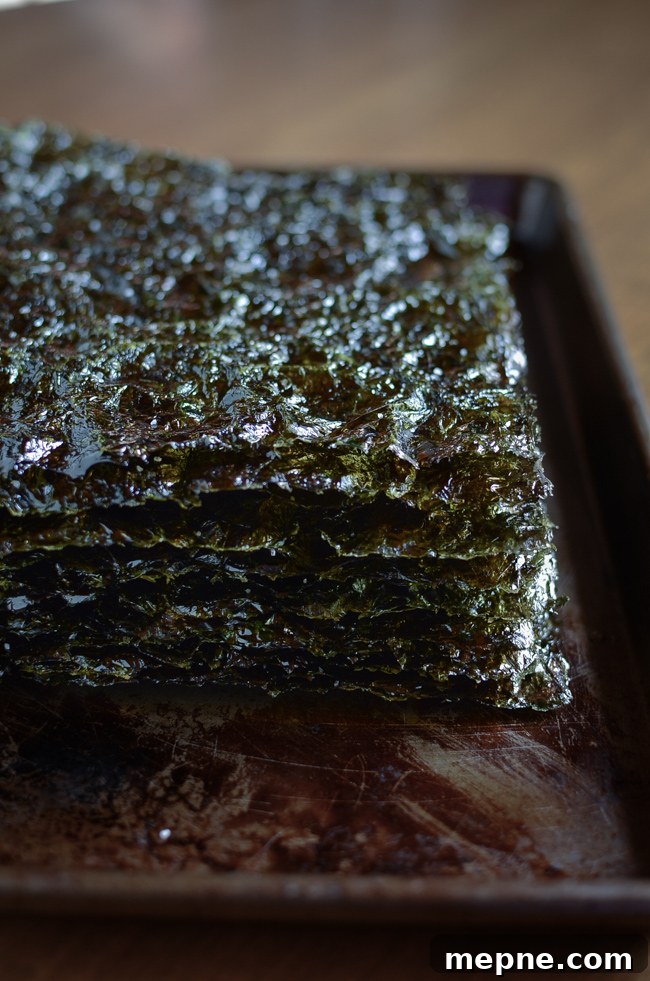
Making homemade roasted seaweed snacks is easy and fast. In about 25 minutes you can roast 30 sheets to create crisp, nutty, lightly salted snacks that are perfect for munching. For best results, use plain raw dried seaweed sheets (often labeled parae-gim or dol-gim).
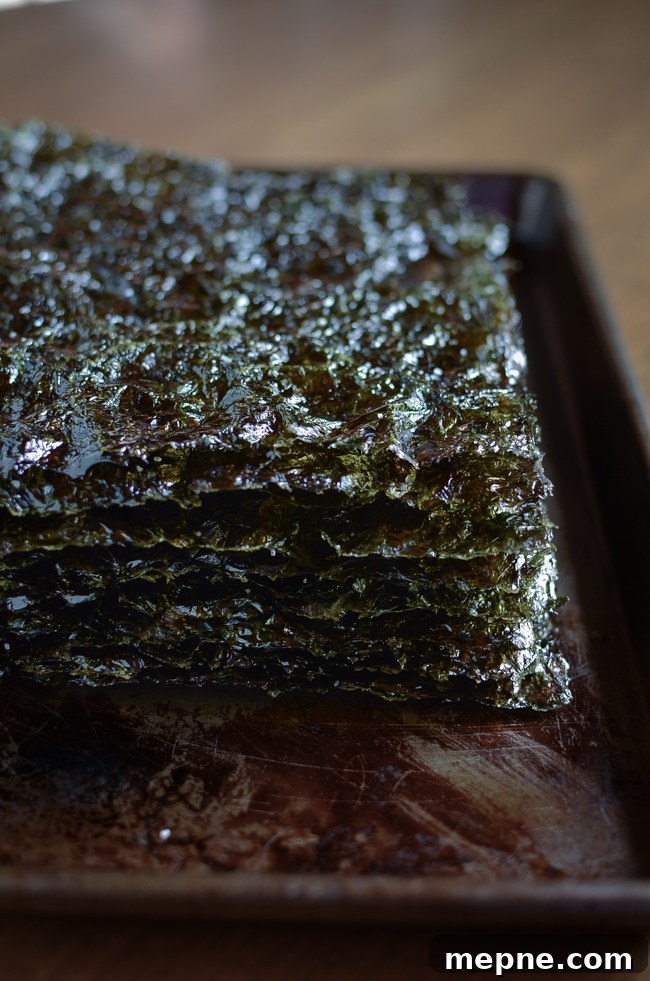
These thin, crisp sheets are dangerously addictive—my kids snack on them like potato chips. Korean roasted seaweed (gim-gui, 김구이) has become popular worldwide, and making it at home gives you control over flavor and freshness. Roasting is quicker and simpler than most people expect.
If you enjoy seaweed, try using these sheets for small rice wraps, quick snacks with kimchi, or as a garnish in soups and salads. They also pair nicely with beer, the classic Korean anju style.
Choosing the Best Seaweed for Roasting
For ultra-thin, crisp snacks choose Korean raw dried seaweed sheets such as Parae-gim (파래김) or Dol-gim (돌김). These varieties are lighter and have a rougher texture with small holes, which allows them to crisp up beautifully when roasted. They differ from sushi nori, which is usually thicker and smoother.
- Dol-gim (돌김): Made from dried red algae laver, with a coarse, textured surface that roasts well.
- Parae-gim (파래김): A common type for roasting, often made from a mix of red and green algae and prized for its light crunch.
You can typically find these at Korean grocery stores, international markets, or specialty aisles.
Tips on picking good seaweeds
When selecting seaweed, look for these signs of freshness:
- Expiration date: Check the package to avoid stale or rancid sheets.
- Smell: Fresh dried seaweed should smell mildly oceanic. If it smells musty or unpleasant, don’t buy it.
- Color: Fresh dried sheets are almost black with subtle brown tones. Avoid sheets that look faded or overly purple in color.
- Packaging: If sealed, inspect the label and date. Avoid packages that look swollen or damaged.
What You’ll Need
- 30 sheets plain raw dried seaweed (parae-gim or dol-gim)
- 1 tablespoon sesame oil
- 1 tablespoon neutral cooking oil (grape seed, vegetable, or use 2 tbsp olive oil if preferred)
- Fine sea salt or kosher salt
- Disposable plastic glove (or use a clean bare hand if you don’t mind oil)
Because sesame oil has a lower smoke point, mixing it with a neutral oil increases heat tolerance. If you prefer a different flavor, you can replace sesame oil with perilla oil (deul-gireum) or skip fragrant oils and use only olive oil.
How to make roasted seaweed snack
Combine the oils
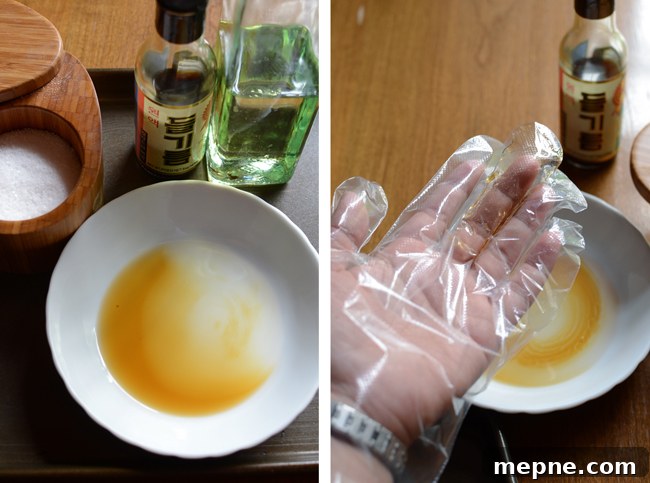
Mix the sesame oil and neutral oil in a small bowl at a 1:1 ratio. For 30 sheets I use about 1 tablespoon of each. Wearing a disposable glove, dab a small amount of the oil mixture onto your fingers and rub it across the palm to spread the oil evenly.
Rub oil onto the dried seaweeds
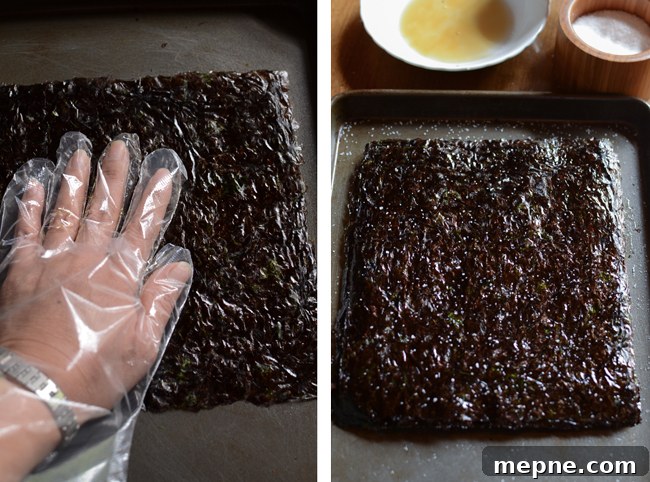
Gently rub one side of each seaweed sheet with your oiled hand to apply a very thin coat of oil; do not oil both sides. Lightly sprinkle a pinch of salt over the oiled surface—adjust the amount to taste. Stack the sheets as you go until all are lightly oiled and salted.
Pan-roast the seaweeds
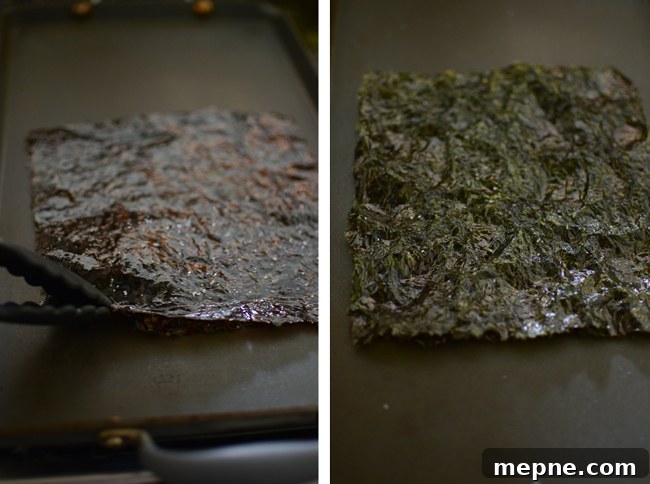
Heat a skillet or pancake griddle over medium heat until hot. Using tongs, place 1–2 sheets at a time on the hot surface. The seaweed will quickly shrink and toast—typically 3–5 seconds per side. Flip and toast the other side the same amount. Lower the heat if they brown too fast; raise it slightly if they take too long to crisp.
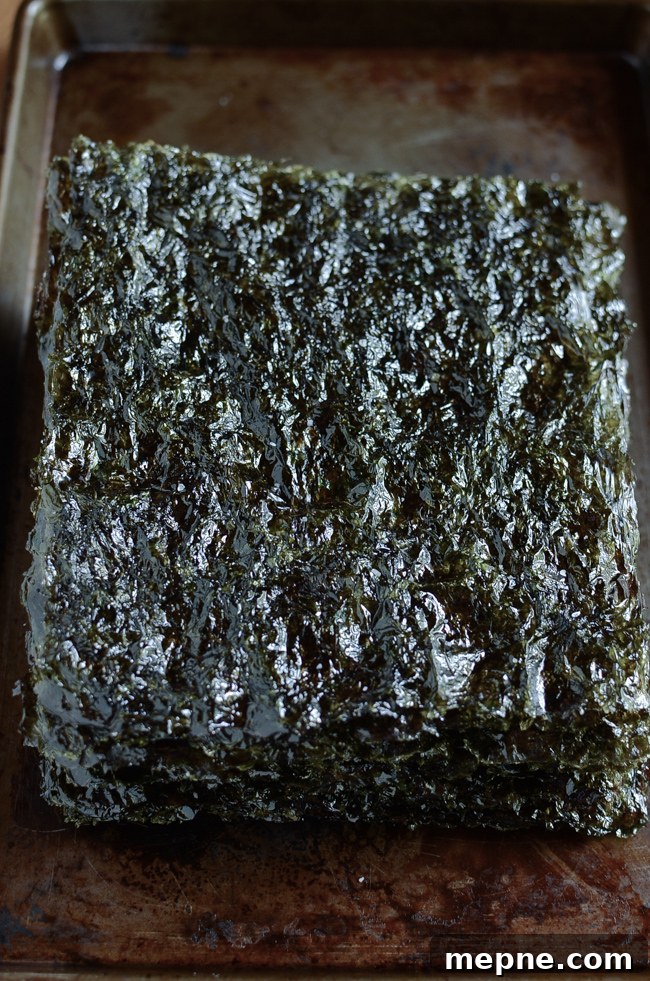
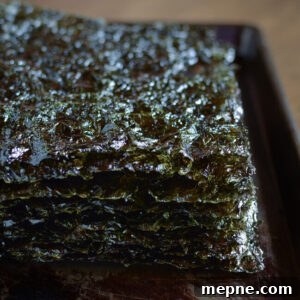
The finished seaweed should be shiny from the oil, crisp, and fragrant with a touch of sesame aroma.
How to eat roasted seaweeds
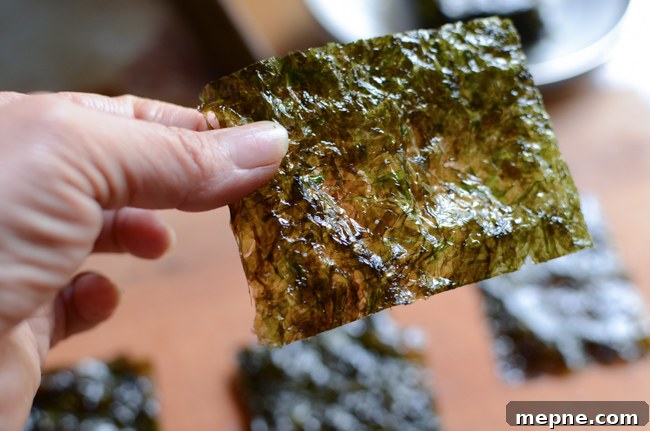
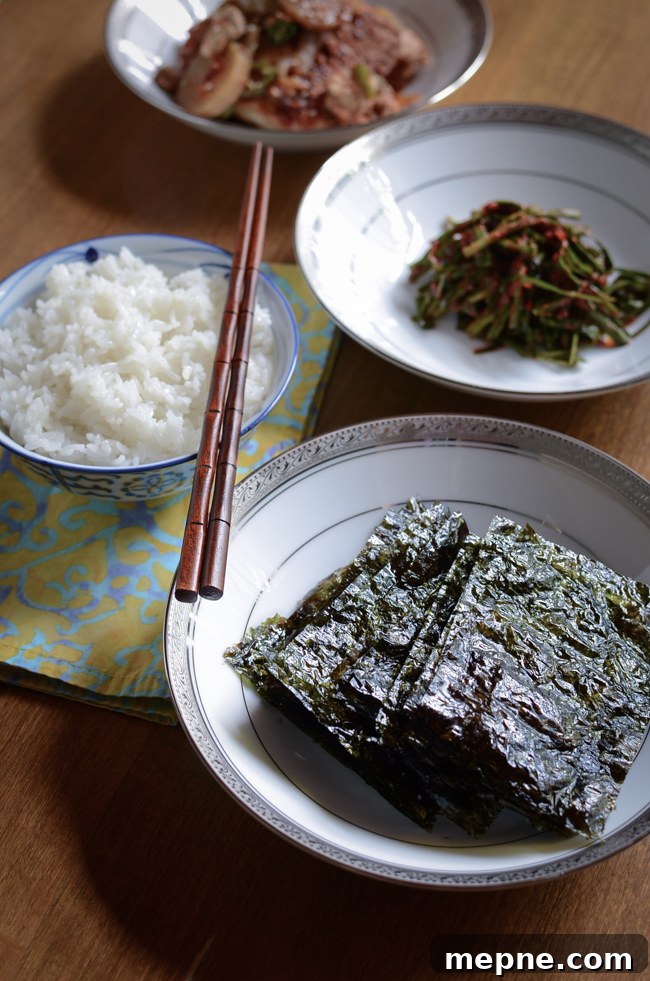
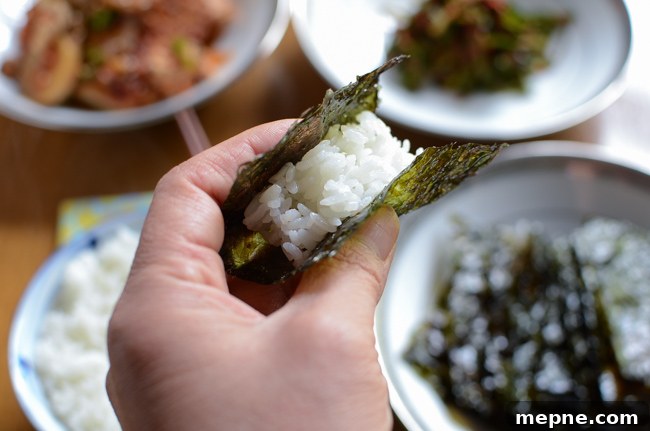
Enjoy these sheets straight from the pan as a light, crunchy snack. They are also excellent wrapped around small portions of rice, used to make mini rice balls (jumeokbap), crumbled over rice, or served as a side with soups and salads. As a child I often wrapped rice and a bit of kimchi in a sheet for a quick, satisfying bite.
Storage Tips
At room temperature, roasted seaweed snacks stay crisp for 2–3 days in an airtight container. For longer storage, place them in a sealed freezer bag and freeze for up to 2–3 months. Avoid refrigeration, which can introduce moisture and make the sheets soggy. Freezing preserves crispness and prevents rancidity.
Homemade Roasted Seaweed Snacks
Servings: about 15 people (30 sheets)
Prep: 15 mins • Cook: 10 mins • Total: 25 mins
Ingredients
- 30 unseasoned raw dried seaweed sheets (parae gim)
- 1 tbsp sesame oil
- 1 tbsp neutral cooking oil (or 2 tbsp olive oil)
- Kosher salt or fine sea salt, to taste
Equipment
- Disposable food prep glove (optional)
- Kitchen tongs
- Skillet or griddle
Instructions
- Mix sesame oil and neutral oil in a small bowl.
- Put on a disposable glove on one hand. Dab a little oil on a finger and rub it across your gloved hand to spread the oil.
- Gently rub one side of each seaweed sheet to apply a very thin coat of oil. Do not oil both sides.
- Sprinkle a pinch of salt on each oiled sheet. Stack the sheets as you go.
- Heat the skillet over medium heat. Place 1–2 sheets on the hot surface, using tongs. Toast for 3–5 seconds per side until crisp. Adjust heat as needed.
- Store completely cooled sheets in an airtight container at room temperature for 2–3 days, or freeze for 2–3 months.
Notes
You can use olive oil instead of the sesame/cooking oil mixture if you prefer a milder or single-oil option. Perilla oil is a fragrant alternative to sesame oil for a different flavor profile.
Nutrition (approx. per sheet)
Calories ~18 kcal; Carbs ~1 g; Protein ~1 g; Fat ~2 g; Sodium varies with salt used.
Made this recipe? Share a photo on social media and tag @beyondkimchee to show your batch—I always enjoy seeing different variations and serving ideas.