You just walked out of the butcher with a perfect two‑inch T‑bone or Porterhouse, ready to be the star of tonight’s dinner. These cuts both come from the short loin and, when cooked correctly, deliver a juicy, flavorful steakhouse experience at home. Read on and you’ll learn a straightforward, reliable method that turns even a novice griller into someone who consistently produces excellent results.
This guide focuses on a simple reverse‑sear approach, two‑zone grilling, and a few practical tips that debunk common myths. You don’t need a restaurant kitchen or expensive equipment—just a good cut of meat, a thermometer, and proper heat control. Follow the steps below and you’ll be rewarded with a well‑rested, perfectly seared steak with a deep, even crust and succulent interior.
Key Points
For thick steaks like a T‑bone or Porterhouse, use the reverse sear method: cook the steak slowly over indirect heat until it’s nearly at your target temperature, then finish it with a hot sear. The idea that you must sear first to “lock in juices” is a myth; reverse searing yields a more evenly cooked interior and excellent crust.
You don’t need charcoal to make a great steak. Gas grills work very well when set up for two‑zone cooking (a hot direct zone and a cooler indirect zone). The goal is controlled, consistent heat. An oven and heavy skillet can also substitute if you don’t have a grill.
Grill marks look attractive, but the true flavor comes from the Maillard reaction—the surface browning that creates savory compounds. Aim to develop that crust across the steak’s surface, not just in parallel stripes.
Another common tip—“flip only once”—isn’t a rule. When searing, flipping and rotating frequently helps build an even, caramelized crust while avoiding overcooking any single side.
Resting the steak after cooking is essential. Resting allows juices to redistribute so they aren’t lost when you slice. For thick T‑bone or Porterhouse steaks, 5–7 minutes of rest is usually sufficient.
How to Grill a T‑bone or Porterhouse Steak | Step‑by‑Step Directions
- Bring Steak to Temperature
Remove the steak from the refrigerator and let it come closer to room temperature for about 45–60 minutes. This promotes even cooking and reduces the chance of a cold center.
- Prepare Steak
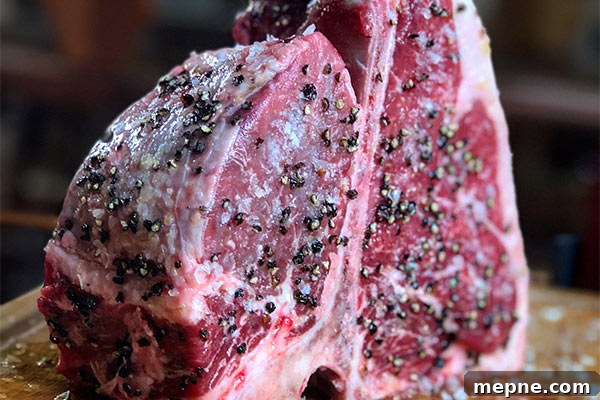
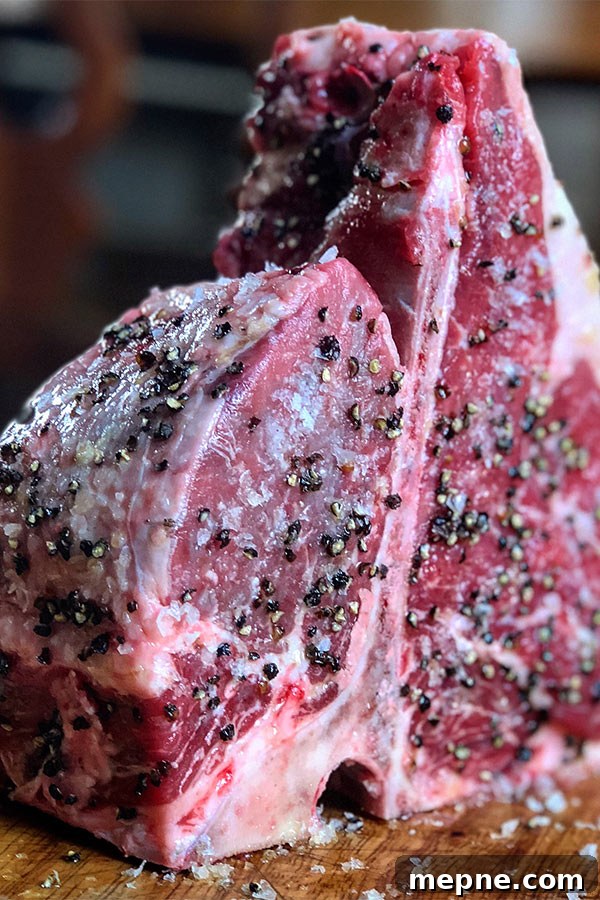
Lightly coat the steak with olive oil and season generously with kosher salt. Many recommend adding pepper before grilling, but black pepper can become bitter at very high direct heat—if you like pepper, apply it after the steak comes off the grill.
- Set Up Two‑Zone Grilling
Create a direct high‑heat zone and an indirect low‑heat zone. Aim for about 225°F (107°C) on the indirect side for the initial cook. For charcoal, bank the coals to one side; for gas, light only one side of the burners.
- Proper Steak Placement
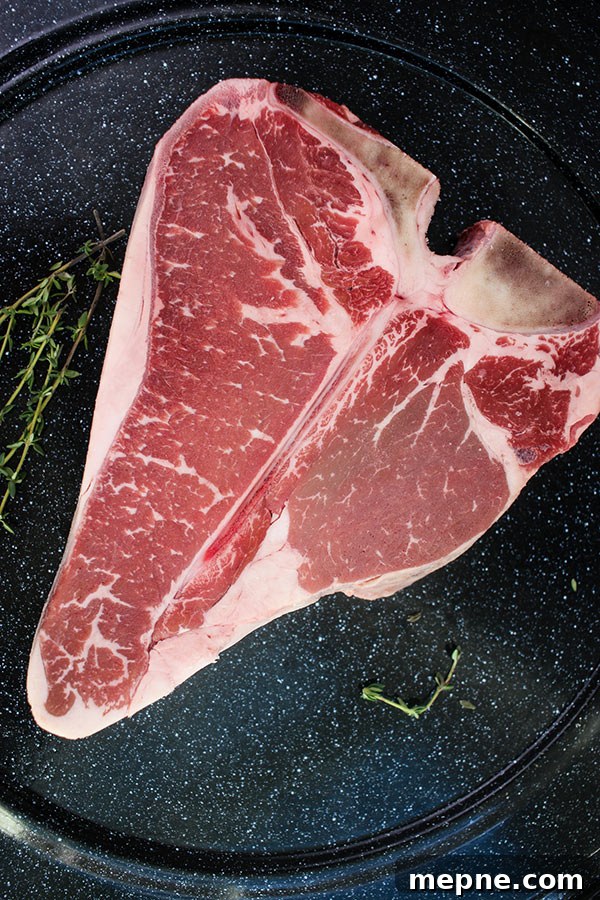
T‑bone and Porterhouse steaks pair a strip steak on one side of the bone with a tenderloin (filet) on the other. The strip has more marbling and can cook slightly differently than the leaner filet. Place the steak on the indirect side with the filet farther from the heat to prevent it from drying out.

Note the greater marbling in the strip compared to the lean filet. - Grill Steak
Use a leave‑in meat thermometer to monitor internal temperature. For a medium‑rare finish, cook the steak over indirect heat until the internal temperature reaches about 123–125°F (51–52°C). This allows room for a final sear to bring the steak to the ideal doneness.
- Raise Grill Temperature
Remove the steak briefly and increase the grill’s heat so the searing zone is as hot as possible. On a gas grill crank the burners up; on charcoal, add and arrange coals for maximum surface heat.
- Sear Steak
Place the steak directly over the hottest part of the grill. Sear by flipping and rotating every 30–45 seconds to build an even, caramelized crust without burning any one area.
- Turn Steak as You Sear
Sear for roughly three minutes per side, adjusting based on grill heat and steak thickness. Aim for a final internal temperature around 127–130°F (53–54°C) for a perfect medium‑rare.
- Let Steak Rest
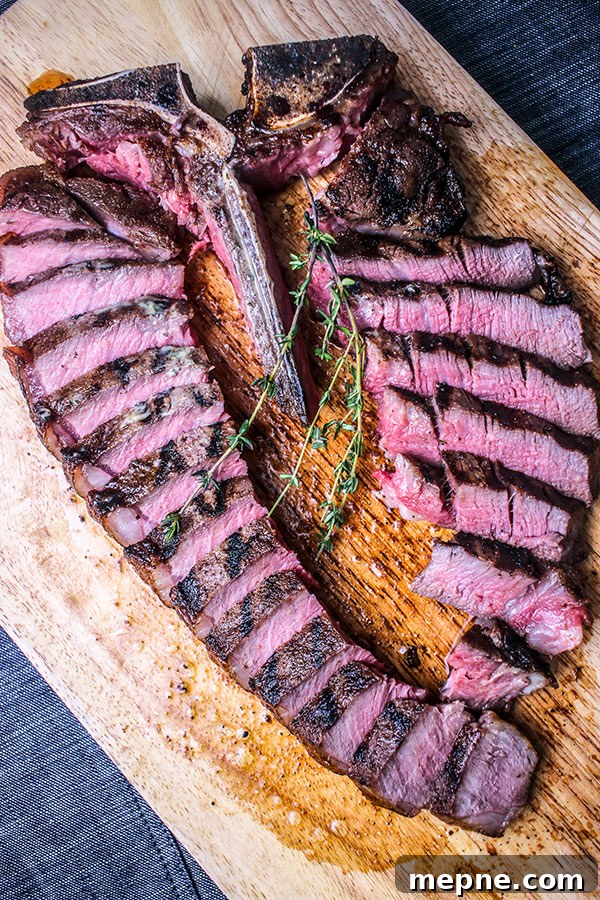
Transfer the steak to a cutting board and rest for 5–7 minutes. Resting allows juices to redistribute so the steak remains moist when sliced. After resting, slice against the grain and serve immediately.