Below are practical tips I’ve gathered for using a bread machine’s delay start timer. They apply to most models and will help you get reliable results.
Last Updated September 26, 2025 – Originally Published February 26, 2017
Most bread machines include a delay start feature that lets you load the ingredients into the pan, set a timer, and have the machine begin the cycle later. That means you can prepare dough before bed and wake up to freshly baked bread, or set things up in the morning and come home to a loaf and a delicious aroma filling your kitchen.
Some machines handle timed starts more gracefully than others. For example, certain models let you set the desired completion time instead of the start time, which removes the need to calculate how many hours until baking should begin. Other machines mute the add beep in timed modes so you won’t be disturbed while sleeping. Check your manual to see how your particular machine behaves.
Tips for Using the Bread Machine Delay Start Timer
These guidelines will help you use the delay timer safely and effectively, regardless of the brand you own.
Choose suitable recipes – Use recipes that rely on shelf-stable ingredients. Avoid recipes that call for fresh milk, juice, raw eggs, or perishable fruit and vegetables, since those ingredients can spoil if left at room temperature for many hours.
Avoid add-beep-dependent steps – If a recipe instructs you to add ingredients when the machine beeps during a knead cycle, skip that recipe for delayed starts. Even if your machine supports an add beep, relying on it during an extended delay is risky; it’s safer to use recipes where all ingredients can be added at the beginning.
Test recipes first – Before trusting a recipe to run unattended, bake it once using the regular cycle so you can confirm the flour-to-liquid ratio and overall timing. Once you know a recipe performs well, the delay timer becomes a reliable convenience.
Allow proper cooling time – Freshly baked bread continues to steam and set as it cools. Plan on leaving the loaf sit for 45 minutes to an hour before slicing so the crumb finishes properly.
Understand the keep-warm setting – If your machine has a keep-warm function, know how long it holds the loaf and whether it automatically switches off. If the machine keeps the bread warm for an extended period, you should remove the loaf promptly when you’re available to prevent the crust from becoming soggy or the bread from over-drying.
Bread recipes that work well with the delay start timer
Below are types of loaves and recipes that are generally good choices for delayed starts. I’ve listed the recipe names and what makes them suitable so you can decide which to try.
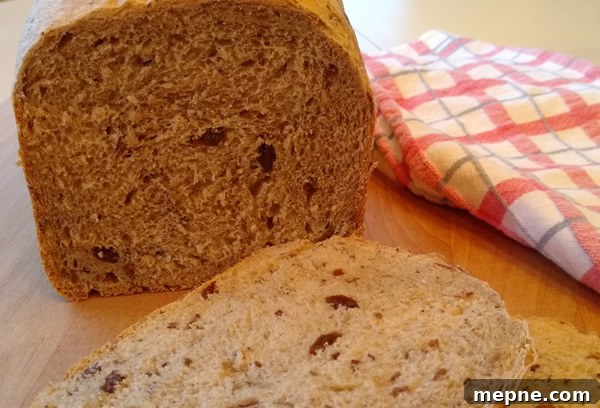
- Raisin Bread – Raisins can be added at the start with many formulas, so you won’t need to rely on an add-beep instruction. The dried fruit holds up well during extended waits before baking.
- Sandwich Bread – Basic sandwich-style recipes that use standard yeast, flour, water, and a little fat tend to perform consistently in delay cycles. Some home-machine programs are designed for this type of loaf.
- Peanut Butter Bread – Recipes that use stable ingredients like peanut butter and dry milk powder (if any) usually travel well through a delay period. The texture is dense and forgiving, and the aroma is especially pleasant when it finishes baking.
- Onion Bread – Simple savory loaves made from dried onion or onion flakes are straightforward to prepare ahead of time, and they release a wonderful scent while baking.
- Extra Light Rye Bread – Milder rye recipes that aren’t heavily reliant on fresh, perishable additions can work nicely in a timed start, producing a loaf with a light, tender crumb.
- Bread mixes – Prepackaged mixes often contain only shelf-stable ingredients. Check the package instructions to verify they don’t require fresh dairy or other perishables before using a delay timer.
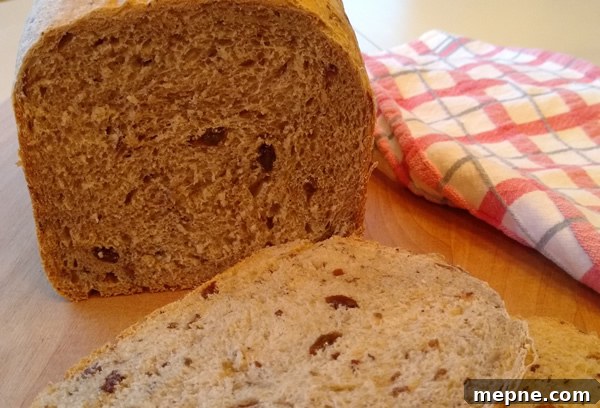
Raisin Bread Made with Delay Start Timer
These suggestions are a starting point. Once you become familiar with how your machine reacts to time, temperature, and ingredient combinations, you can expand your repertoire and build a collection of reliable recipes that fit your schedule. The delay start feature is a powerful convenience when used thoughtfully—plan ahead, choose stable ingredients, and allow proper cooling, and you’ll enjoy excellent results.