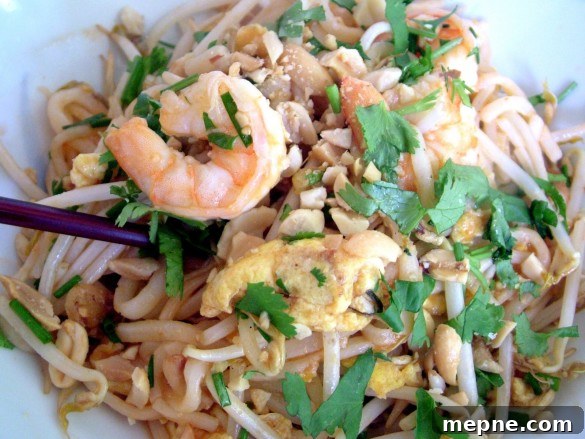
Pad Thai for a Casual Evening
What we really had for dinner that night was the last of a bison rotini, but the more memorable meal was the impromptu pad Thai. Friends came over, we sat outside in folding chairs with cold pink fizzy wine, and the pad Thai made the evening feel effortless and festive. It’s the kind of dish that’s ideal for gatherings because it’s fast, flexible, and satisfying.
When I went to soak rice noodles I discovered I had none left in the pantry. I’m on a mission to use up an overfull stash of different pastas and noodles, so I wasn’t surprised. Fortunately I had fresh Asian noodles, which worked perfectly. Pad Thai adapts well to whatever noodles you have on hand.
Pad Thai is quick once mise en place is done: have your noodles softened, vegetables chopped, proteins ready, and sauces measured. It’s a great way to use leftover roasted chicken, tofu, pork, or a handful of frozen shrimp straight from the freezer. Two pantry ingredients that really lift the flavor are tamarind concentrate and sweet chili sauce—both are usually available in the ethnic foods aisle or at Asian markets. They keep well in the refrigerator, so buying a jar or bottle for future batches is a good investment.
Helpful Tips for Better Pad Thai
To make pad Thai restaurant-worthy at home, keep these tips in mind: cook ingredients in batches so nothing steams in a crowded pan; toss noodles quickly with the sauce to coat evenly; and finish with a squeeze of lime, chopped peanuts, and fresh cilantro or green onions for texture and brightness. The dish is forgiving, which makes it perfect for last-minute dinners or feeding a crowd.
Rice and Barley Pudding: A Second-Act Dessert
After we finished Vij’s chicken curry and rice earlier in the week, there was still rice left over. If I’m not in the mood for fried rice, I often turn leftover cooked rice into a simple pudding. I pour milk over the rice, bring it to a simmer with a little honey, and let the grains absorb the liquid as the starch thickens the mixture. It’s comforting and easy.
That evening I decided to experiment and add barley to the pot—about half a cup—along with more milk to generously cover the grains. Short-grain rice or extra barley can be added to change the texture. The method is straightforward: simmer gently, add more milk as needed, and stir occasionally until the mixture reaches the thickness you like. Sweeten with sugar, honey, or maple syrup to taste and finish with a splash of vanilla for warmth.
Rhubarb-Strawberry Compote
To accompany the pudding I made a quick rhubarb and strawberry compote, an excellent way to use early-season rhubarb. Chop a few stalks of rhubarb and add a couple handfuls of strawberries to a small pot. Sweeten with about half a cup of sugar, or adjust to your preference, and add a spoonful of orange juice concentrate if you have it on hand. Simmer until the fruit breaks down into a loose, jam-like compote—runny enough to spoon over pudding, toast, or bagels but not as heavily sweetened as a typical jam.
The compote has the bright, tart notes of rhubarb balanced by the sweetness of strawberries, making it perfect on warm pudding or spread on toast for breakfast. It also stores well in the refrigerator and can be used as a topping for yogurt, pancakes, or even savory meats when you want a fruity accent.
Final Thoughts
Both the pad Thai and the improvised rice-barley pudding with rhubarb-strawberry compote showcase how leftovers and a small selection of fresh ingredients can turn into memorable meals. A little planning—keeping staples like tamarind concentrate, sweet chili sauce, and a bag of frozen shrimp—means you can create flavorful dinners at a moment’s notice. Likewise, a handful of pantry grains and some seasonal fruit can transform into a comforting dessert. Simple, flexible cooking keeps weeknights low-stress and delicious.