
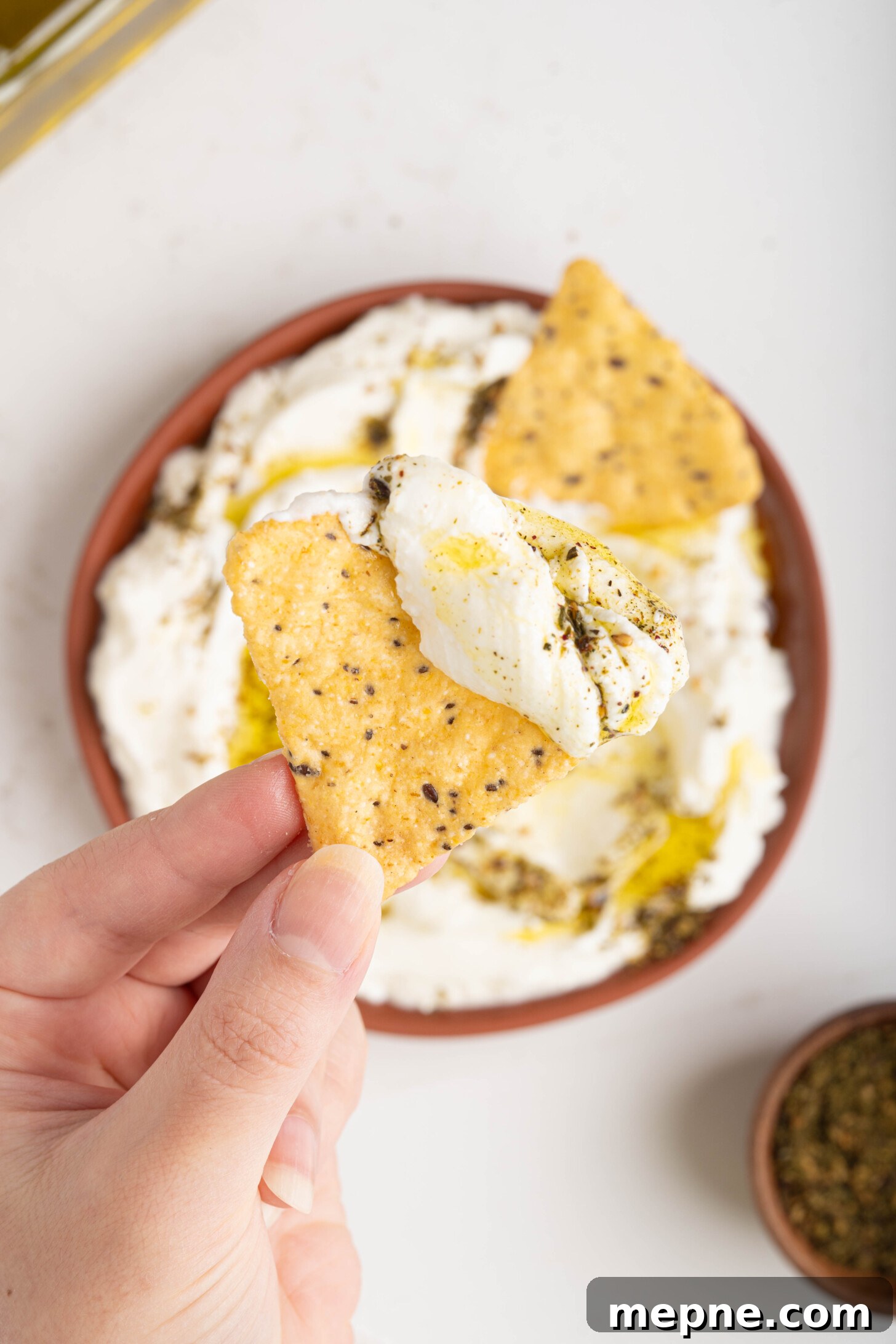
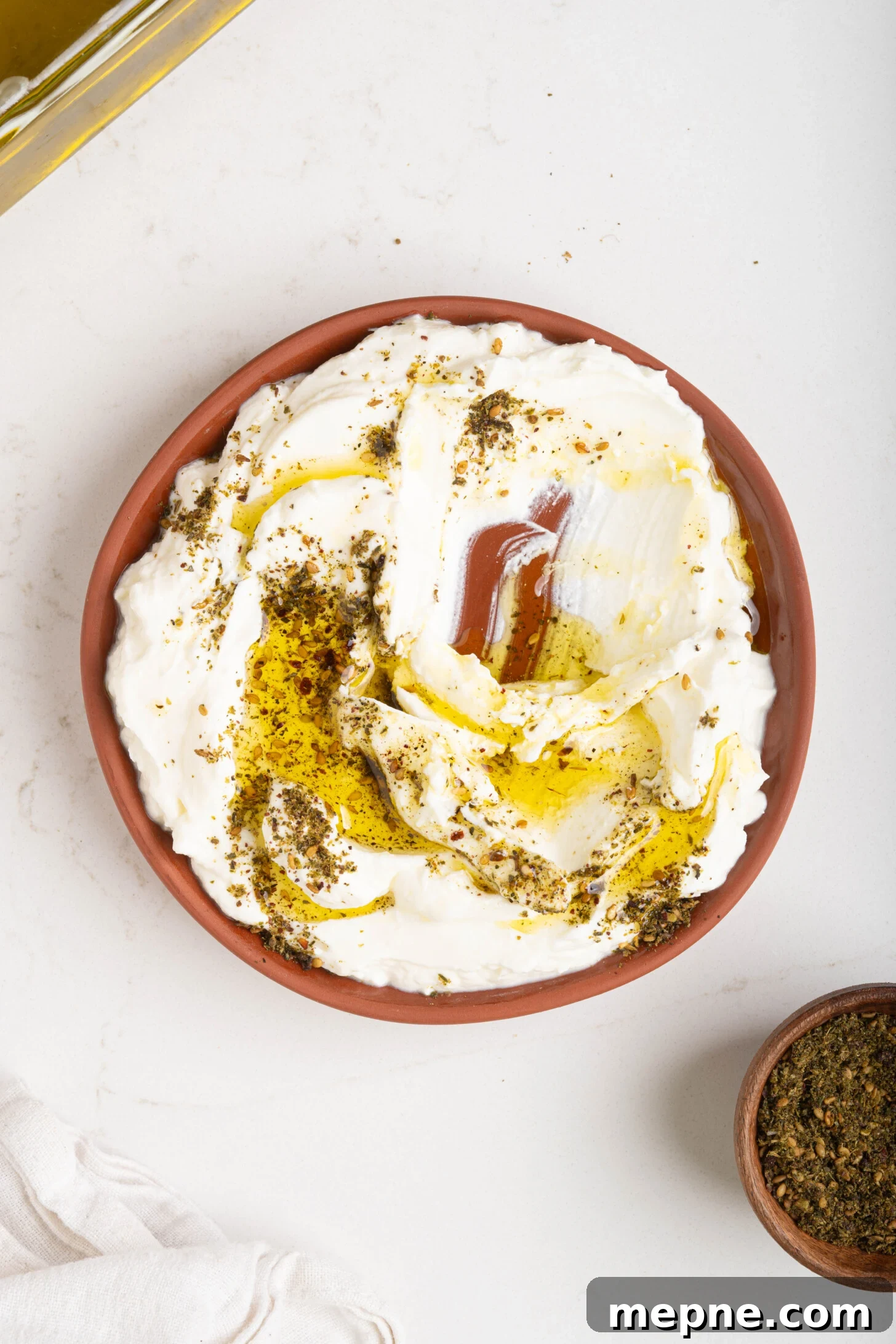
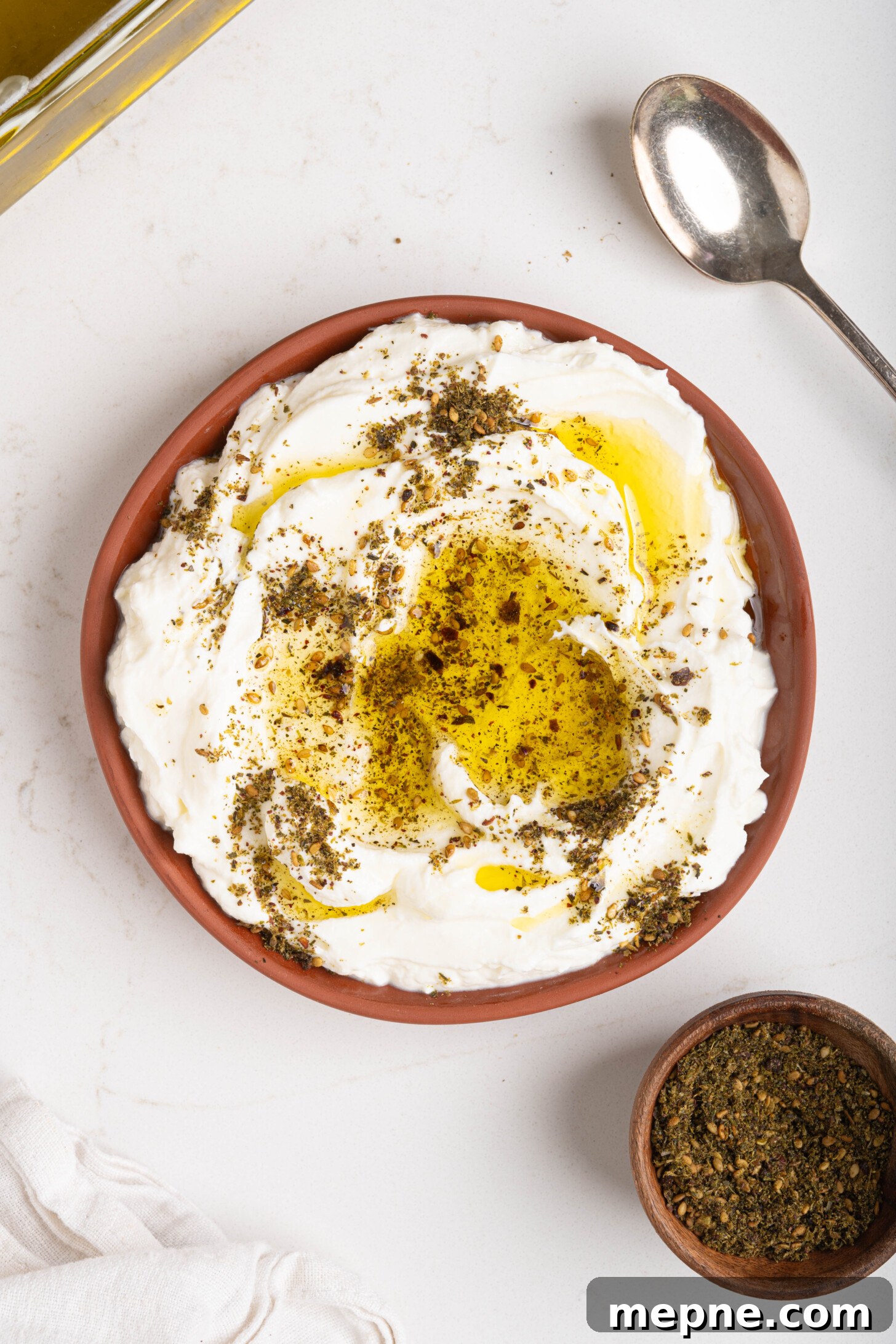
This creamy Middle Eastern labneh recipe is made with just two simple ingredients: plain full-fat yogurt and salt. Thick, tangy, and beautifully smooth, labneh is strained yogurt with a texture similar to soft cheese and a flavor close to Greek yogurt. Serve it as a dip with olive oil, za’atar, herbs, or fresh vegetables, or use it as a spread, topping, or creamy side dish. Dairy-free notes are included below for anyone using plant-based yogurt.

Labneh is one of the easiest Middle Eastern recipes you can make at home, and it delivers a wonderfully rich result with very little effort. It is commonly served as part of a mezze spread with pita, olives, hummus, fresh vegetables, and simple toppings such as olive oil and za’atar.
Although labneh is often enjoyed as a dip, it is much more versatile than that. Spread it over warm bread, spoon it onto a plate before adding grilled chicken, serve it with honey and fruit, or use it anywhere you want something creamy, tangy, and satisfying.
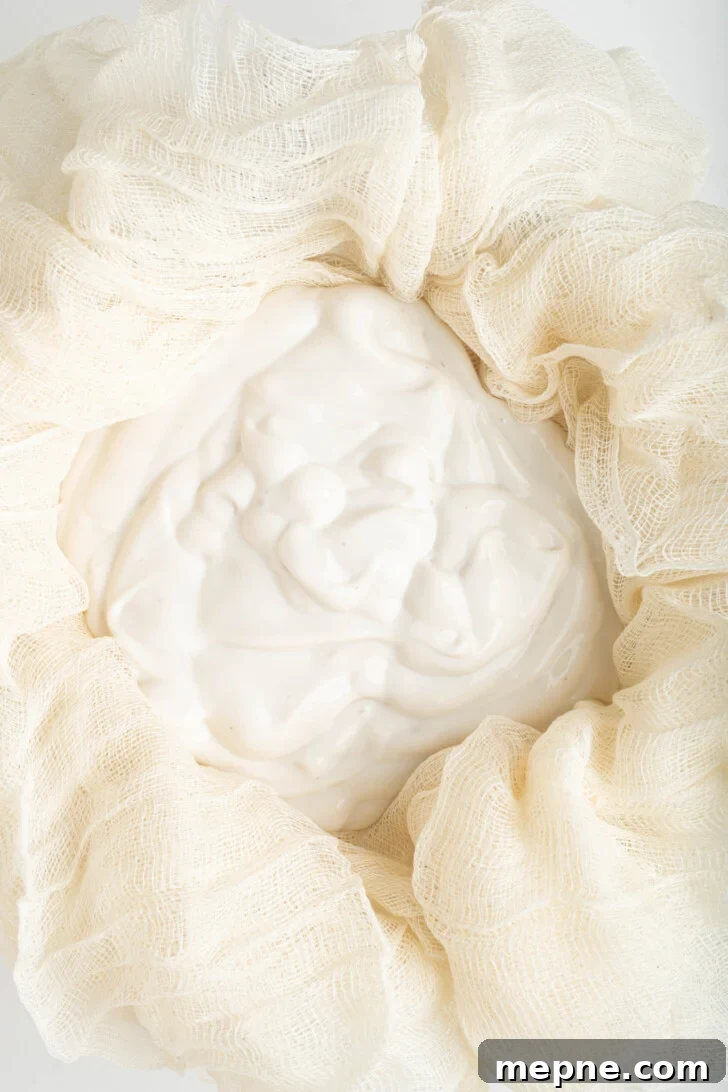
The process is simple: yogurt is mixed with salt, wrapped in cheesecloth, and left to strain in the refrigerator. As the liquid drains away, the yogurt becomes thick, silky, and spreadable. The longer it strains, the thicker the finished labneh will be. Overnight works well, but 24 to 48 hours gives the classic dense and creamy texture.
This recipe is naturally simple and very forgiving. Plain full-fat yogurt is the best choice for a traditional flavor and smooth consistency, but Greek yogurt can also be used. If you need a dairy-free option, soy-based or neutral cashew yogurt works best, though it usually requires a longer straining time.
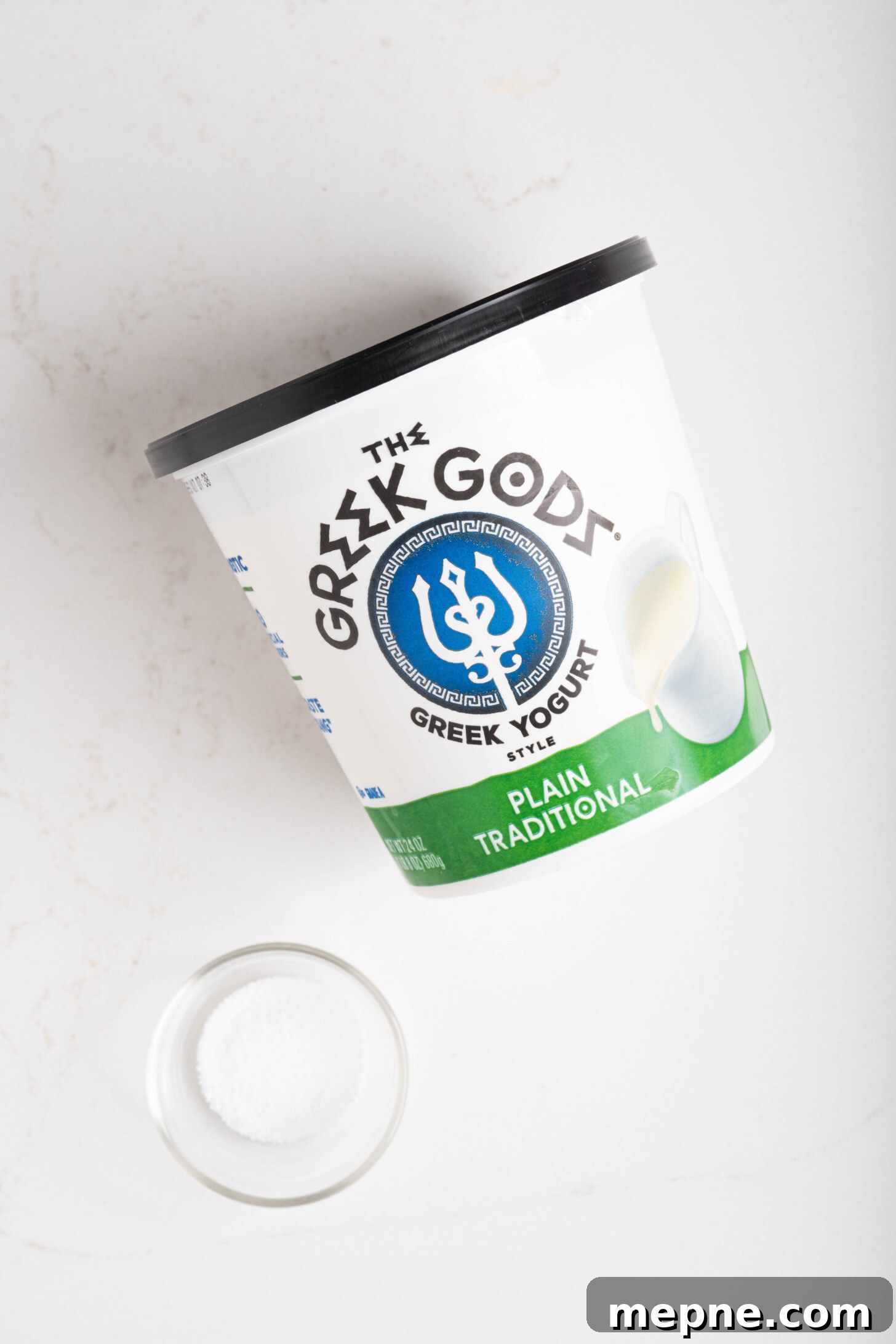
2 Easy Ingredients
You only need two ingredients to make homemade labneh:
- Plain full-fat yogurt, or Greek yogurt if preferred
- Salt
For the best texture, choose a plain yogurt with a rich, clean flavor. Avoid sweetened or flavored yogurts, as they will change the taste of the finished labneh. Full-fat yogurt gives the creamiest result, while Greek yogurt can shorten the straining time because it is already thicker.
Step by Step Instructions
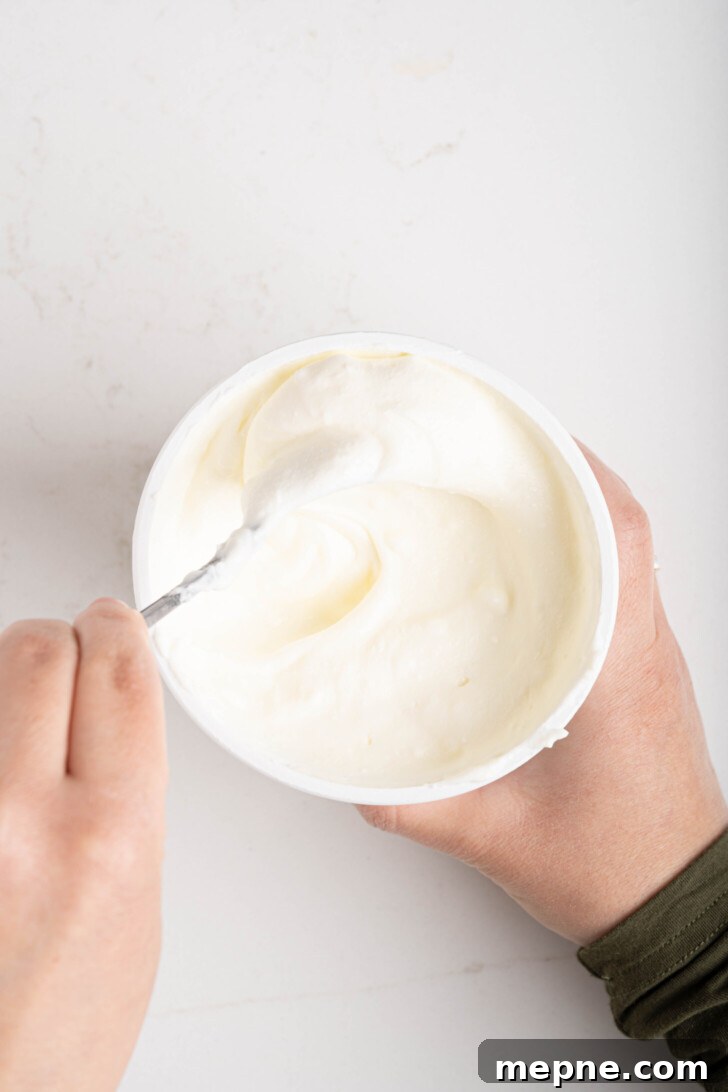
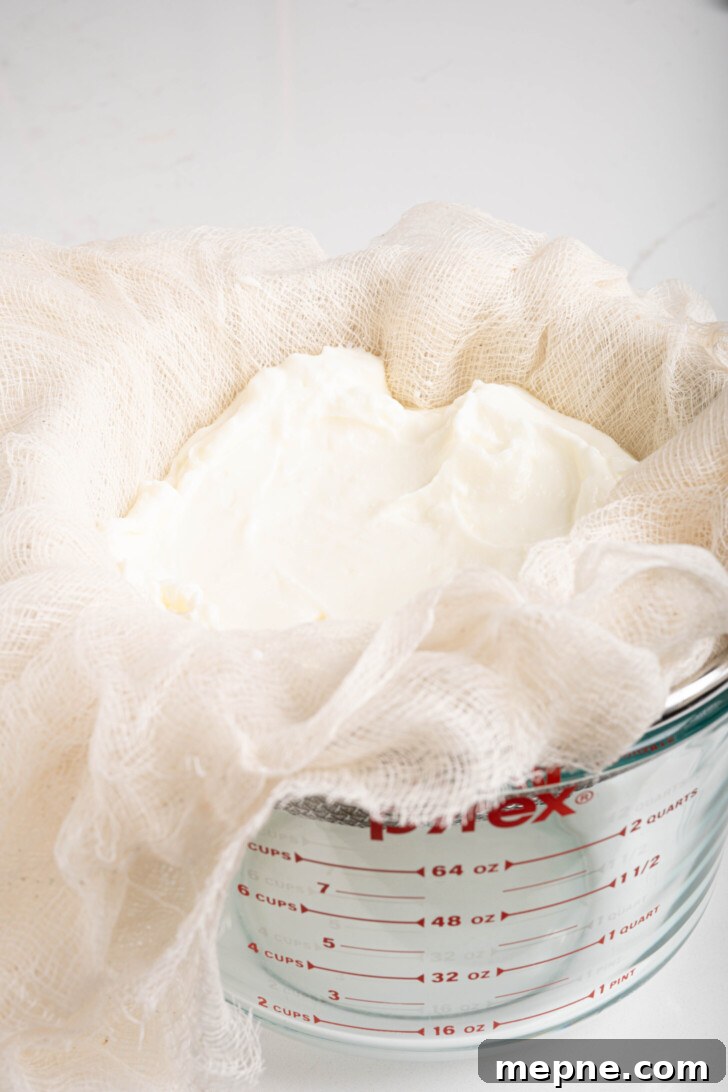
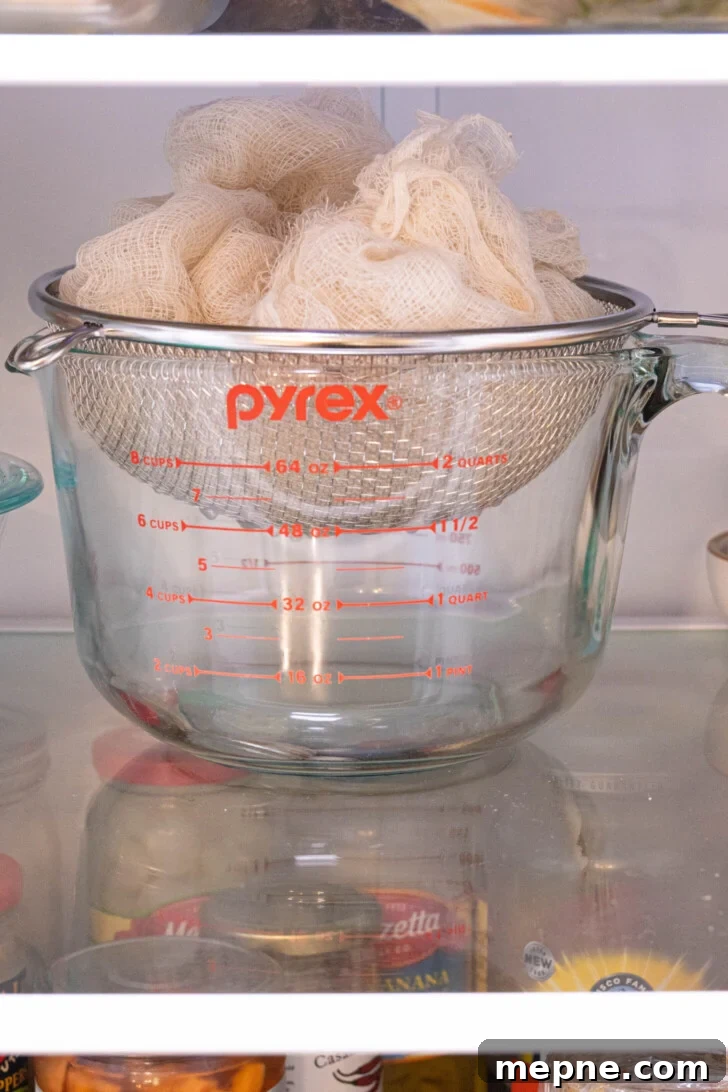
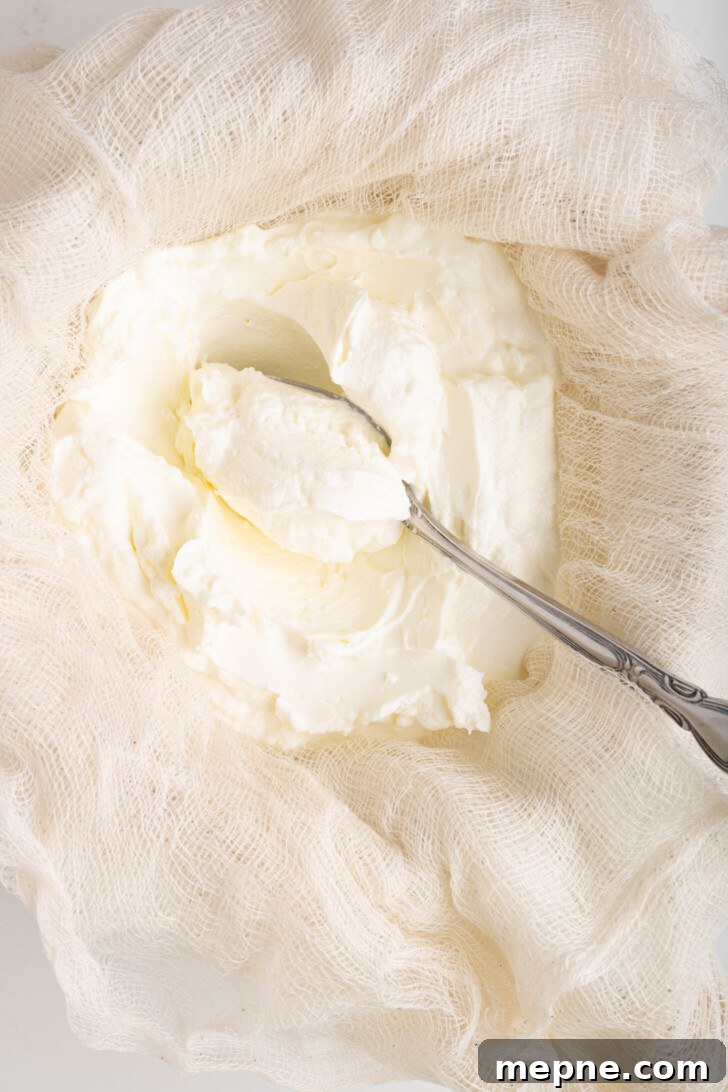
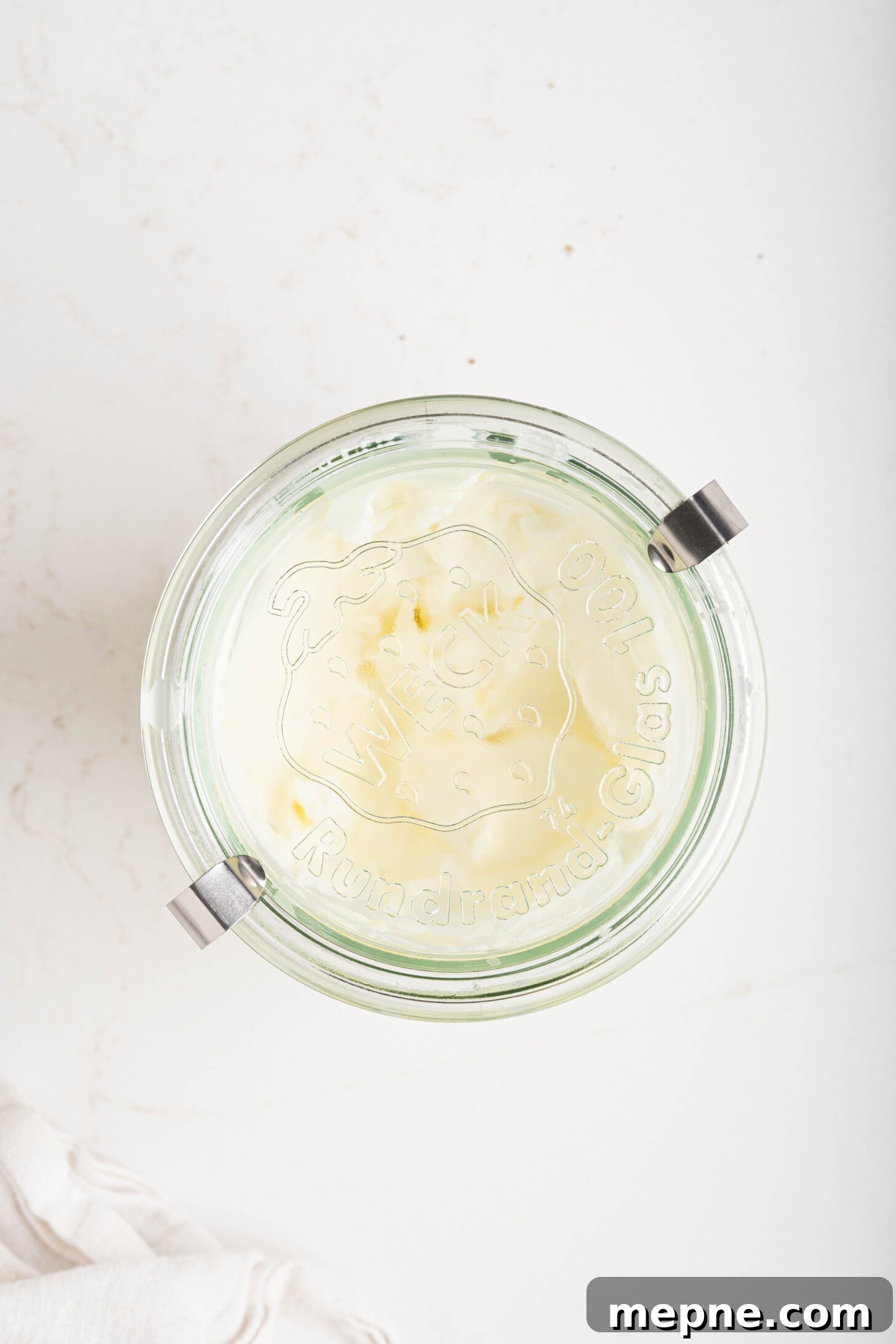
Storage: Once strained, transfer labneh to an airtight container and refrigerate for up to 2 weeks. A drizzle of olive oil on top helps maintain its quality.
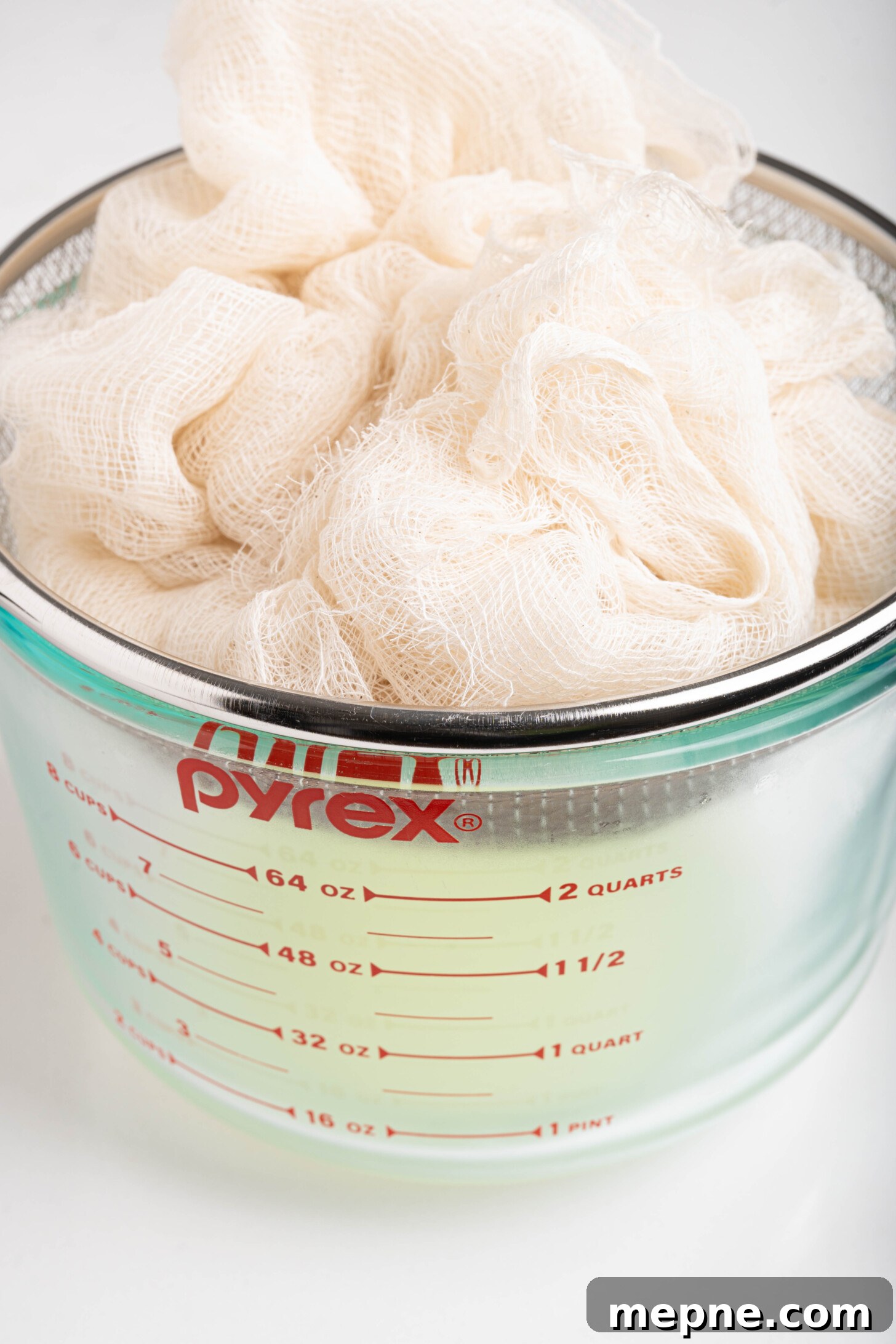
Special Equipment
To make labneh, you will need a few basic tools:
- Mesh strainer
- Cheesecloth
- Medium or large bowl
If you do not have a mesh strainer, tie the cheesecloth around a wooden spoon and suspend it over a bowl so the yogurt can drain without sitting in the liquid. You can also place a small bowl or trivet inside a larger bowl to keep the yogurt elevated.
If cheesecloth is not available, sturdy paper towels can work in a pinch. Make sure the yogurt stays supported and that the liquid has room to drain away from the solids.
How to Enjoy Labneh
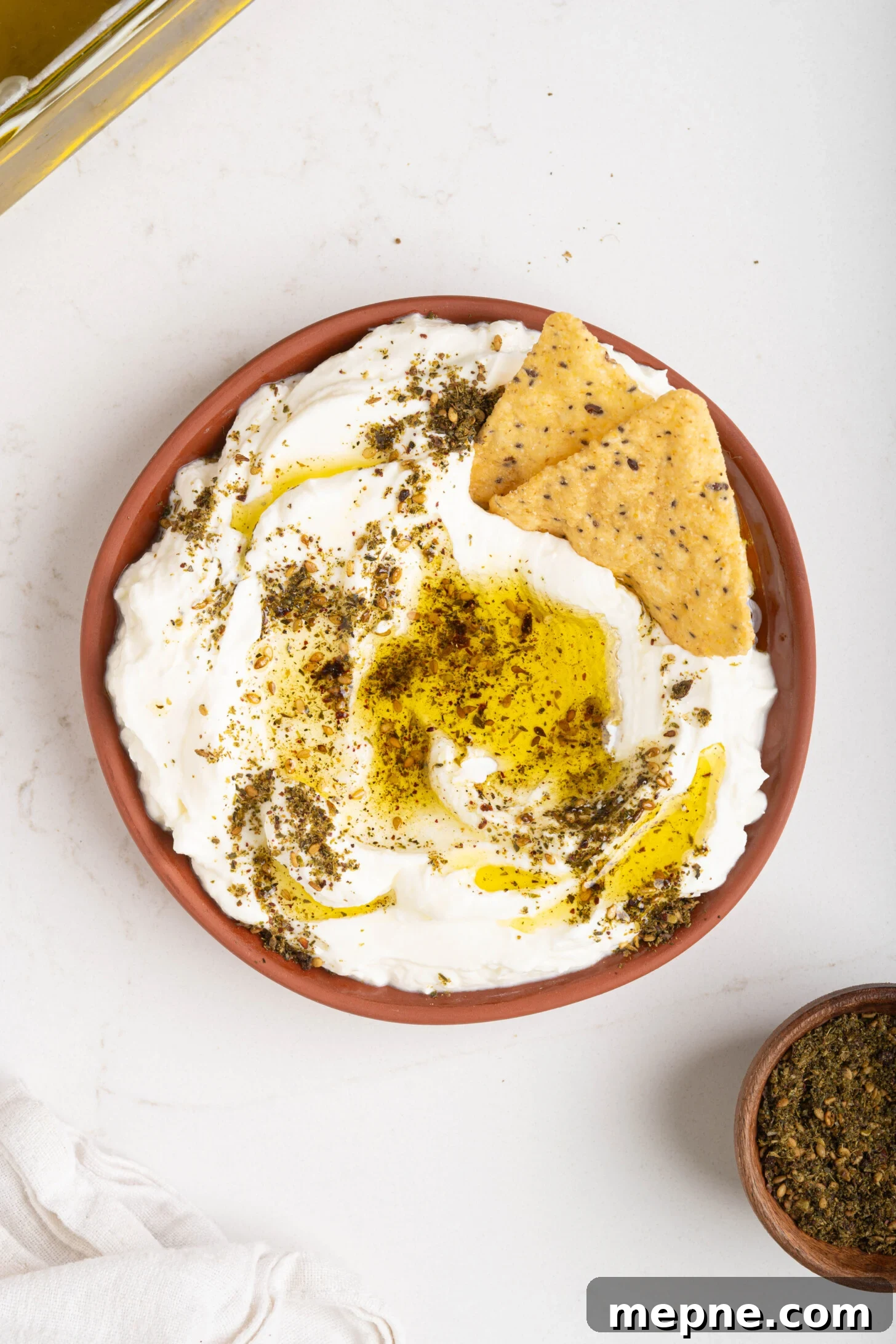
Labneh tastes like a delicious cross between yogurt and soft cheese. It is thick enough to spread, tangy enough to brighten a dish, and simple enough to serve in many ways.
Try these easy serving ideas:
- Spread it onto a plate and top with grilled meat, roasted vegetables, or tagine
- Spoon it over warm bread or pita
- Serve it like yogurt with honey, granola, and fresh fruit
- Drizzle with olive oil and sprinkle with za’atar or other favorite spices
- Top with olives, toasted pine nuts, pistachios, or poached eggs
- Dollop it onto pasta for a creamy, tangy finish
- Use it instead of feta or other soft cheeses as a topping

Quick Roasted Juicy Harissa Chicken Thighs

30-Minute Creamy Harissa Pasta

Roasted Ras El Hanout Chicken Thighs

Moroccan Chicken Tagine
Tips for Straining
Some traditional methods strain yogurt at room temperature, but refrigerating the entire setup is a safer and more reliable option. Place the bowl, strainer, cheesecloth, and yogurt in the fridge and let time do the work.
For the best homemade labneh texture, strain for at least 12 hours. If you want a thicker, richer result that holds its shape well, strain for 24 to 48 hours. Greek yogurt usually needs less time because it starts out thicker than regular yogurt.
Keep in mind that straining time directly affects texture. A shorter strain gives a softer, creamier dip, while a longer strain creates a firmer, cheese-like consistency.
Labneh Balls: After about 48 hours of straining, labneh should be thick enough to shape into small cheese balls, a log, or another form you prefer.
Dairy Free Labneh?
Dairy-free labneh can be made with plant-based yogurt, but the results depend heavily on the type of yogurt used. Oat and coconut yogurts were not the best options during testing because their flavors did not closely match traditional labneh. Soy-based yogurt was the most reliable dairy-free alternative, and a neutral cashew yogurt can also work.

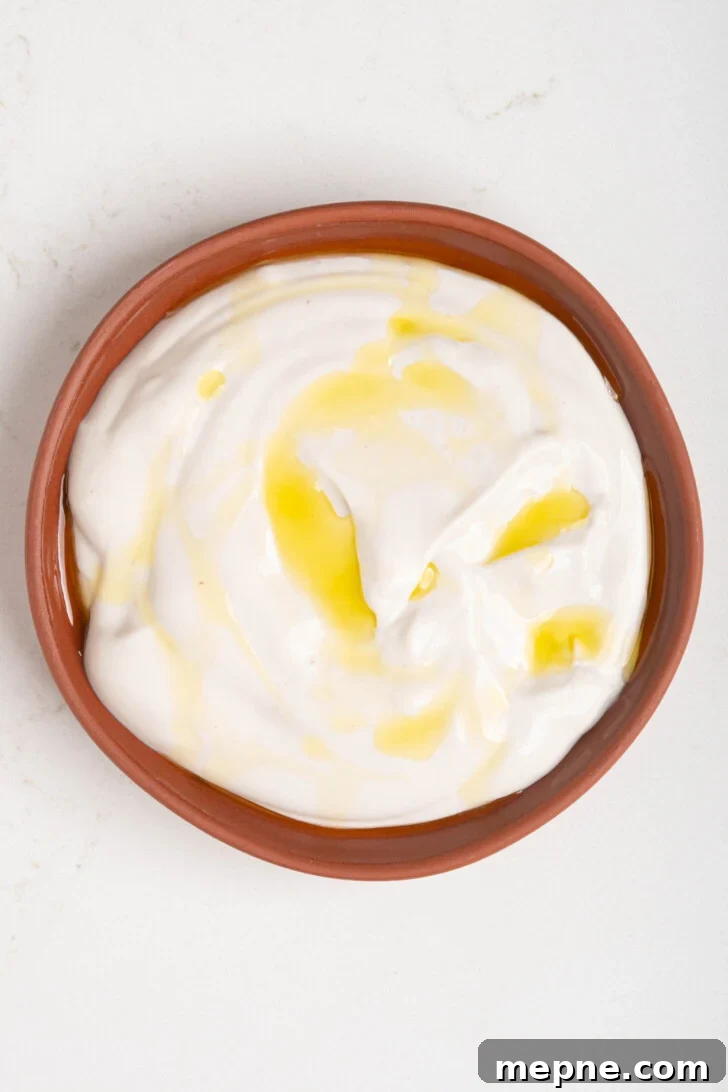

When making dairy-free labneh, follow the same basic instructions but plan for a longer straining time. Many plant-based yogurts are naturally thinner, so they may need several extra days to reach a thick, spreadable texture.
- Use plain, unsweetened dairy-free yogurt
- Choose a neutral flavor, such as soy or cashew
- Strain for several days if needed
- Avoid strong-flavored yogurts if you want a traditional labneh taste
- Remember that more straining time creates thicker labneh
Related Recipes

30-Minute Turkish Eggs in Yogurt

30 Minute Moroccan-Style Shakshuka

5 Minute Creamy Tahini Dressing

5 Minute Creamy Whipped Feta
Thanks for being here,


2 Ingredient Labneh Strained Yogurt
- Prep Time: 5 minutes
- Passive Time: 12 hours
- Total Time: 12 hours
- Yield: 4 servings
- Category: Side dish, snack, appetizer
- Method: Strained
- Cuisine: Middle Eastern
- Diet: Gluten Free
Description
This two-ingredient labneh recipe turns plain yogurt into a thick, creamy Middle Eastern strained yogurt. Serve it with olive oil and za’atar as a dip, spread it on bread, or use it as a tangy topping for savory meals.
Ingredients
- 1 (24 ounce) container plain full-fat yogurt, or Greek yogurt
- 1/2 teaspoon salt
Instructions
- Mix the yogurt and salt. Stir the yogurt and salt together until evenly combined.
- Prepare for straining. Line a mesh strainer with cheesecloth and set it over a bowl. Spoon the yogurt mixture into the center of the cheesecloth.
- Refrigerate. Place the bowl and strainer in the refrigerator and let the yogurt strain overnight or for up to 48 hours. The longer it strains, the thicker the labneh becomes.
- Serve and store. Scoop the labneh from the cheesecloth. Serve with olive oil and toppings, or store in an airtight container in the refrigerator.
Equipment
- Cheesecloth
- Mesh strainer
- Bowl
Notes
Storage: Store strained labneh in an airtight container in the refrigerator for up to 2 weeks. Covering the top with a little olive oil can help preserve its texture and flavor.
Dairy-free option: Use plain soy or neutral cashew yogurt and strain for several days if needed. Plant-based yogurts are often thinner, so they usually need more time to become thick and spreadable.